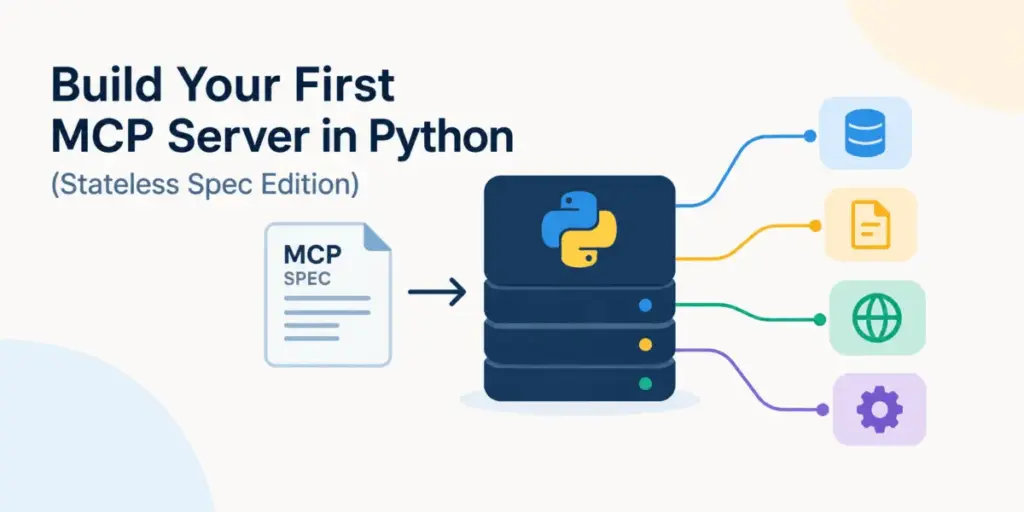
The Model Context Protocol (MCP) has undergone a fundamental architectural transformation, introducing a stateless core that significantly simplifies how developers scale AI tool servers behind standard HTTP infrastructure. Implemented through the late-July specification update and paired with the stable release of version 2 of the official Python SDK, the protocol eliminates the historical requirement for clients to establish persistent sessions before making requests, removing operational barriers for modern backend deployments.
Machine learning engineers and backend developers working with the protocol no longer need to rely on tracking mechanisms like Mcp-Session-Id for standard interactions. Under the updated specification, modern MCP clients can issue self-contained requests that do not require sticky routing or shared session infrastructure. This shift transitions the protocol core from a bidirectional, stateful design to a stateless request-response model, allowing applications to leverage standard load balancers and horizontal scaling patterns effortlessly across multiple server workers.
Simultaneously, the release of the v2 Python SDK introduces a streamlined, high-level MCPServer interface that lets developers define tools, resources, and prompts using ordinary Python functions. Rather than manually writing complex JSON schemas, argument parsers, or tool manifests, developers can rely on native Python type hints and standard function signatures to automatically generate the underlying interface definitions required by the protocol.
To demonstrate the practical implications of this update, the SDK framework enables the creation of network-accessible applications with minimal boilerplate. By utilizing the higher-level server API, developers can expose developer knowledge-base utilities, retrieval functions, and structured prompt templates through simple decorators. For instance, a function designed to search a support knowledge base automatically translates its parameters and return types into valid MCP tool definitions without requiring explicit schema configuration.
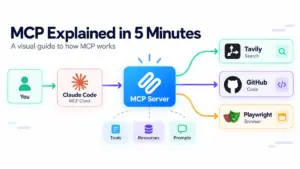
The updated SDK maintains a clear distinction between the various primitives supported by the protocol. Tools function as executable actions that an artificial intelligence model can autonomously invoke to perform work, while resources expose read-only data akin to retrieval endpoints that host applications can inject directly into context. Prompts offer reusable templates designed to guide interactions, all managed through a unified decorator-based architecture.
During local development, the SDK provides dedicated tooling via the MCP development command, launching servers alongside an interactive inspector interface that permits developers to verify tool execution and inspect schemas before production deployment. When moving toward production environments, applications can be served over Streamable HTTP or integrated directly into larger ASGI web frameworks such as Starlette and FastAPI using standard server applications.
Despite the transition to a stateless protocol core, developers retain full capability to manage application-level state where required. The architectural shift clarifies that while MCP itself no longer conceals application state within protocol sessions, developers can design their systems to handle state explicitly. By passing explicit identifiers—such as basket or session handles—through tool arguments, models can successfully interact with stateful backends without depending on underlying protocol trickery.
This architectural evolution ultimately reduces the operational friction historically associated with deploying AI agent infrastructure. By removing the overhead of session management, protocol handshakes, and specialized routing configurations, the updated Model Context Protocol and its accompanying Python SDK allow engineering teams to treat AI tool servers much like traditional web APIs, facilitating smoother integration into existing enterprise architectures.