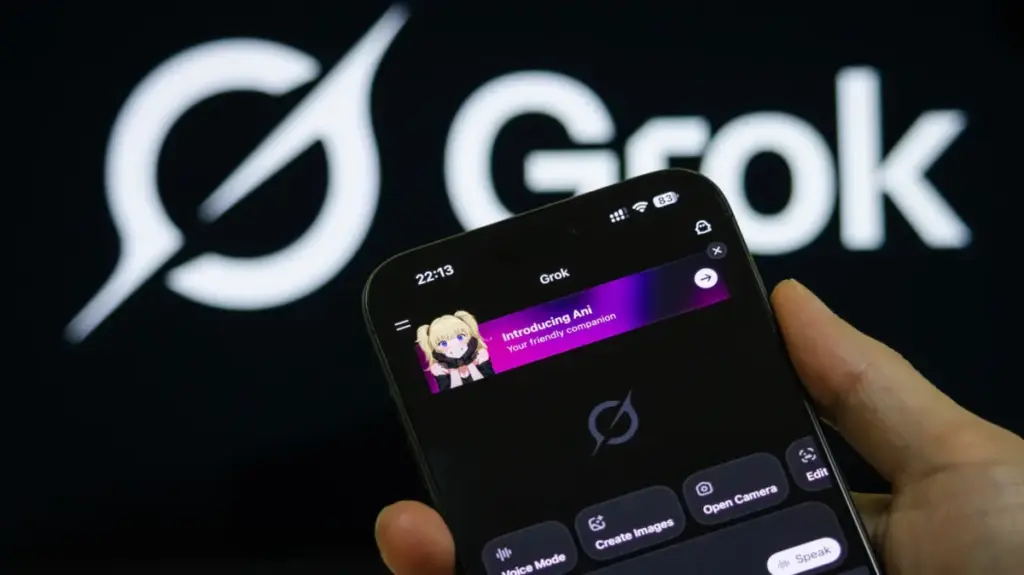
The landscape of generative artificial intelligence has become increasingly crowded, with over 3,500 models competing for user attention and integration into daily workflows. Amid this surge of innovation, xAI’s Grok has carved out a unique position, bolstered by its deep integration with the X platform and its distinct, often irreverent, personality. As the service matures in 2026, many users are questioning the viability of its free tier versus the investment required for its premium subscriptions. Like most prominent AI services, Grok employs a "freemium" model, providing a gateway for casual users while walling off advanced capabilities behind a subscription paywall.
For the uninitiated, the short answer to whether Grok is free is a definitive yes—but with significant caveats. The no-cost tier is designed primarily as a sandbox, allowing users to interact with the chatbot, conduct basic web queries, and explore voice features without an immediate financial commitment. However, this accessibility comes with strict usage caps. While the free version is sufficient for an occasional question or a brief exploration of the interface, power users—those who rely on AI for constant research, coding, or content creation—will find themselves hitting these usage walls quite rapidly.
The free experience is best characterized as a "lightweight" version of the broader xAI suite. It allows users to engage in basic conversational flows and access real-time information through X and web search capabilities. However, these quotas are dynamic. xAI frequently adjusts these limits based on current server demand and internal platform policies. Consequently, users should never operate under the assumption that "free" guarantees unlimited, round-the-clock access or parity with the features enjoyed by paying subscribers. Furthermore, high-end generative media tools, such as sophisticated image and video generation, are almost exclusively reserved for those on premium plans. While occasional, minor features may surface for free users, the most impactful and resource-intensive generative technologies are fundamentally linked to the financial tiers of the service.

What You Get with Grok’s Paid Plans
For those who find the free tier insufficient for their daily requirements, xAI offers a tiered subscription strategy, with the most recognizable consumer upgrade being "SuperGrok." This tier is specifically engineered for users who require higher rate limits, access to more sophisticated reasoning models, and the ability to maintain longer, more complex conversational threads. Marketing for SuperGrok emphasizes that it provides the "full power" of the xAI experience, removing the friction points that frequently interrupt the workflow of free-tier users.
The benefits of moving to a paid subscription go beyond simply removing usage caps. Subscribers gain access to advanced reasoning models capable of handling intricate logic, specialized coding tools designed to assist developers, and, most importantly, priority access. In the world of cloud-based AI, latency is a constant concern; during peak hours, when global traffic to AI platforms spikes, free users often experience significant delays or outright service outages. Premium subscribers, by contrast, are granted preferential access to compute resources, ensuring a smoother and more reliable experience even when the network is under heavy load.
Beyond the standard SuperGrok individual plan, the service distinguishes between personal use and organizational needs. Business and Enterprise plans cater to entities that require features beyond simple chat, such as centralized billing, enhanced security protocols, and API-style deployment for integration into proprietary software. These plans are largely unsuitable for the average individual user, who is typically better served by the consumer-facing tiers.
Interestingly, there is a strategic overlap between xAI subscriptions and the broader X platform ecosystem. For example, the "SuperGrok Heavy" tier includes an X Premium subscription, effectively bundling social media utility with high-end AI research tools. This integration is a deliberate attempt to capture the power-user demographic that already spends a significant amount of time on the X platform. By aligning these services, xAI aims to make the subscription cost feel like a consolidated investment rather than a fragmented expense.
Is SuperGrok Worth Paying For?
Determining the value of a subscription to a service like SuperGrok requires a candid assessment of how an individual interacts with artificial intelligence. If a user’s interaction is limited to occasional inquiries, light fact-checking, or simply testing the chatbot’s personality, the free tier provides more than enough utility. In these instances, paying for a subscription would likely yield a poor return on investment, as the additional headroom would remain largely unused.
However, the value proposition shifts dramatically for those who integrate AI into their professional or creative lives. For researchers who need to parse large amounts of data, programmers who use AI as an auxiliary coding partner, or creators who rely on high-fidelity image and video generation, the limitations of the free tier become a bottleneck. When a user is constantly interrupted by usage caps or denied access to the most capable models during critical moments, the subscription cost of SuperGrok effectively becomes a productivity tax—one that is worth paying to ensure uninterrupted output.
It is critical, however, to manage expectations regarding the performance of these paid models. A common misconception among new AI adopters is that paying for a premium subscription guarantees a higher degree of factual accuracy. This is not the case. Regardless of whether a user is on the free tier or the most expensive enterprise plan, all Large Language Models (LLMs) are susceptible to "hallucinations"—the tendency to present plausible-sounding but entirely incorrect information. These models process data based on patterns and probabilities, not human-level understanding or objective truth.
This risk is particularly pronounced when dealing with breaking news or topics that are currently trending on social media platforms like X. Because the AI is often processing real-time, unverified data, it can misinterpret nuances or amplify misinformation. Consequently, a premium subscription does not absolve the user of the responsibility to fact-check. Whether one is using the free version or the most advanced iteration of SuperGrok, the results should always be treated as a starting point for inquiry rather than a definitive source of truth.
For those considering an upgrade, the best approach is to start with the free tier and treat it as a trial period. Engage with the model, test its limitations, and determine whether it provides tangible value in your daily routine. If you find that the model’s reasoning capabilities are insufficient for your work, or if you consistently run into the "ceiling" of usage quotas, then transitioning to a paid tier becomes a logical step. The evolution of AI in 2026 is moving toward specialized, high-performance tools, and the decision to pay for such services should be based on the specific, measurable value those tools add to your unique workflow. As the technology continues to iterate and the competitive landscape shifts, staying informed about what each tier offers will remain the best way to ensure that your digital toolkit is both effective and cost-efficient.