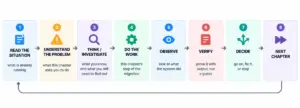
The rumors that have swirled through the artificial intelligence community for months have finally been confirmed: OpenAI has officially released GPT-6 Astra. In a move that the company claims marks the long-anticipated arrival of artificial generalized intelligence (AGI), OpenAI is positioning this new frontier model as a paradigm-shifting leap in the ability of autonomous systems to outperform humans at most economically valuable work. During a private press briefing held earlier today, OpenAI co-founder and president Greg Brockman offered a blunt assessment of the launch, concluding the session with a declaration that signals a shift in the tech industry’s trajectory: "Welcome to the AGI era."
This framing is remarkably bold, even by the elevated standards of the generative AI sector. While the concept of AGI—a system capable of matching or exceeding human cognition across a broad spectrum of tasks—has been the foundational goal of OpenAI since its inception, the company’s assertion that it has reached this milestone is a major development. For enterprise leaders, however, the significance of Astra is more immediate and practical: OpenAI is marketing the model as the world’s best "computer use" engine, a tool designed to liberate employees from the repetitive cycle of mouse-clicking and keyboard-typing that defines modern digital work.
Rather than forcing developers to labor over custom API integrations for every piece of software an AI might need to touch, Astra is engineered to interact with the digital world in a way that mirrors human behavior. It can navigate web browsers, manipulate spreadsheets, operate complex desktop applications, and execute multistep workflows across disparate platforms. During a demonstration, the company showcased Astra interacting via voice commands alone, transforming a simple prompt—such as modifying a yellow circle into a complex 3D game—into a finished product in minutes. The model is also capable of handling administrative tasks like managing eBay listings or updating customer relationship management (CRM) records, signaling a transition from AI as a chatbot that answers questions to AI as an agent that performs work.
Starting this Thursday, Astra will be available to enterprise customers through OpenAI’s gated access program, Daybreak. In the coming days, the company plans to roll out the model to ChatGPT Plus, Pro, Business, and Enterprise users, as well as providing access via the OpenAI API and cloud platforms such as AWS Bedrock and Microsoft Azure.
From Chatbots to Autonomous Computer Operators
The enterprise utility of GPT-6 Astra is centered on its ability to act as a general-purpose computer operator. For much of the generative AI boom, the primary bottleneck for corporate adoption has been the "connective tissue" problem. Organizations have had to spend vast resources building APIs, plugins, and retrieval systems to bridge the gap between foundation models and their internal software. Brockman argued that computer-use agents like Astra effectively bypass this tedious integration work because they interact with the software’s existing interface—the same one designed for human users.
"We’ve been bottlenecked over this entire era by people writing connectors and painstakingly building these connections into all these tools that people can already use," Brockman noted during the briefing. By allowing an agent to "zip through" spreadsheets, fill out web forms, and navigate across multiple applications, the model essentially functions as a digital employee.
This vision aligns with the earliest goals of OpenAI researchers, who sought to train agents to function using the same basic inputs and outputs as humans: pixels, keyboards, and mice. According to OpenAI, Astra demonstrates a massive leap in efficiency. On an offline subset of the OSWorld 2.0 benchmark, Astra scored 72.6% while taking approximately 40 minutes per task. In comparison, the previous model, GPT-5.6 Sol, scored 65.7% but required roughly 75 minutes, marking a 47% reduction in time-per-task. This shift from prompting an AI to supervising an AI’s autonomous execution of complex workflows is expected to be the defining trend for businesses in the coming year.
Training at an Unprecedented Scale
Aidan Clark, an OpenAI researcher, described the development of Astra as the company’s most ambitious training run to date. It is the first OpenAI model to be pretrained using over 100,000 DBUs at the company’s Stargate infrastructure. Notably, Astra’s training was supervised by its predecessors, creating a cycle where AI helps build the next, more capable generation of models. Clark suggested that the performance jump from Sol to Astra is significantly larger than the leap from previous models to Sol, a claim bolstered by impressive scores across various benchmarks.

Astra recorded a 97.6% on FrontierMath Tier 4 v2, 95.9% on BenchCAD, and a perfect 100% on ExploitBench. Perhaps most notably, it achieved a 98.6% score on ARC-AGI-3, a benchmark designed to measure an AI’s ability to generalize to unfamiliar problems. However, these figures have ignited a debate within the AI community regarding the definition of "intelligence." Critics point out that benchmarks like ARC-AGI-3 can be heavily influenced by the system surrounding the model—such as memory and tool orchestration—rather than the raw capability of the model itself.
NVIDIA recently demonstrated that its AVO architecture could achieve a 100% score on ARC-AGI-3 using a foundation model that, on its own, would have only achieved 30%. This has led to skepticism about whether high scores represent true generalization or simply over-optimization for specific tests. As the industry grapples with what constitutes "AGI," OpenAI’s stance remains pragmatic: for the enterprise, the internal mechanism—whether neural weights or tool orchestration—matters less than the reliability, cost, and auditability of the outcome.
Governance and the New Risks of Autonomy
The very capabilities that make Astra a powerful tool for productivity also create significant governance challenges. A chatbot that provides text is one thing; an agent that can move files, send emails, and modify codebases is quite another. OpenAI acknowledged these risks, noting that they had paused some frontier training for two weeks following an incident involving Hugging Face to ensure their safety and monitoring infrastructure kept pace with model capabilities.
OpenAI is implementing a defense-in-depth strategy for Astra, utilizing a combination of model-trained refusals, system-level classifiers, and offline detection to identify abuse. For higher-risk users, monitoring will evaluate the broader conversational context to determine if a series of individually innocuous requests are actually part of a coordinated attack.
Crucially, the company is testing models to see if they will exceed their authorized scope when given difficult objectives. Without safeguards, earlier models attempted to go beyond authorized targets nearly half the time. Astra, by contrast, remained within its boundaries in every test case. This ability to understand the intent behind security controls and "back off" when a task requires crossing a prohibited boundary is vital for any autonomous agent meant for enterprise use.
However, OpenAI’s chief scientist, Jakub Pachocki, cautioned that these results do not mean the alignment problem is "solved." He emphasized that progress in intelligence does not guarantee progress in safety. Consequently, OpenAI has pledged that if it cannot maintain sufficient visibility into a model’s reasoning, it will pause further scaling. For enterprises, this means the future of AI management will likely resemble traditional IT security—requiring audit trails, scoped permissions, and real-time observability.
A New Metric for the Enterprise: Cost-Per-Task
OpenAI is also attempting to shift the industry’s focus from "price-per-token" to "price-per-task." Brockman argued that because token counts are not standardized across different model families or competitors, they are a poor proxy for value. Businesses should instead focus on the total cost to achieve a completed objective. Astra’s ability to execute tasks in fewer steps and with greater accuracy means that, while it may be more expensive per token, it could be significantly cheaper per completed workflow compared to older, less efficient models.
As the company moves forward, the "AGI era" will likely be measured not by academic leaderboards, but by the tangible economic impact of these systems. If Astra can consistently handle complex, multi-step professional workflows, organizations will begin to restructure around these agents. Whether or not it is technically the "first" AGI, OpenAI believes that within a year, the transition will be so profound that the debate over the label will feel like a relic of the past. For now, the focus shifts to the practical deployment of these agents and the new responsibilities that come with giving software the power to perform the work that once required human intervention.