However, before rushing to place a preorder, consumers might want to take a closer look around their living spaces. For those who already own a third-generation Apple TV 4K or certain other existing devices, holding off on an immediate purchase could yield significant financial savings. As it turns out, Apple’s rollout of Siri AI is not entirely restricted to brand-new silicon. Certain features are making their way to older hardware through upcoming software updates, meaning that an expensive hardware refresh might not be strictly necessary for everyone hoping to experience the next generation of Apple’s voice assistant.
OK, let’s do Apple TV 4K one last time
The most expensive hardware upgrade in Apple’s latest smart home wave is the fourth-generation Apple TV 4K. Priced at $300, this new set-top box shares the same name, physical design, resolution support, and overarching feature set as the third-generation model released back in 2022. Instead of a complete external overhaul, buyers are paying for internal improvements: a significantly faster A19 processor, integrated internal microphones designed to pick up Siri commands and queries directly from the room, a robust 128GB of internal storage, and a dedicated Ethernet port, which serves as the sole configuration available for this iteration.

The package also includes a revamped Siri Remote. While it looks and acts almost identical to its predecessor, it introduces precision finding capabilities along with a built-in chime. This audio cue can be triggered when using the Find My app, helping users locate the remote when it inevitably slips between couch cushions or hides beneath living room furniture.

Despite lacking the built-in microphones and the speedier A19 chip of the new model, second- and third-generation Apple TV 4K units will still receive Siri AI when the feature rolls out later this year. According to the fine print in Apple’s official press release, the functionality is currently rolling out via the tvOS 27.2 beta. Initially, it will be available in English across the United States, Australia, Canada, India, New Zealand, Singapore, South Africa, and the UK. Furthermore, for users who want the updated hardware perks without buying an entirely new set-top box, the new Siri Remote will be sold separately for $59 starting November 13, offering full compatibility with previous Apple TV 4K models as well as the older Apple TV HD.
HomePod Minis aren’t quite as lucky
The introduction of new audio hardware naturally raises questions about ecosystem compatibility, particularly for households that have accumulated smart speakers over the years. Mixing first- and second-generation HomePod Minis in a single living space creates an interesting scenario. When uttering the familiar wake phrase, users might wonder how the system handles requests between units running advanced intelligence versus those running what Apple now refers to as Siri Classic. While some enthusiasts might consider completely overhauling their existing audio setups, doing so carries a steep price tag. Outfit a room with four diminutive speakers and a fourth-generation Apple TV 4K to take advantage of Apple’s newly envisioned surround-sound environment would cost roughly $900, a setup that reviewers and audiophiles will undoubtedly compare against traditional, high-end soundbar configurations.

Unfortunately, users of older HomePod Minis will not be receiving the more advanced Siri AI features. Apple has clarified that Siri AI requires the faster S10 processor found inside the newly announced HomePod Mini 2, meaning those sophisticated processing capabilities will not be backported to older generations.
Despite this limitation, the lack of complete backwards compatibility does not prevent users from mixing and matching HomePod Minis within a single home configuration. Basic Siri commands will continue to function across older and newer units alike. Even so, practical real-world testing will be necessary to determine how seamlessly a mixed-generation ecosystem operates when only the newest hardware possesses the advanced processing power required for complex AI tasks.
The iPad in the kitchen
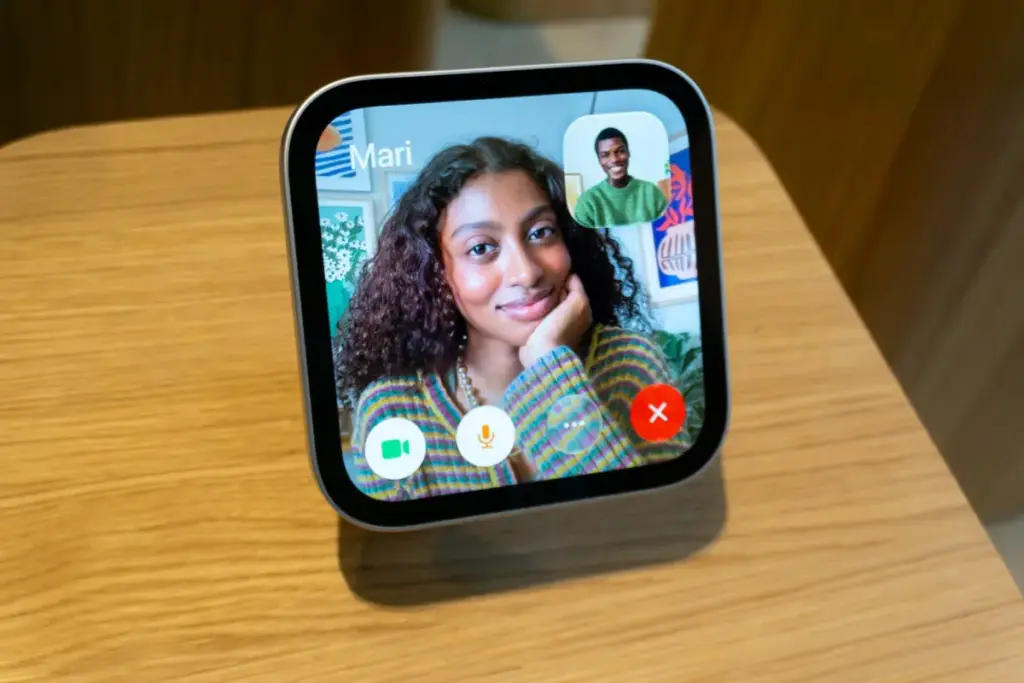
Apple’s new HomeView marks the company’s first dedicated smart home device featuring a built-in screen. While its physical aesthetic may not lean entirely into the retro-futuristic iMac G4 style that some observers anticipated, its capacity for secure, personalized multi-user interaction makes it a notable addition to the smart home category. Naturally, Siri AI serves as a core component for a device intended to sit comfortably on a kitchen counter.

For years, many households have relied on an iPad or iPad Mini resting on an inexpensive stand to fill that exact kitchen assistant role. Apple’s tablets have capably managed kitchen duties since their inception, allowing users to set timers, pull up recipes, handle FaceTime calls, and execute many of the tasks demonstrated in Apple’s promotional material. For those weighing whether to purchase the new HomeView, existing hardware remains a viable alternative. Later this year, Siri AI support will arrive on compatible tablets, including iPad Pro and iPad Air models running the M1 chip or later, as well as the iPad Mini equipped with the A17 Pro chip. Unlike a wall-mounted or docked smart display, the iPad also retains the advantage of not requiring a permanent power tether.
The Apple devices connecting them all
Given that advanced Siri AI features demand substantial processing power, questions naturally arise about how older smart home hardware will manage the workload. The answer lies in the ecosystem’s interconnected nature. Many of these smart home devices rely on a nearby, capable mobile device—specifically an iPhone or iPad equipped to handle Apple Intelligence—to process complex requests. This requirement extends to the iPhone 15 Pro and newer models, alongside the aforementioned modern iPad lineup.
In fact, the HomeView’s marquee feature—its ability to seamlessly switch between up to six different household members and present personalized information—depends entirely on each person carrying an Apple Intelligence-supported iPhone or iPad. To function correctly, the mobile device must be paired with the HomeView, connected to the same Wi-Fi network, and recently unlocked. For some families, fully utilizing a new smart home hub may inadvertently necessitate upgrading multiple iPhones to current-generation hardware.

Will you really be able to get the new Siri AI features without buying new hardware?
Apple’s decision to extend select Siri AI features to older generations of the Apple TV 4K demonstrates a conscious effort to avoid alienating its existing customer base. For consumers who prioritize enhanced gaming performance, faster overall system navigation, or wish to expand their audio footprint by moving older HomePods to secondary rooms, upgrading remains a logical choice.
Ultimately, Apple appears to be playing a long-term strategic game. The company is actively courting consumers eager to dive headfirst into its expanding ecosystem, particularly as it renews its focus on the smart home market through its new Home Collection. At the same time, the strategy accommodates cautious buyers who are just beginning to explore the concept of a connected home and have the financial flexibility to invest in a comprehensive rollout.
For consumers who have already accumulated a collection of recent Apple home devices, however, the smartest immediate move may simply be patience. By waiting to see how the new software updates perform in the wild, users can evaluate the true utility of Siri AI without incurring the upfront cost of redundant hardware upgrades.