









As the dust settles on the midterm elections, the political landscape in Washington is undergoing a subtle but profound recalibration. For the past two years, the titans of Silicon Valley have enjoyed a period of relative deregulation, largely fueled by close ties to the Trump administration. From tax incentives and the easing of federal antitrust scrutiny to a hands-off approach toward artificial intelligence, the tech sector flourished under a regulatory environment that prioritized innovation over restriction. However, with the midterm results signaling a shift in the balance of power, the industry is now aggressively moving to mend bridges with the Democratic Party, which has made it clear that a new era of AI oversight is on the horizon.
The shift in strategy was made plain just days before the election when OpenAI announced the hiring of Jessica Schumer, the daughter of Democratic Senate leader Chuck Schumer. While corporate hiring practices are often viewed through the lens of talent acquisition, in the high-stakes world of D.C. lobbying, such moves are widely interpreted as deliberate attempts to ensure access and influence within Democratic circles. This pivot toward "optics management" has extended beyond personnel decisions; in a move that industry insiders describe as a branding refinement, OpenAI has begun referring to its expansive data centers as "compute campuses." The change in terminology, while seemingly semantic, reflects a broader effort to reframe the environmental and physical footprint of AI infrastructure in a way that feels more palatable to communities and lawmakers alike.
The End of a Pro-Industry Era
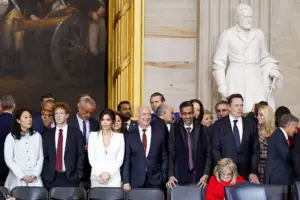
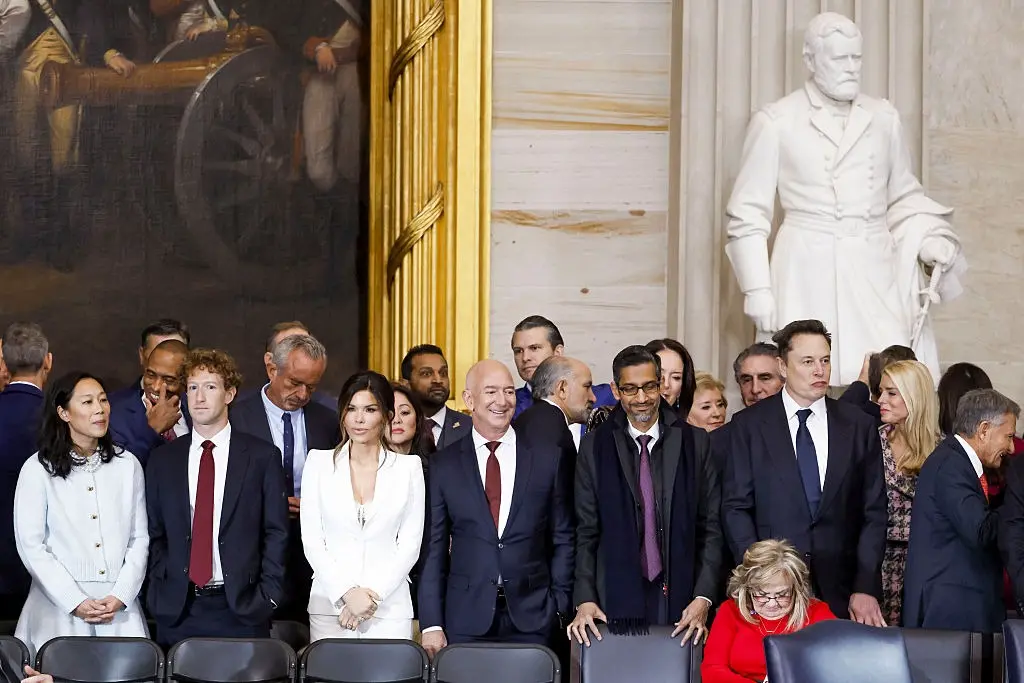
For the last two years, the relationship between Silicon Valley and the Trump White House was defined by mutual benefit. Major tech executives were frequent visitors to the White House, and the administration’s policies provided the industry with a tailwind of tax breaks and the pausing of various federal investigations. In exchange, some companies adjusted their internal policies, scaling back diversity, equity, and inclusion (DEI) initiatives that had previously drawn the ire of conservative critics. Several high-profile executives also opened their wallets, donating millions of dollars to super PACs supporting the President’s campaign and his political allies.
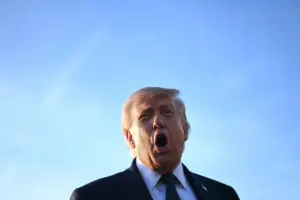
This alliance was not without its friction, however. While the administration favored a deregulatory stance, the industry still faced significant legal headwinds. Meta, for instance, navigated a gauntlet of lawsuits and billion-dollar fines, while OpenAI found itself in the crosshairs of litigation alleging that its generative models were causing harm to users. Despite these challenges, the overarching federal sentiment remained one of "innovation first."
Now, that atmosphere is changing. With Democrats poised to exert greater influence, the industry faces the prospect of heightened oversight. The question, however, is whether image-polishing and high-profile hires will be enough to appease a party that has signaled a desire for stricter guardrails. Experts suggest that the real battleground for the future of AI will not be decided solely by lobbying in the halls of Congress, but rather through the grinding, granular work of state legislatures, community zoning boards, and the volatile reactions of financial markets.
The Critics: "PR Washing" and the Trust Gap
Not everyone is convinced that these strategic pivots will succeed. J.B. Branch, the director of federal AI governance and technology policy at the nonpartisan advocacy group Public Citizen, is skeptical of the industry’s new face. He characterizes the recent rebranding efforts and political hires as a form of "PR washing," designed to deflect from systemic concerns regarding AI’s societal impact.
"The tech industry realizes they have an optics problem," Branch noted. He points to a series of strategic investments as evidence of a broader, long-term campaign to secure legitimacy through private-public partnerships. OpenAI’s partnership with the American Federation of Teachers, Anthropic’s launch of "Claude Corps," and Meta’s "America’s Workforce Academy" are all, in Branch’s view, attempts to embed these companies into the social fabric in a way that makes them harder to regulate. "I would imagine more of that sort of investment in these corporate, private-public partnerships," he added, suggesting that these initiatives are part of a calculated defensive strategy.
This sentiment is echoed by Alice Marwick, director of research at the tech policy nonprofit Data & Society. Marwick believes that while Big Tech will undoubtedly attempt to pivot toward the political center, or even the left, the window for winning public trust may be closing. "It’s a little too late," she said. "Tech companies should be asking themselves how their products can make people’s lives better, because right now, it doesn’t seem like they are."
The New Regulatory Reality
As the political pendulum swings, the prospect of federal AI regulation has moved from the theoretical to the inevitable. Democratic platforms have consistently called for increased transparency, safety testing, and accountability for AI developers. Across the country, the momentum for local action is already building, with data center moratoriums gaining traction in jurisdictions concerned about the massive energy and water consumption required to train and run large-scale AI models.
Dina Powell McCormick, president of Meta, addressed these concerns during a recent appearance at the WSJ Tech conference. While she emphasized the importance of bipartisanship—stating, "You have to work with the government that the American people elect"—she also acknowledged the local friction. She expressed a desire for Meta to demonstrate the "enormous amount of benefit" that its data centers can bring to local communities, while conceding that those that choose to reject such investments "will of course have the right to stop them."
The reality, however, is that Washington may be heading toward a period of legislative gridlock. Aryan Ranjan, founder of the political campaign management software firm Baraza, argues that the most significant action will likely shift to the state level. "A coalition built on newer, working-class voters is likely to push Democrats to frame AI around electricity bills, data-center siting, and jobs rather than abstract AI safety," Ranjan said. "For the next two years, a company’s AI rules may depend more on where it operates rather than on anything Washington passes."
A Market in Flux
The intersection of politics and the economy has become increasingly volatile. Last December, the Trump administration issued an executive order establishing an "AI Litigation Task Force," a federal body explicitly designed to challenge state-level AI regulations. The administration’s position has been clear: U.S. companies must be allowed to innovate without the friction of "cumbersome regulations." Yet, despite this federal pushback, states have continued to pass their own measures targeting everything from chatbot transparency to the proliferation of deepfakes.
The fragility of the current AI boom was underscored on the Wednesday following the midterms, when a trillion-dollar market sell-off sent shockwaves through the industry. The event left investors rattled, with some reportedly reconsidering the viability of massive, multi-billion-dollar IPOs—most notably Anthropic’s highly anticipated public offering.
Branch, of Public Citizen, suggests that the political and economic fates of these companies are now inextricably linked to the administration’s response to these market pressures. "There’s a very strong likelihood that there will be an AI bubble pop, and it’ll happen on Trump’s hands," he said. "Does he want to sink or swim along with the AI industry?"
For now, the White House remains steadfast in its support for the sector. A spokesperson for the administration stated that "American leadership in super intelligence is essential for our national security, economic prosperity, and the quality of life of the American people." The official added that the President remains committed to ensuring the U.S. maintains its global edge while protecting consumers, emphasizing a willingness to work with all parties to deliver "victories for hardworking Americans."
As the political and economic landscape continues to shift, the path forward for Silicon Valley is anything but certain. Between the threat of state-level restrictions, the rising public demand for guardrails, and the looming possibility of an economic correction in the AI sector, the industry’s ability to "rebrand" may be tested by forces far more powerful than a change in hiring or terminology.