








Spend any time scrolling through modern job boards, and you will quickly notice that mentions of artificial intelligence are virtually everywhere. Yet, beneath the surface of these ubiquitous listings lies a significant gap between what shows up as a vague, generalized requirement and what employers are actually screening for during interviews. For professionals trying to build genuinely marketable skills rather than simply padding their resumes with trendy buzzwords, understanding this divide has become critical.
Recent labor market data compiled from several large-scale analyses of job postings throughout late 2025 and 2026 sheds light on this phenomenon. The data reveals which artificial intelligence competencies appear most consistently across industries, how specific employer demands break down by various role types, and where professionals should strategically focus their time and energy.
Why the Numbers Are Moving So Fast
To understand the current hiring landscape, one must first examine the sheer scale of the shift. An exhaustive analysis of more than 360,000 job postings collected between late 2025 and mid-2026 revealed that artificial intelligence has rapidly become the second most requested skill across all job roles, appearing in roughly one in every five postings. In this broader ranking, it trailed only general communication skills while outpacing traditional technical staples such as Python, SQL, and major cloud computing platforms like AWS.
While that metric alone is striking, the true velocity of change highlights an unprecedented transformation in the global workforce. Tech-focused recruitment platform Dice analyzed an expansive dataset of seven million U.S. technology job postings and discovered that artificial intelligence skill requirements skyrocketed from just 15 percent of postings in January 2024 to an astonishing 75 percent by mid-2026. Furthermore, data from Lightcast—highlighted by the Bipartisan Policy Center—indicated that job postings explicitly requiring artificial intelligence-related skills surged by 144 percent year over year. Within data and analytics roles specifically, artificial intelligence now appears in nearly 45 percent of all available listings.
The overarching takeaway for the modern workforce is clear: artificial intelligence fluency is rapidly shifting from an impressive differentiator to a baseline corporate expectation. More importantly, this transition is occurring at a pace that far outstrips the skill-building timelines of most working professionals.
The Skills Employers Are Naming, by Category
A closer examination of the recruitment data demonstrates that not all artificial intelligence skills carry equal weight, nor is employer demand uniform across different professional functions. Looking across the broader market, four distinct categories emerge to define what organizations are actively seeking.
The first and most widespread category is artificial intelligence literacy and prompt engineering. Artificial intelligence literacy represents the broadest population of workers, denoting a general understanding of what these tools can and cannot accomplish, how to deploy them effectively within daily workflows, and how to critically evaluate their generated outputs rather than blindly accepting them. Within this umbrella, prompt engineering has experienced dramatic expansion. Dice identified prompt engineering as one of the fastest-growing artificial intelligence skills by year-over-year demand, registering a massive 253 percent increase. Similarly, LinkedIn’s 2026 labor market report demonstrated that U.S. jobs requiring AI literacy competencies grew by 70 percent year over year. Across broader datasets, prompt engineering appears in seven percent of all job postings, ChatGPT proficiency in six percent, and general large language model familiarity in four percent.
Industry analysts note a vital caveat regarding these figures: employers are rarely hiring for standalone prompt engineering positions. Instead, the competency appears most frequently as a supporting component within a broader, established role. Much like Microsoft Excel proficiency or basic internet research evolved from specialized advantages into universal baseline expectations, artificial intelligence literacy is becoming integrated into everyday job functions. Workforce experts often describe the most valuable positioning as "prompting plus something," where technical fluency acts as an amplifier for pre-existing domain expertise rather than a replacement for it.
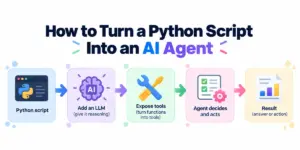
The second major category centers on agentic artificial intelligence and workflow automation. Although this area remains relatively concentrated within technical engineering roles, it represents the fastest-growing category by rate of change. Stanford’s 2026 AI Index reported that the share of artificial intelligence job postings mentioning agentic systems surged from 0.69 percent to 18.9 percent in a single year. Dice’s comprehensive analysis revealed that demand for agentic artificial intelligence grew by 587 percent year over year, with specific mentions of autonomous AI agents climbing 503 percent. In practical terms, employers are increasingly searching for individuals who understand how artificial intelligence systems can be configured to execute sequences of actions autonomously, often leveraging technologies such as retrieval-augmented generation, vector databases, and specialized agent orchestration frameworks.
The third foundational category involves core machine learning capabilities. Despite newer categories growing more rapidly from smaller baselines, machine learning remains the most consistently requested technical skill throughout the history of modern hiring. While these roles are heavily concentrated in engineering, data science, and academic research, the terminology itself is appearing far more broadly. The primary shift in the current market lies in the granular specificity of employer requests. While historical postings frequently listed machine learning as a broad, generic requirement, contemporary listings routinely ask for hands-on experience with specific phases of the machine learning lifecycle, including rigorous model evaluation, fine-tuning, and machine learning operations—the critical infrastructure required to move systems out of experimental phases and into full production environments. Concurrently, data engineering tops recruiter search data on platforms like SignalHire, outpacing both AI engineering and data science roles. This heavy demand reflects a practical corporate bottleneck: companies heavily investing in artificial intelligence capabilities frequently encounter operational roadblocks at the data storage and pipeline layers long before they reach the modeling phase.
The fourth category encompasses artificial intelligence governance, ethics, and responsible deployment. This domain occupies a complex position within the broader employment data. On one side, LinkedIn’s 2026 data highlights governance as a top priority for business-side hiring, while Microsoft’s 2026 Work Trend Index notes that nearly half of all corporate interactions with digital assistants are now dedicated to complex cognitive work such as deep analysis, strategic evaluation, and decision-making, which naturally elevates the stakes around accountability and governance frameworks. Conversely, direct analysis of job postings reveals a quieter reality: terms related to artificial intelligence governance and responsible AI appear in only about 1.5 percent of listings, indicating that formal corporate adoption has lagged behind the rapid deployment of the technology itself. The World Economic Forum estimates that roughly 22 percent of current jobs will undergo structural shifts by 2030, a transformation that will inevitably introduce compliance and ethical challenges that most organizations have yet to systematically build hiring pipelines to address. For individual candidates, governance expertise rarely serves as an entry-level hiring trigger, but it increasingly separates top-tier candidates vying for senior and principal-level responsibilities.
How Demand Differs Across Functions
One of the most consequential trends evident in recent labor data is the expansion of artificial intelligence skill requirements far beyond traditional technical departments. Lightcast figures indicate that 51 percent of job postings requiring artificial intelligence skills now reside entirely outside of information technology and computer science, extending deep into sectors such as healthcare, finance, marketing, and human resources.
Within product management specifically, artificial intelligence appeared as an explicit requirement in 37 percent of job postings analyzed by Qarera. For creative design roles, that figure reached 23.1 percent, while business analyst positions saw a 19.1 percent requirement rate. These figures do not represent traditional engineering positions, nor are the requested competencies centered on writing code. Instead, they reflect a widespread corporate expectation that professionals across various business units must be capable of working collaboratively alongside intelligent systems, interpreting their analytical outputs, and exercising sound judgment regarding when and where to deploy them.
LinkedIn’s 2026 labor report captured this directional shift clearly, emphasizing that employers are actively seeking professionals who can define genuine business value propositions for artificial intelligence, rather than simply individuals who know how to build the underlying systems.
What the Pay Data Suggests
While salary metrics always represent an imperfect signal of market dynamics, the overall direction in the current hiring environment remains remarkably consistent. Job postings that explicitly mention artificial intelligence skills command compensation packages roughly 28 percent higher than equivalent roles lacking those requirements. Within non-technical functions where artificial intelligence fluency is layered onto an existing professional profile, reported pay uplifts frequently range between 35 and 43 percent.
Positions operating at the crucial intersection of data infrastructure and artificial intelligence—most notably data engineering—exhibit national midpoint salaries hovering around $153,750 in the United States. Artificial intelligence and machine learning engineers similarly command robust compensation packages, though the broader market has experienced some normalization at junior levels as the talent pipeline has expanded.
This tangible pay premium reflects acute market scarcity, as well as the unique ability to pair technological capability with deep domain expertise to drive measurable business outcomes. Modern job listings increasingly echo this reality. Recruitment specialists consistently advise candidates to highlight concrete outcomes rather than merely listing tools on their resumes, noting that a successful application might detail how a specific automated workflow reduced a time-consuming administrative process from hours to minutes, rather than simply claiming basic familiarity with a software platform.
Common Misconceptions Worth Clearing Up
An analysis of current hiring trends also helps dispel several widely held assumptions regarding the modern workforce.
The first major misconception is that artificial intelligence competencies universally require advanced programming capabilities. In reality, many of the most heavily demanded skills—including general literacy, prompt engineering, automated workflow configuration, and governance—require zero coding knowledge. Workforce research indicates that foundational literacy and prompt engineering skills can be successfully developed through as little as 30 hours of focused, practical application.
The second misconception is that obtaining a standalone artificial intelligence credential is sufficient to secure employment. Most contemporary job postings consistently request a balanced combination of capabilities rather than relying on any single technological trick. The data indicates that artificial intelligence skills function best as multipliers that enhance pre-existing professional expertise, rather than replacing traditional qualifications as the primary requirement for a role.
The third misconception is that the labor market will experience a prolonged cooling period, granting professionals ample time to catch up at a gradual pace. The rapid expansion observed in tech recruitment—where requirements surged from 15 percent to 75 percent in roughly 18 months—suggests the exact opposite. The window of time during which artificial intelligence fluency serves as a distinct competitive differentiator rather than a baseline employment requirement may be significantly shorter than many realize.
Where to Focus
Ultimately, market data indicates that the most appropriate skill development path depends heavily on the specific professional role an individual currently holds or is actively targeting. Technical professionals building production-ready systems will find the highest return on investment in mastering machine learning operations, model evaluation, retrieval-augmented generation, and agentic orchestration frameworks. Meanwhile, business-side professionals will likely derive more immediate leverage from enhancing their digital literacy, mastering domain-specific prompt workflows, and acquiring enough governance knowledge to contribute meaningfully to organizational deployment conversations.
Across both technical and non-technical domains, a singular unifying pattern continues to emerge: the combination of artificial intelligence capability with genuine, deep expertise in a specific functional area is precisely what employers are hiring for. The skills appearing in modern job postings do not serve as a replacement for existing professional experience; rather, they form an essential, high-value layer built directly on top of it.