









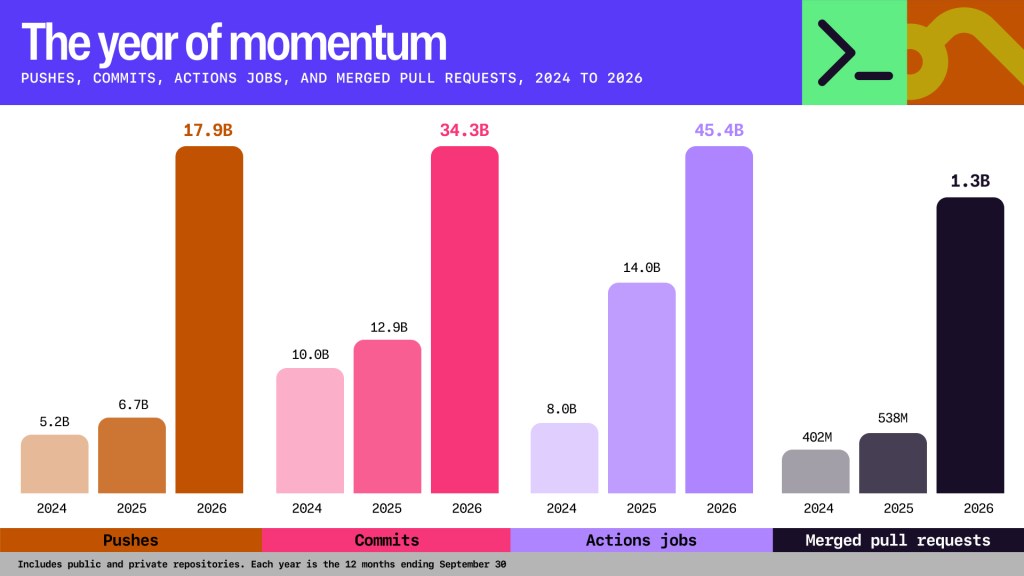
The landscape of software development underwent a seismic shift over the past twelve months, defined by a level of activity and technological adoption that has effectively rewritten the industry’s growth projections. According to the 2026 Octoverse report, developers pushed code to GitHub an unprecedented 17.9 billion times—a volume of activity that surpasses the combined total of both 2024 and 2025. This surge is not merely a quantitative milestone; it represents a fundamental change in how the global community of builders creates, collaborates, and leverages artificial intelligence to solve complex, real-world problems.
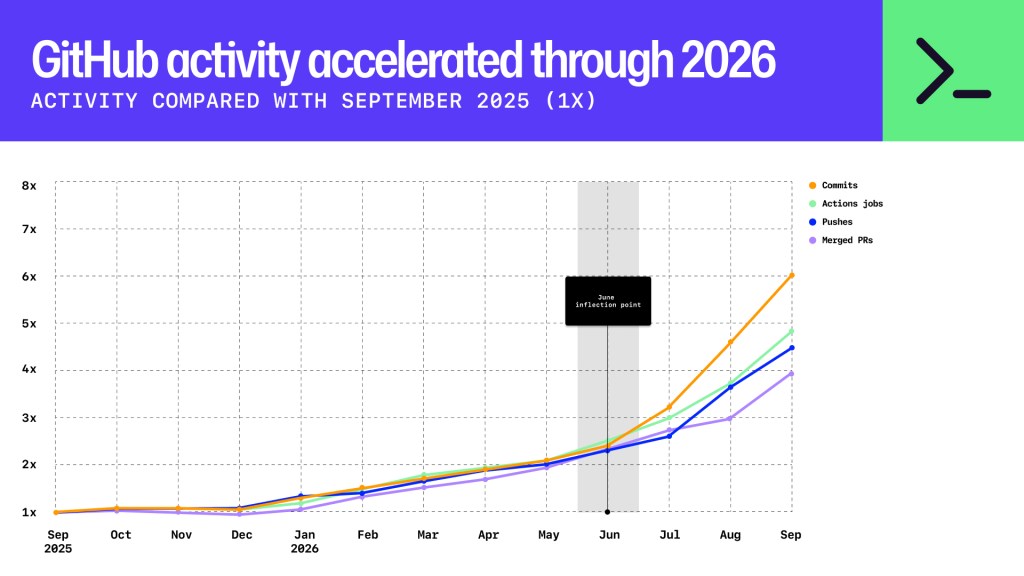
This era of momentum is characterized by a rapid acceleration that began in mid-2026. As the year progressed, developer activity bent sharply upward, coinciding with a critical inflection point in the industry: the maturation of AI agents from experimental, single-session tools into persistent, autonomous assistants capable of orchestrating complex workflows. This shift has allowed developers to work alongside intelligent systems, significantly increasing the pace and scale of innovation across every sector, from traditional software hubs to emerging fields like agriculture and health care.
The Year Developers Set a New Pace
The sheer scale of the 2026 growth is staggering. Beyond the 17.9 billion code pushes, total commits across all public and private repositories climbed to 34.3 billion, more than triple the figures recorded just two years ago. The velocity of collaboration has similarly spiked, with merged pull requests reaching 1.3 billion for the year—an average of 3.5 million per day.

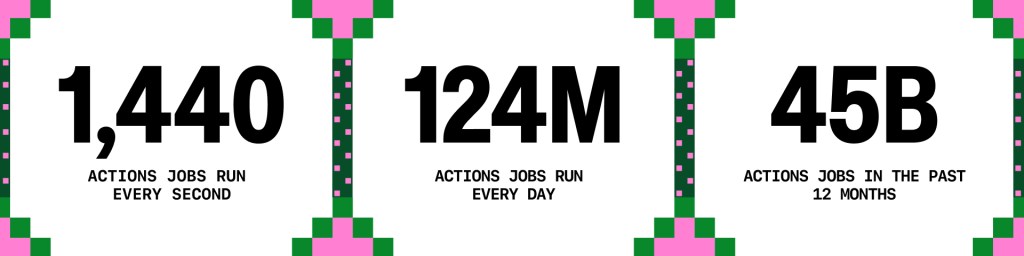
Central to this acceleration is the integration of AI agents. Data from newly created repositories reveals a stark performance gap: projects configured with agentic workflows logged, on average, eight times as many commits as those without. This suggests that teams and individuals who embrace agent-based tools from the inception of a project are operating at a fundamentally different tempo. Furthermore, the reliance on automation has become standard practice. GitHub Actions processed a job every 1,440 seconds this year, totaling 45 billion jobs—a three-fold increase over the previous year. Additionally, the use of Dependabot to manage dependencies and mitigate vulnerabilities has doubled, reflecting a more proactive approach to maintaining code health in a high-velocity environment.
The inflection point observed around June 2026 serves as a clear indicator of a global industry-wide awakening. During this period, the convergence of advanced underlying models, sophisticated tool-harnessing frameworks, and persistent AI agents allowed developers to track progress across multiple days and execute tasks in the cloud. This trend transcends the divide between novice and veteran developers. While roughly 55% of commits since June originated from new repositories, experienced developers—those who have been active on the platform for an average of 36 months—have also significantly increased their output. On average, developers are now engaging with 10% more repositories than they were just one year ago, signaling a broader, more interconnected approach to building.
This energy is equally vibrant in the open-source community, where public contributions reached 2.5 billion in 2026. High-impact contributors, such as those maintaining complex catalogs of public API information or critical community libraries like mathlib, demonstrate the power of combining human oversight with agentic workflows. These individual efforts underpin the vast, collective progress of the global developer ecosystem.
Developers Are Building from More Places
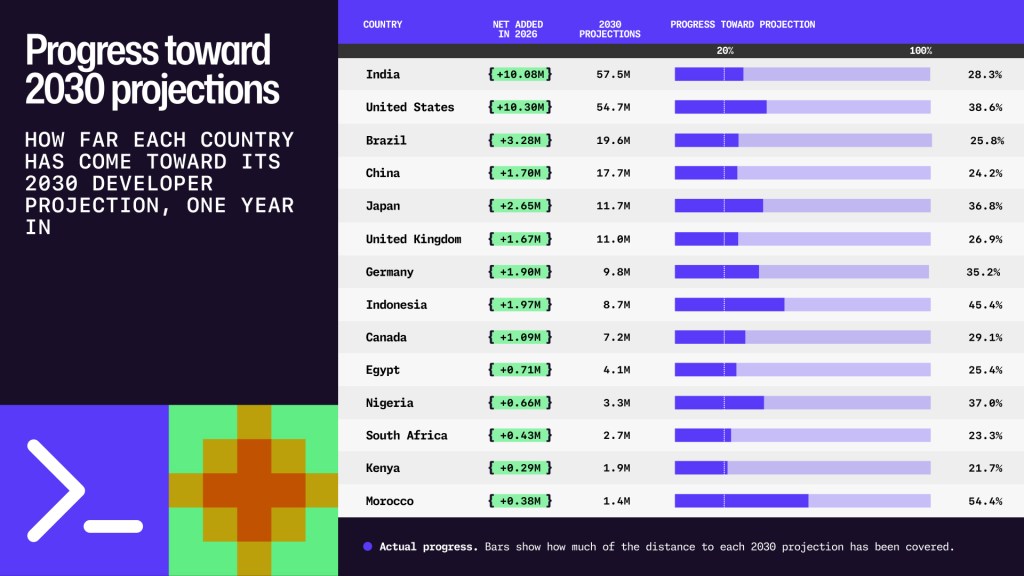
The reach of the developer community is expanding globally, with GitHub now serving over 225 million individuals. While the United States and India remain the largest hubs, with 38.3 million and 32 million developers respectively, the growth is distributed across a widening range of countries. Brazil, for instance, added 3.28 million developers this year. More significantly, the aggressive growth observed in 2026 has rendered previous five-year projections obsolete. Every country monitored by the report has already closed at least 20% of the distance toward its 2030 developer population goal, with the United States having covered nearly 39% of its projected growth in just twelve months.
This global expansion is driven by distinct regional factors. In the Americas, the growth is fueled largely by the robust fintech and digital payments sectors. EMEA is seeing a surge in AI adoption across manufacturing and startups, particularly in countries like Morocco, Kenya, and Nigeria, where coding bootcamps and localized digital economies are flourishing. In the APAC region, heavy government investment in AI infrastructure and talent development is propelling growth in countries like Indonesia, Japan, and South Korea.
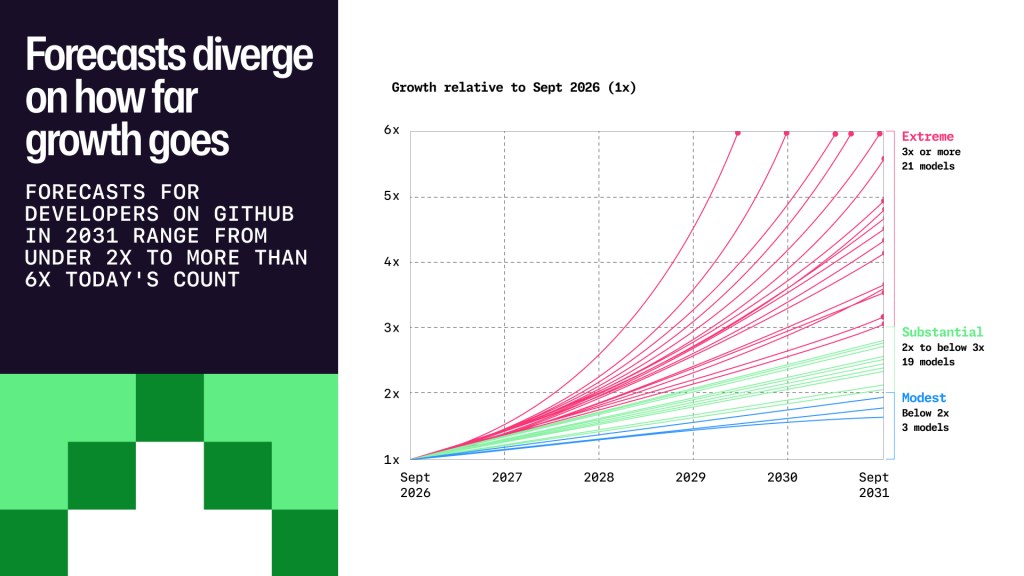
When looking toward the next five years, the sheer volume of data from 2026 has made forecasting more complex. Using over 40 different time-series and regression models, the outlook suggests a future of either "substantial" or "extreme" growth. Nearly half of these models predict that the total number of developers on GitHub will triple by 2031, reflecting a world where building software is no longer confined to traditional tech hubs but is becoming a universal skill.
The Future Is Being Built Everywhere
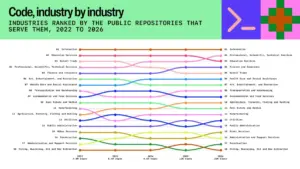
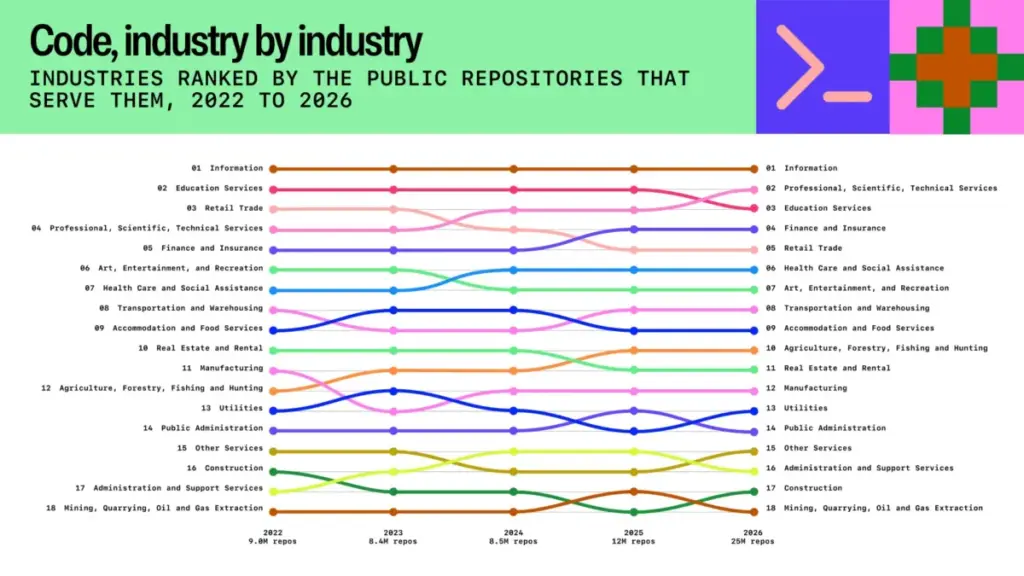
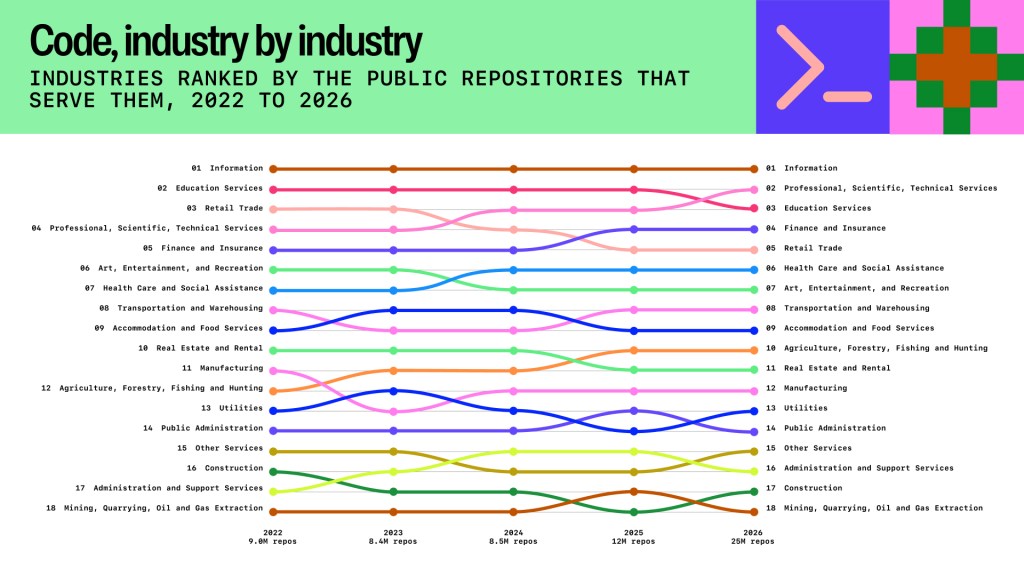
The definition of "everywhere" has expanded to include not just geography, but industrial utility. By using the North American Industry Classification System (NAICS) to categorize public repositories, it is evident that sectors well beyond software are becoming primary centers of code production. Professional, scientific, and technical services have risen to second place among all industries, trailing only information. Meanwhile, agriculture, finance, and health care have moved up the rankings, demonstrating that the people closest to a problem are increasingly building the technical solutions themselves.
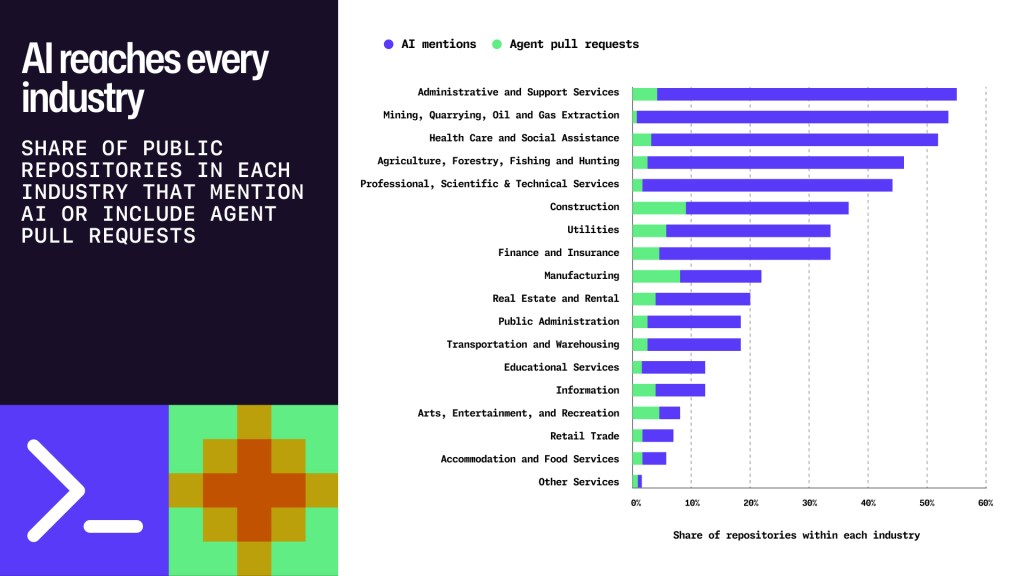
This trend is empowered by AI. In industries like construction and manufacturing, where agent-led pull requests are more frequent than in other sectors, developers are using these tools to solve physical-world challenges. From creating 3D-printable organizers for industrial tools to building pipelines that classify video for agricultural research or developing toolkits for energy reuse in industrial plants, the application of code has become deeply pragmatic.
Even in highly specialized scientific fields, the repository has become a vital part of the research infrastructure. The code behind landmark achievements—such as the AlphaFold protein structure predictions, the reconstruction of the first black hole image, or the modeling of viral stability—highlights how open-source collaboration has become the standard for the modern scientific paper trail.
Developers Are Reshaping Their Workflow
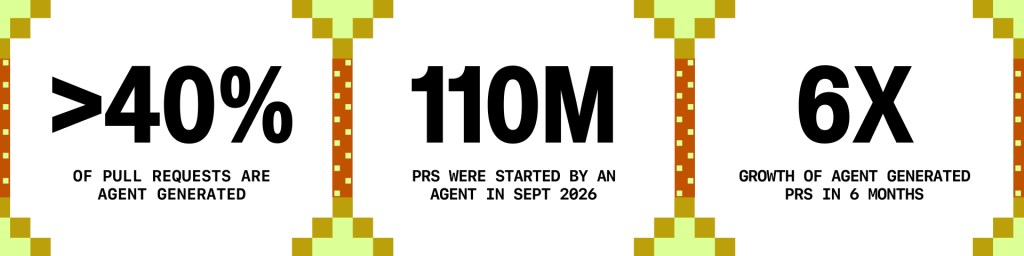
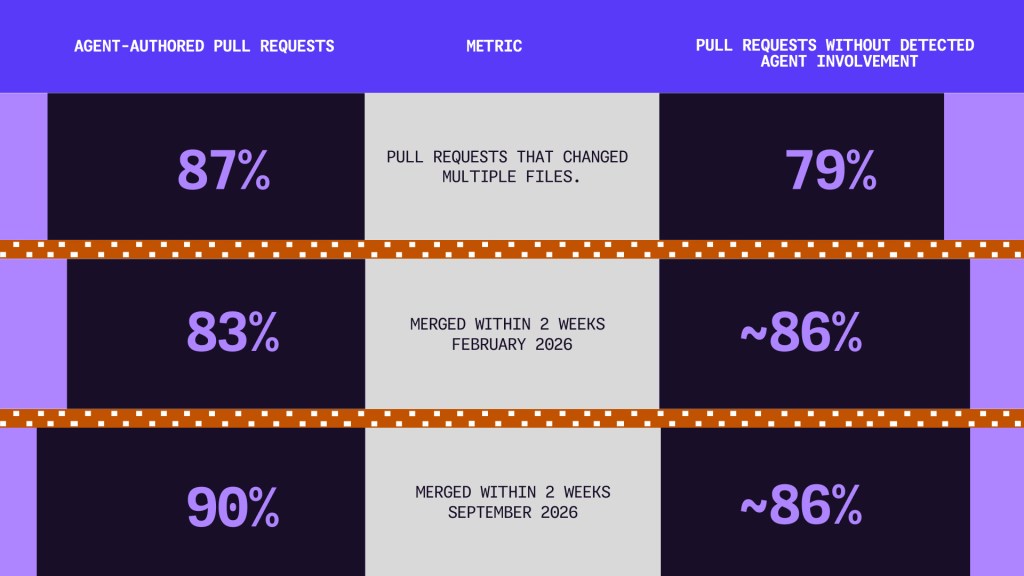
The daily routine of a developer is undergoing a transformation, with agentic workflows becoming the new baseline. By September 2026, more than 40% of all pull requests on GitHub were initiated by an agent’s first draft, a six-fold increase from the 17% recorded in March. These agent-started pull requests are not only more likely to involve multiple files but are also being merged at a higher frequency than human-only contributions.
The adoption of "hands-off" AI tools is also accelerating. Usage of the GitHub Copilot cloud agent—where a developer assigns a high-level task for the AI to complete independently—has grown by 230% year over year. This indicates a growing trust in AI to handle not just individual lines of code, but entire project tasks. Simultaneously, developers are increasingly focused on the quality of their output, as evidenced by the rapid adoption of stacked pull requests and AI-assisted code reviews. Security, too, remains a top priority, with push protection scans running 5.8 billion times this year to catch exposed secrets, effectively safeguarding the expanded output of this highly productive year.
Model Choice Moves at Developer Speed
As the range of available AI models grows, so does the sophistication of the developers choosing them. In September 2026, 61% of GitHub Copilot users who manually selected their models utilized more than one, often switching between different tools based on the specific requirements of a task. The variety of models available is vast, with paying users utilizing 47 distinct models throughout the month.
To manage this complexity, developers are gravitating toward orchestration. Whether through manual selection or automated systems like GitHub Copilot Fusion—which intelligently routes tasks to the most appropriate model for a specific job—the modern developer is acting as a curator of intelligence. This multi-model approach allows for a balance of speed, cost, and reasoning capability, ensuring that a simple script gets a fast, lightweight model, while a complex architectural change is handled by a deep-reasoning model.
Language Choice Has New Influence
TypeScript remains the most used language on GitHub, followed by Python and JavaScript. However, the data suggests that the influence of AI is beginning to shape language trends. The languages experiencing the fastest community growth—TypeScript, Python, and Rust—are also those with the highest shares of AI-involved pull requests.
It appears that developers are increasingly choosing languages where AI output is easier to verify or where agent support is most robust. When a developer does not specify a language and allows an agent to take the lead, there is a clear preference for a specific set of languages, with TypeScript serving as the primary choice. This suggests that the evolution of programming languages is no longer driven solely by human preference or legacy systems, but also by the interaction between the developer and the intelligent agent.
What Is Capturing Developer Attention
The list of the fastest-growing and most-engaged projects on GitHub reveals a clear division of labor within the ecosystem. On the community side, foundation-governed projects like vLLM, llama.cpp, and PyTorch provide the foundational inference engines and frameworks that power the industry. On the vendor side, product-led repositories such as claude-code and copilot-cli offer the tools that developers use to interact with those systems daily.
This ecosystem relies on both layers: the stable, open-source infrastructure and the agile, vendor-supported tools. Both are receiving significant attention from contributors, ensuring that as the industry moves forward, it does so on a foundation that is both robust and capable of rapid innovation.
What Doesn’t Change
Amidst the massive changes in output, tooling, and global participation, one thing remains constant: the human element. The rocket emoji, which topped the list of emojis used in repositories across every industry, serves as a fitting, if unofficial, symbol for the year. It captures the speed and excitement of a community pushing boundaries.
Yet, the core responsibility of the developer remains unchanged. Whether it is building software to assess earthquake risks or creating a simple tool to change how an app answers a query, the vision, the intent, and the final judgment on whether a piece of work is "good" still rest with the individual. The tools have evolved to make the journey from a weekend thought to a functional reality much shorter, but the act of creation remains a fundamentally human endeavor. As developers continue to build, they do so with more power, more support, and more reach than ever before, yet they remain the sole architects of their own ideas.