










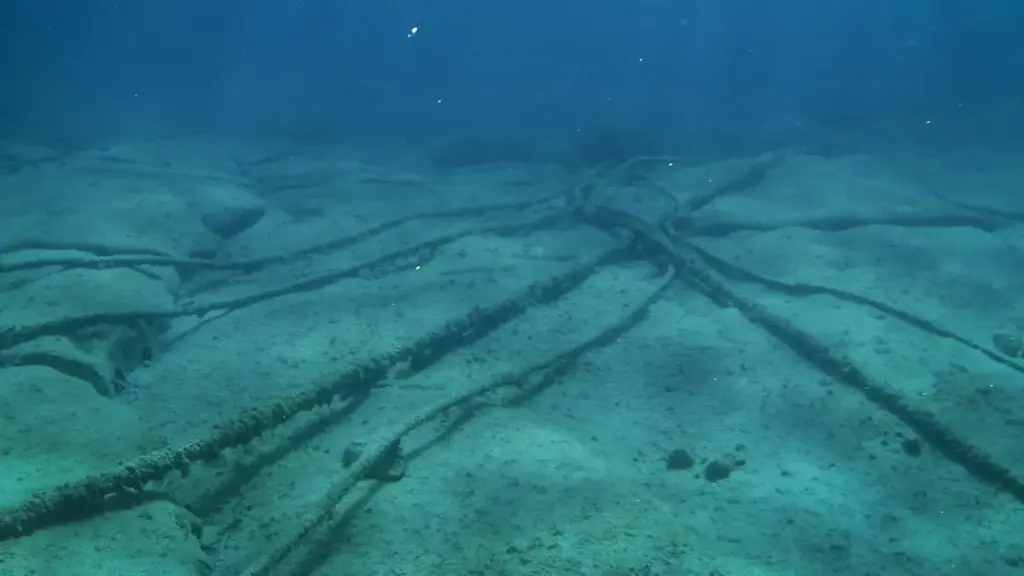
The global telecommunications industry is facing an unprecedented bottleneck in undersea infrastructure, driven by an insatiable demand for data capacity that is outstripping available supply. Australian telecommunications and cable firm Vocus has become the latest major industry voice to sound the alarm, warning that the sector is careening toward a severe subsea capacity crunch.
Speaking at an online industry event, Simon Parker, Vocus’ head of strategic sales, revealed that the company is witnessing what he described as a "tidal wave of capacity demand." According to Parker, the telecommunications market is rapidly running out of physical stock, creating a high-stakes environment for operators across the globe who are struggling to keep pace with the exponential growth in data traffic.
"That applies not just to lit capacity, but more critically for us, to the underlying fiber that actually carries that capacity," Parker told attendees during the webinar. Illustrating the staggering scale of the surge, he added, "Our customers aren’t just asking for double or quadruple of what they had. Some of them are asking for 100x uplifts in capacity."
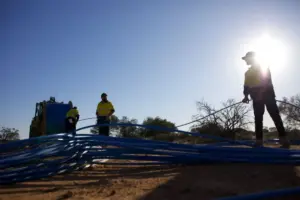
Vocus occupies a vital strategic position in the Asia-Pacific telecommunications landscape. The company operates an extensive network of domestic subsea and terrestrial capacity within Australia, alongside a major international route connecting to Singapore. Furthermore, Vocus holds a stake in a high-capacity Google subsea cable stretching across the Pacific Ocean, giving the company a front-row seat to the massive shifts occurring in international data transit.
To address the skyrocketing requirements of its customer base, Parker explained that the industry is pursuing a dual-track strategy. The first approach involves maximizing the efficiency and data-carrying capacity of existing cables already resting on the ocean floor. This requires deep, close collaboration with various partners throughout the supply chain to extract every possible gigabit from current assets.
The second and more challenging avenue is the construction of entirely fresh subsea routes. However, Parker noted that most of the world’s critical construction resources have already been locked down and absorbed by major technology conglomerates, commonly referred to as hyperscalers.
Extremely Short Supply
The scarcity of resources required to plan, build, and deploy undersea communication lines has reached critical levels. Undersea cable projects are notoriously complex, requiring specialized assets and heavy engineering capabilities that cannot be easily scaled up to meet sudden demand spikes.
"We need cable manufacturing slots, marine installation vessels, and permitting. We need specialist people who run these projects. These are all items in extremely short supply because the hyperscalers are consuming those resources themselves," Parker emphasized.
Compounding the problem is the timeline for these critical assets. Parker pointed out that necessary marine resources and manufacturing slots are heavily committed well beyond 2030. For regional telecommunications providers and independent operators, this leaves very few viable paths forward, making close cooperation with the dominant US technology giants almost mandatory.
"The only alternative is to work closely with US giants who are dominating the buildouts," Parker said.
This reality, however, is a bitter pill for many within the telecommunications industry. Parker candidly acknowledged that his perspective is not universally shared. Many industry stakeholders actively reject this approach out of fear that deep reliance on foreign technology heavyweights risks surrendering strategic control over domestic and regional digital infrastructure.
Vocus itself shares some of these fundamental sovereignty concerns, Parker noted. Yet, he argued that these anxieties must be weighed against economic and practical realities, chief among them being that alternative sovereign investment simply does not exist at the scale required to bridge the gap.
According to Parker, traditional or government-backed sovereign investments cannot match the speed or financial muscle needed for modern infrastructure rollouts. Hyperscalers and neocloud providers, he asserted, stand alone as the only entities possessing the vast financial resources necessary to build purpose-built infrastructure tailored to the burgeoning artificial intelligence ecosystem. They alone operate with the scale and speed that the current technological moment demands.
Addressing broader market anxieties regarding the sustainability of the current artificial intelligence boom, Parker pushed back against fears of an impending market collapse. He maintained that the massive capital expenditures funneling into AI infrastructure bear little resemblance to the speculative excesses of the dotcom era a generation ago.
Unlike the internet companies of the late 1990s, the hyperscalers driving today’s AI investments are backed by exceptionally robust balance sheets and are responding to genuine, measurable enterprise and consumer demand. To illustrate the immense financial strength underpinning these digital giants, Parker highlighted their projected capital expenditure. He noted that while these major corporations are forecasting a staggering $760 billion in capital expenditure investments this year, their financial generation more than matches the ambition. In the second quarter alone, these companies generated a combined $660 billion in operating cash flow, marking a remarkable 33 percent increase compared to the same period in the previous year.