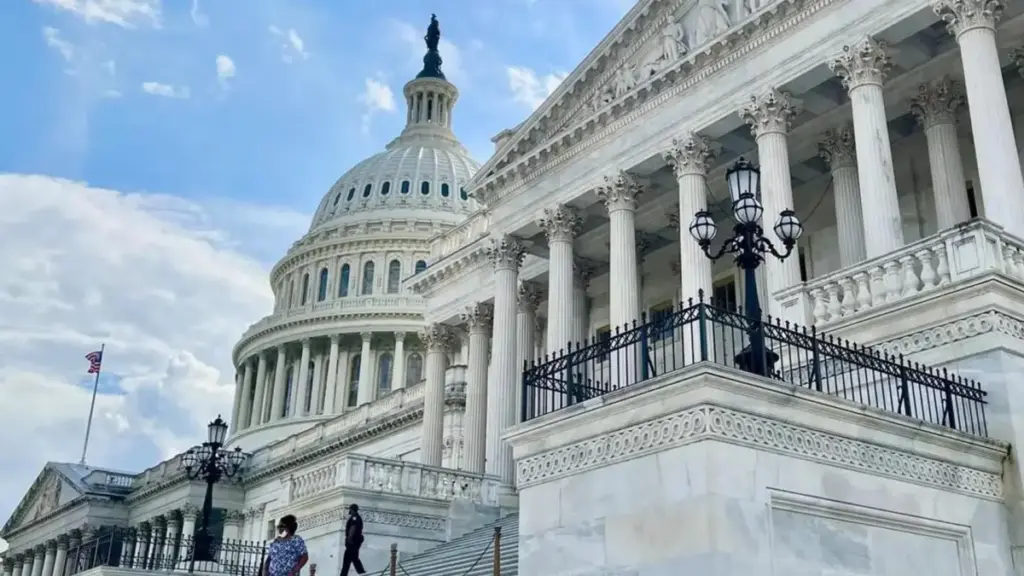
The U.S. Supreme Court is currently at the center of a high-stakes legal tug-of-war that could redefine the regulatory landscape for prediction markets. As the nation’s highest court weighs whether to grant certiorari in a pivotal case regarding the classification of sports-based prediction contracts, a massive wave of amicus briefs has arrived at its doorstep. These filings, coupled with aggressive new rulemaking activity from the Commodity Futures Trading Commission (CFTC), underscore the deepening divide between federal regulators, state authorities, and the rapidly expanding prediction market industry.
As of mid-October 2026, the Supreme Court has not yet indicated whether it will hear the case. However, the legal environment surrounding the petition is increasingly crowded. In a remarkable show of consensus, an array of powerful stakeholders—ranging from former high-ranking government officials and professional sports leagues to state attorneys general and tribal nations—have urged the Court to intervene. This push for judicial clarity comes as the CFTC simultaneously attempts to assert its authority through formal rule proposals, creating a complex interplay of administrative action and potential Supreme Court oversight.
The Core Conflict: Swaps or Gambling?
At the heart of the legal dispute is a fundamental question: are prediction market contracts, specifically those tied to sports outcomes, "swaps" subject to federal oversight, or are they essentially gambling products that fall under the purview of state and tribal regulators?

The urgency of this question has been amplified by a distinct circuit court split. While two appellate courts have determined that prediction markets involving sports should be categorized as gambling—and therefore regulated at the state level—a third appellate court recently ruled that these products are indeed financial derivatives subject to the jurisdiction of the CFTC. This jurisdictional fragmentation has created significant uncertainty for market operators like Kalshi, which find themselves caught in the middle of conflicting federal and state requirements.
The sheer volume of parties filing amicus briefs in support of the petitioners reflects the gravity of the situation. Among the notable signatories are former Senator Chris Dodd and former CFTC and SEC Chair Gary Gensler, both of whom were instrumental in the development of the 2010 Dodd-Frank Wall Street Reform and Consumer Protection Act. Their involvement is particularly significant, as the current debate hinges on the interpretation of that very legislation.
The "Dodd-Frank" Debate: A Question of Intent
Former Senator Chris Dodd, whose name is synonymous with the landmark financial reform law, has taken a clear stance: the Dodd-Frank Act was never intended to grant the CFTC the power to override state-level gambling regulations. In his amicus brief, Dodd argues that the legislative intent behind the Act was to regulate financial derivatives, not to turn the CFTC into a federal arbiter of sports betting.
Dodd’s filing directly challenges the logic of the Third Circuit Court of Appeals, which had previously ruled that the CFTC maintains jurisdiction over these markets. The brief draws a sharp line between legitimate financial derivatives—designed for hedging and price discovery—and the speculative nature of sports parlays. "Parlays that chain together multiple wagers—often on point spreads or player performances in different games, in different cities, in different sports—do not facilitate hedging or price discovery," the brief asserts. "Nor are they ‘associated with’ the type of ‘potential financial, economic, or commercial consequences’ required to qualify as swaps under the CEA."
This sentiment is echoed by Gary Gensler, who has consistently argued that the CFTC’s mandate does not include the preemption of state gambling laws. Both men suggest that the CFTC’s reliance on its "exclusive jurisdiction" over "designated contract markets" (DCMs) is a misapplication of the law. They argue that identifying the CFTC as the primary federal regulator for financial instruments does not grant it a blanket immunity that allows it to supersede state or tribal authority in the realm of gaming.
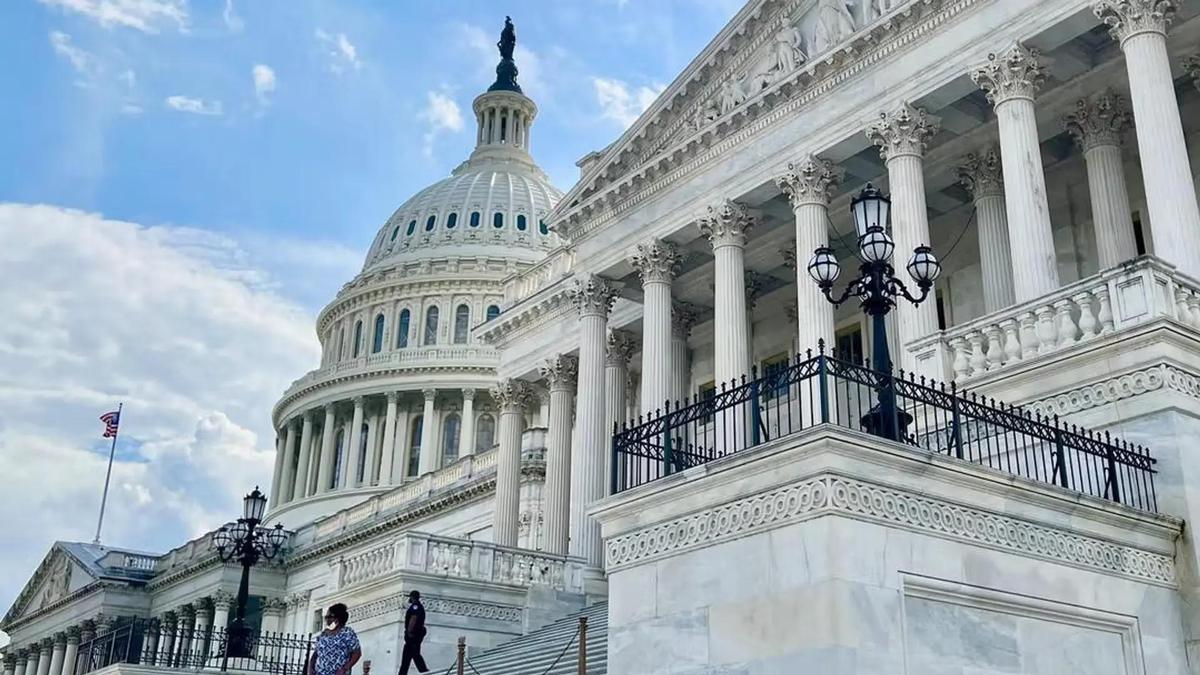
Institutional Stakes: The NFL and the States
The pushback against the CFTC is not limited to legal theorists and former regulators; it includes major institutional players with a direct stake in the integrity of sporting events. The National Football League (NFL) filed an amicus brief expressing deep concern over the "laissez-faire" approach adopted by the CFTC. The league argues that the lack of a clear, unified regulatory framework creates a dangerous divergence between how states handle the gambling industry and how the federal government oversees prediction markets.
The involvement of 39 states, the District of Columbia, and 145 tribal nations highlights the political stakes of the debate. For these entities, the ability to regulate gambling is both a matter of consumer protection and a vital source of revenue and sovereignty. They argue that allowing a federal agency to classify sports betting as a "swap" effectively strips local jurisdictions of their ability to set rules that reflect the values and legal standards of their own citizens.
The CFTC’s Regulatory Pivot
While the Supreme Court deliberates on whether to take up the case, the CFTC has signaled its refusal to back down. On Friday, the agency moved to solidify its position by issuing an interim final rule and a separate rule proposal. These actions are designed to formalize the agency’s interpretation of how various event contracts fit within the definition of a "swap."
In its proposal, the CFTC draws a distinction between "casino-style" gambling—which it acknowledges falls outside its jurisdiction—and other forms of event contracts. However, the agency is actively seeking to codify its authority over contracts related to sports, politics, culture, and weather. By formally including these categories as "swaps," the CFTC is attempting to cement its regulatory footprint before the Supreme Court can potentially intervene. This maneuver is seen by some as an effort to establish a "new normal" for prediction markets, effectively insulating the agency’s jurisdiction against future judicial challenges.
Looking Ahead: The Path to the High Court
The legal drama is far from over. Following the flurry of filings last week, the platform Kalshi requested and was granted an extension to file its response to the Supreme Court. The deadline for this filing is now set for November 9, 2026. This extension gives the parties more time to refine their arguments in light of the CFTC’s new regulatory proposals, which will undoubtedly feature heavily in the upcoming deliberations.
The Supreme Court’s decision on whether to grant certiorari will be a defining moment for the future of prediction markets in the United States. If the Court chooses to hear the case, it will have to resolve the fundamental tension between federal financial regulation and state-level control of gaming. If it declines to intervene, the country will likely face a patchwork of conflicting court rulings and regulatory interpretations, leaving market participants in a state of persistent legal ambiguity.
As the industry waits for word from the high court, the debate continues to rage across various legal, political, and public forums. The outcome will not only affect the future of sports-based prediction markets but will also set a significant precedent for how federal agencies can interpret their authority under the Dodd-Frank Act in an era of rapid technological and financial innovation. For now, the legal community, regulators, and market participants remain in a tense period of anticipation, awaiting a signal that could either validate the CFTC’s expansionist regulatory agenda or force a return to state-based oversight.