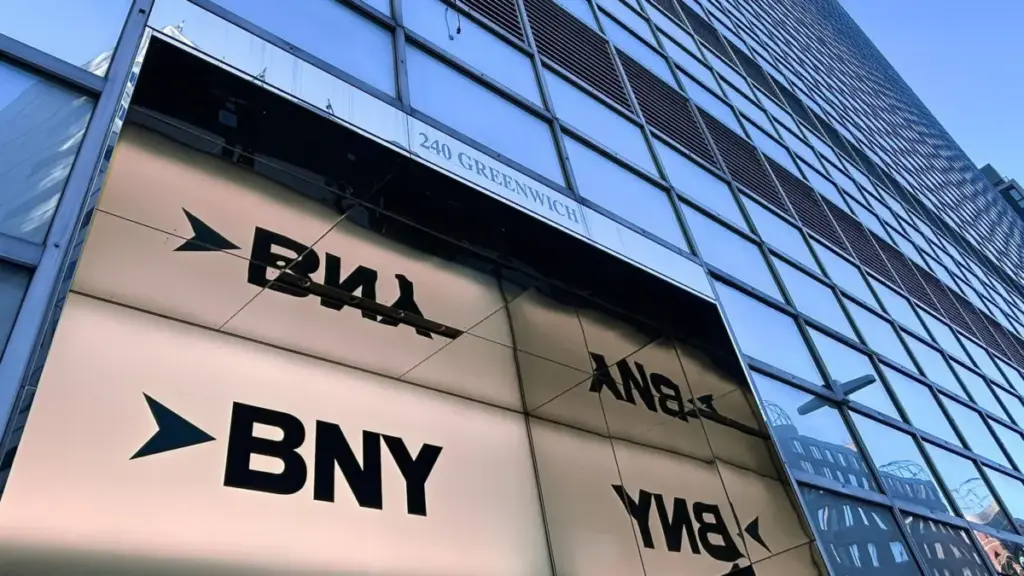
In a significant milestone for the integration of distributed ledger technology into traditional finance, BNY—the world’s largest custody bank—and global trading giant Citadel Securities announced on Tuesday the successful completion of a transaction involving tokenized U.S. Treasuries. The pilot, which signals a major shift in how institutional market participants manage liquidity, demonstrates the potential for blockchain-based assets to streamline the movement of collateral between settlement and financing workflows. By bridging the gap between legacy systems and blockchain infrastructure, the two firms have showcased a practical path toward reducing friction in the multi-trillion-dollar repo market.
At the heart of the transaction is the critical issue of collateral management. In modern financial markets, U.S. government bonds serve as the primary "safe" asset, functioning as the bedrock for short-term lending, hedging, and securing trading activities. Under the current market architecture, however, the process of moving these bonds between various accounts and settlement systems is often encumbered by manual processes, time-zone constraints, and siloed databases. This creates a state of "trapped" capital, where high-quality assets that could be leveraged for liquidity are instead sidelined during the time-consuming transfer process. By tokenizing these securities, BNY and Citadel Securities aim to demonstrate that blockchain technology can effectively "un-trap" this capital, allowing firms to move assets with unprecedented speed and efficiency.
The Strategic Shift Toward Tokenized Collateral
The collaboration between BNY and Citadel Securities is not an isolated experiment but part of a broader, accelerating trend on Wall Street. Over the past several years, major financial institutions—including BlackRock, Franklin Templeton, and JPMorgan—have increasingly moved to bring traditional assets onto blockchain rails. These firms are placing a significant bet that tokenization can do more than just digitize paper records; they believe it can fundamentally shorten settlement times, automate complex lifecycle processes, and ensure that assets are more fluid in an increasingly volatile global market.

The BNY-Citadel Securities transaction specifically focused on the "triparty repo" workflow. A triparty repo is a form of short-term financing where a third-party agent—in this case, BNY—manages the collateral, ensuring that the borrower’s assets are properly secured for the lender. By utilizing a tokenized representation of U.S. Treasuries, the two firms were able to demonstrate a seamless transition from the settlement phase to the financing phase. This capability is vital for trading firms, which require constant access to liquid collateral to satisfy margin requirements and maintain market-making operations. If an asset can be settled on a blockchain and immediately repurposed for financing, the firm effectively optimizes its balance sheet, freeing up cash that can then be redeployed into other strategic trades.
Dan Doherty, digital assets operations lead at Citadel Securities, emphasized the significance of this efficiency in his statement following the announcement. "Efficient movement of high-quality collateral is fundamental to well-functioning markets," Doherty noted. By reducing the operational delays that have historically characterized the trade lifecycle, institutional players like Citadel Securities hope to create a more resilient and responsive market environment. The goal is to move toward a state where collateral is not merely an inert holding but a dynamic, always-on tool for liquidity management.
Expanding the Digital Infrastructure
The success of this pilot is only the beginning of a larger roadmap for BNY. The bank has signaled that it intends to aggressively expand its digital asset offerings, with plans to introduce further capabilities for digital cash and tokenized deposits. These components are essential for creating an end-to-end blockchain-based ecosystem. While tokenized Treasuries provide the "collateral" side of the transaction, the ability to settle those transactions using digital cash is the final piece of the puzzle, potentially enabling near-instantaneous, atomic settlement—where the exchange of assets and cash happens simultaneously rather than over the course of days.
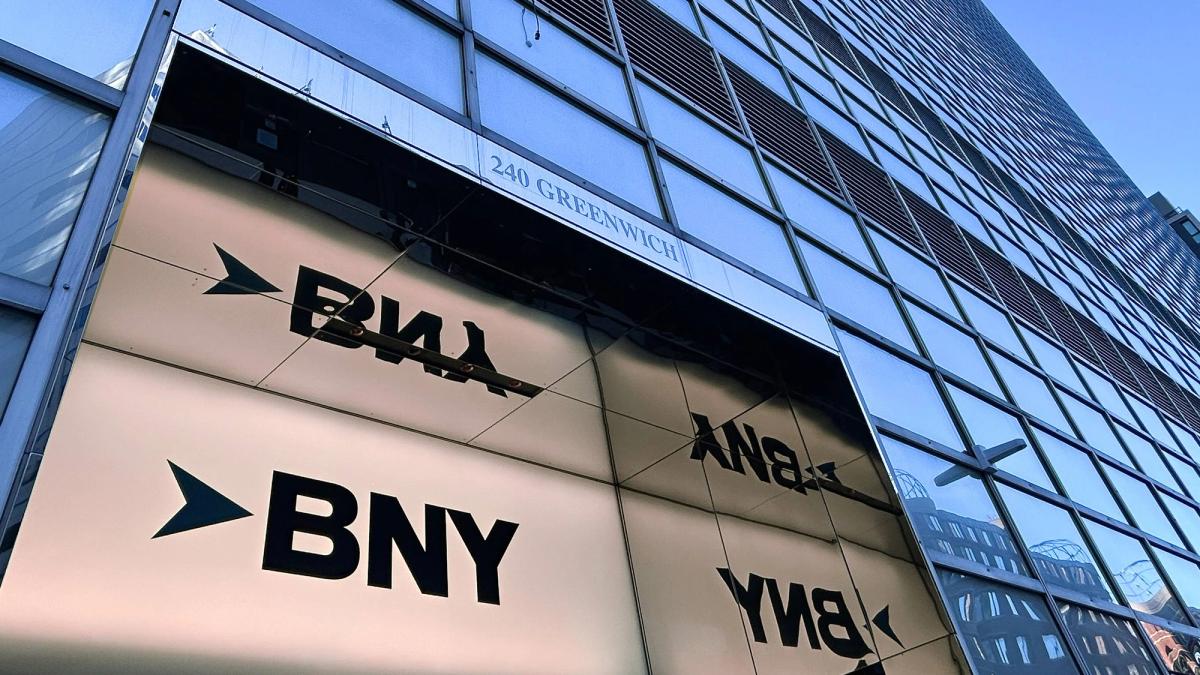
Beyond tokenization, BNY is also taking steps to modernize its existing operational hours to align with the demands of a globalized, 24/7 financial landscape. The bank announced that it expects to extend the operating hours of its traditional settlement systems for Federal Reserve-eligible securities and U.S. triparty transactions. This expansion is strategically aimed at capturing activity from European and Asian trading hours, which have historically been underserved by the traditional U.S.-centric settlement windows. By aligning these systems with global markets, BNY aims to ensure that its clients can manage their collateral and financing needs regardless of where they are located or when they are trading.
Carolyn Weinberg, chief innovation and market transformation officer at BNY, framed the project as a move toward a more integrated global infrastructure. "By using a tokenized representation of a U.S. Treasury across both settlement and financing, we are enabling a more connected, efficient and always-on financial system," Weinberg stated. Her remarks highlight the industry’s shift in philosophy: the future of finance is increasingly viewed as an "always-on" environment where the boundaries between domestic and international markets are dissolved by digital rails.
Broader Implications for Wall Street
The implications of this transaction extend well beyond the immediate operational benefits for the two participants. For the broader banking and trading community, the BNY-Citadel Securities partnership provides a blueprint for how legacy custodians can evolve in the digital age. By integrating blockchain-based workflows into the core of their custody operations, firms like BNY are effectively validating the technology for institutional use. This transition from "proof-of-concept" to "production-grade" transaction is a necessary step for the widespread adoption of digital securities.
As firms continue to navigate a complex regulatory and economic landscape, the drive toward automation and efficiency becomes even more pronounced. Traditional settlement cycles, which have long been the industry standard, are increasingly viewed as a source of counterparty risk and capital inefficiency. By adopting tokenization, institutions are not just experimenting with new technology—they are responding to the fundamental need for speed and transparency.
The successful integration of tokenized U.S. Treasuries into the triparty repo process serves as a clear indicator that the financial industry is moving toward a hybrid model. In this model, the security and reliability of traditional custodial services are bolstered by the speed and transparency of decentralized ledgers. As BNY continues to scale its digital asset capabilities and expand its settlement hours, the industry will likely see a domino effect, with other market participants forced to adopt similar technologies to remain competitive. The era of "always-on" finance, once a theoretical goal for fintech innovators, is rapidly becoming a tangible reality for the most entrenched players on Wall Street. Whether this leads to a total overhaul of existing market structures or a gradual transition remains to be seen, but the trajectory of the BNY-Citadel Securities pilot suggests that the foundation for such a shift is already being laid.