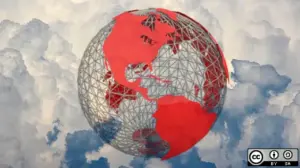







The community is hard at work on something new. Regular visitors to Opensource.com may have noticed a distinct quiet settling over the platform lately. That temporary lull is due to an exciting new project currently in the works behind the scenes. While specific details regarding the exact nature of this upcoming evolution remain under wraps for the moment, there is already plenty to discuss regarding the foundation of the project, its philosophy, and its future. What better way to start exploring this next chapter than by looking at the very fabric of the global network that connects us all: the entire internet itself?
The Internet and Top-Level Domains
To understand where the Opensource.com community is heading, it helps to revisit how the digital landscape was built. As most web users know, the internet is fundamentally a network. By definition, a network is a group of interconnected connections—in fact, the very word "internet" is a portmanteau derived from "interconnected" and "network."
In its earliest days, the internet was a much smaller and more specialized space. Originally, it consisted primarily of just two distinct networks: the military network and the academic network. These early environments were tightly controlled and served specific institutional purposes. However, once the internet began to gain widespread popularity and commercial viability outside of those initial, specialized groups, it quickly became apparent that different designations were desperately needed.

As the digital ecosystem expanded, society needed a way to instantly differentiate a commercial entity from a charitable organization, a university from a governmental department, or an individual hobbyist from a major enterprise. To solve this organizational challenge, top-level domains, commonly referred to as TLDs, were introduced.

Today, there are countless top-level domains available for registration, ranging from broad geographic extensions to highly specific industry niches. However, for a long time, there were only a handful of foundational TLDs guiding traffic across the web. These original top-level domains remain remarkably popular and culturally embedded in how we navigate cyberspace. Most internet users instinctively know that when they visit an address ending in .com, they are interacting with a commercial enterprise. Conversely, when they navigate to a .org address, they expect to find a non-profit organization dedicated to a public mission, cause, or community service. These suffixes became shorthand for the institutional intent behind a website.
Open Source Is a Network
While domain suffixes like .com and .org help categorize digital organizations, open source defies such rigid, singular classifications. Open source can be many things simultaneously. It can be commercial, driving enterprise software solutions and billion-dollar corporate infrastructures. It can be non-profit, fueling public-interest software and digital rights advocacy. It can be academic, serving as the backbone for university research and scientific discovery. It can also be cultural, shaping how artists, writers, and creators share their work with the world.
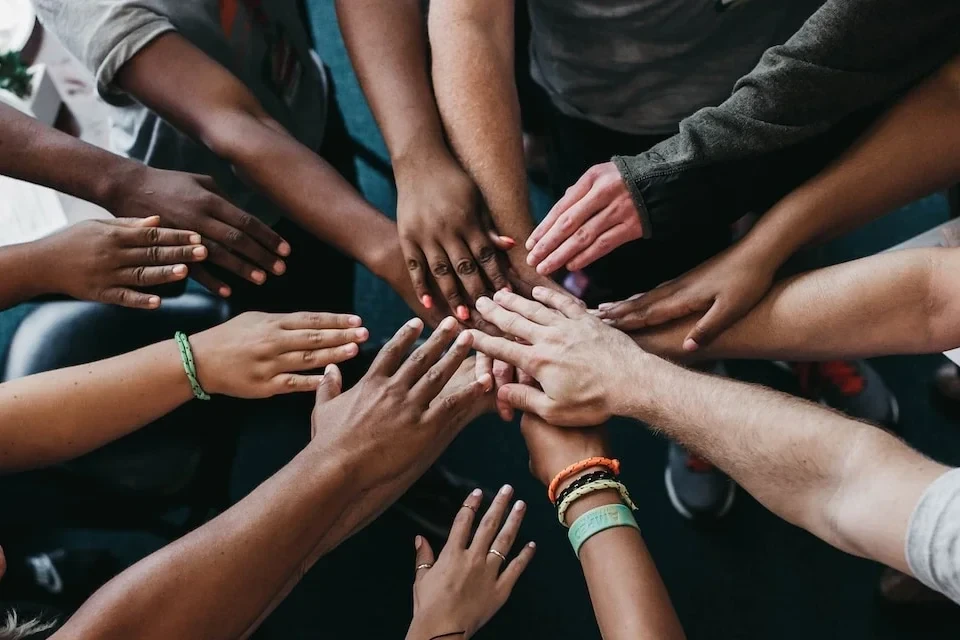
No matter what form open source takes, or what commercial or institutional wrapper it might wear, it is always fundamentally a network. Sometimes—though certainly not always—that network is composed of physical computers, servers, and repositories sharing code across the globe. But most importantly and fundamentally, it is a network of people.
Open source lives and breathes through human connection. Whether people are gathering in large convention centers for a multi-day international conference, catching up over drinks at a local pub after work, or collaborating asynchronously in an online chat room, open source is first and foremost a community of living, breathing human beings. The software, the documentation, and the infrastructure matter immensely, but they are all driven by the collaborative spirit of the people behind the keyboards.

For the past twelve years, the website Opensource.com has been generously supported by a commercial entity. That corporate backing provided the resources, stability, and platform necessary to publish countless stories, guides, and essays about the open source way of life. But while the platform had corporate sponsorship, the people who actually make up the Opensource.com community—the writers, editors, commenters, advocates, and readers—are not commercial entities. They are simply people, united by a shared passion for openness, collaboration, and the belief that software and knowledge should be shared freely.
In one month, Opensource.com is going to resolve that structural mismatch between corporate backing and community identity. A new chapter is about to unfold, bringing the platform into closer alignment with the human network that sustains it. Stay tuned as more details emerge regarding this transition.