








Nvidia currently finds itself at a defining crossroads, characterized by a jarring duality that has left both Wall Street and the broader technology sector searching for clarity. On one side of the ledger, the company continues to demonstrate remarkable financial fortitude, reporting robust revenue growth that suggests its dominant position in the AI chip market remains intact. Yet, beneath this veneer of operational success, the company is grappling with a profound leadership crisis, punctuated by high-profile calls for the return of former CEO Jensen Huang and ongoing uncertainty regarding its strategic operations in China.
This "tale of two Nvidias" was the central focus of the latest episode of TechCrunch’s Equity podcast, where hosts Kirsten Korosec, Tim De Chant, and Anthony Ha unpacked the volatility surrounding the semiconductor giant. While current leadership projects confidence to investors, insisting that the company is on a steady course, the external environment—and the vocal demands from some of tech’s most powerful figures—suggests a narrative that is far from settled.
The Financial Mirage and Leadership Pressure
The company’s recent earnings report served as a powerful reminder of why Nvidia remains the cornerstone of the AI revolution. Guidance was strong, expectations were soundly beaten, and the company’s internal pipeline remains deep and productive. Interim CEO Colette Kress concluded the earnings call with a message of stability, assuring shareholders that the current executive team has a firm grasp on the company’s trajectory.

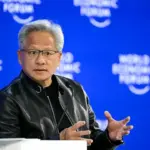
However, the stock market has offered a more skeptical assessment. Despite the positive financials, Nvidia’s share price has faced downward pressure, signaling that investors are perhaps more concerned with the boardroom instability than the current balance sheet. This tension is fueled in part by a very public campaign to reinstate Jensen Huang. Elon Musk and other prominent tech leaders have been vocal in their support, with some comparing the move to remove Huang to the tactical error of "kicking Michael Jordan off your team."
The drama is further complicated by the fact that Huang himself has expressed a willingness to return. This creates an awkward, persistent friction between the current board, which is desperate to project control, and an external chorus of influential voices demanding a leadership change. For the board, the priority is to avoid the appearance of yielding to outside pressure—a lesson they seem to be taking from the internal chaos that previously gripped OpenAI.
Navigating the China Conflict
Beyond the leadership saga, Nvidia is facing significant geopolitical headwinds that threaten to disrupt its long-term growth. In a move that highlights the tightening grip of U.S. export controls, interim CEO Colette Kress confirmed that Nvidia will cease the sale of its high-end H200 chips to customers in China.
This decision arrives in the wake of intensifying pressure from the Trump administration to close loopholes that have allowed advanced AI hardware to flow into China. For years, the industry has operated in a gray area, where chips were shipped to intermediate countries—such as Malaysia—and then accessed by Chinese firms via remote data centers. By effectively shutting down these remote access channels, the U.S. government is attempting to implement a more comprehensive blockade on AI capabilities.
The implications for Nvidia are significant. While the company is publicly complying with these stricter regulations, the reality of its revenue composition remains a point of intense speculation. Some analysts estimate that as much as 20% of Nvidia’s business could be tied to the Chinese market, either directly or through secondary channels. If Nvidia is truly forced to sever these ties, it could result in a substantial blow to its bottom line that current guidance may not fully account for.
Tim De Chant, speaking on the Equity podcast, noted the cyclical nature of these restrictions, pointing out that the administration’s approach to export controls has shifted back and forth over the years. "I’d love to be a fly on the wall in some of these Trump administration conversations," De Chant remarked, highlighting that the current, more stringent climate marks a return to the aggressive policies seen toward the end of the first Trump term.
A Company in Flux
The uncertainty surrounding China operations and the potential for a leadership upheaval are not entirely separate issues; they are both symptoms of a company attempting to maintain its hegemony while navigating a rapidly changing global landscape. The board is clearly sensitive to the optics of the situation. By swiftly and publicly dismissing the petitions for Huang’s return, the directors are attempting to signal that they are in full command of the company’s destiny.
However, the speed at which they shot down these calls for leadership change may betray a deeper anxiety. In the corporate world, rapid, defensive reactions can sometimes signal that there is more happening behind the scenes than what is disclosed in public filings. The board’s desire to maintain an image of total control is understandable, especially given the ongoing, undisclosed investigations into how certain chips were allegedly sold to China in violation of previous policies.
For investors, the question remains: is the current executive team capable of navigating these geopolitical minefields as effectively as their predecessor? Critics of the current board argue that the most recent quarter may represent the "last of the good times" under the previous regime, and that the company’s future viability without Huang at the helm remains unproven.
While it seems unlikely that a leadership change will occur in the immediate future, the situation remains highly fluid. The board’s public stance—a flat "no" to the prospect of Huang’s return—is subject to change if the pressures on the company become insurmountable. As Kirsten Korosec noted during the discussion, in the world of high-stakes corporate drama, one should "never say never."
Ultimately, Nvidia is attempting to walk a tightrope. It must satisfy the requirements of a shifting regulatory environment in the U.S., appease a nervous investor base that is wary of instability, and manage the internal optics of a transition that many in the tech elite have yet to accept. Whether this "tale of two Nvidias" ends with a reconciliation or a complete shift in direction remains one of the most significant storylines in the technology sector as we head into the next year. For now, the company remains in a state of watchful waiting, with both its executive suite and its global supply chain under intense scrutiny.