








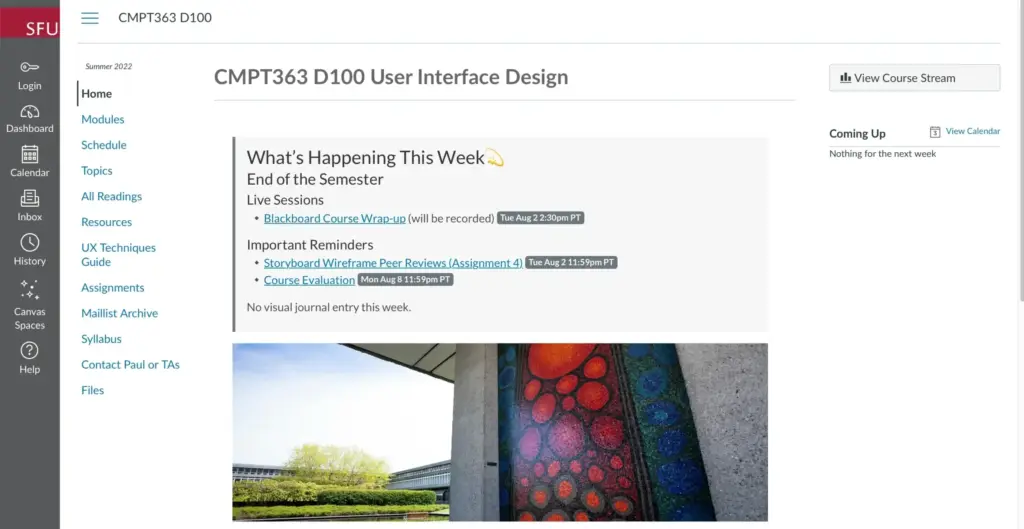
For technical writers, educators, developers, and content creators who prefer the simplicity of Markdown, publishing content online has traditionally required setting up a dedicated website, managing complex build processes, or wrestling with rigid publishing platforms. A new open-source project aims to eliminate those hurdles entirely. Known as Docsify-This and built on top of the popular Docsify.js framework, the tool provides a streamlined mechanism to publish, share, and reuse Markdown content anywhere on the web without requiring a traditional website deployment or complex server-side infrastructure.
By bridging the gap between raw text files stored in version control repositories and modern web delivery, Docsify-This offers a compelling option for individuals and organizations seeking to embed constraint-free Markdown or HTML into multiple external platforms, including content management systems (CMS) and learning management systems (LMS). As an open-source initiative, it also affords users the freedom to host their own instances under custom domains, effectively shielding them from proprietary platform lock-in and recurring subscription fees associated with commercial publishing tools.

What is Docsify-This?
At its core, Docsify-This transforms any publicly available Markdown file into a responsive, standalone web page almost instantly. Beyond rendering single files, users can link multiple Markdown documents together to establish a lightweight, cohesive website structure. For designers and layout specialists seeking visual customization, the platform offers a point-and-click Web Page Builder interface alongside a comprehensive suite of URL parameters. Furthermore, creators can leverage a specialized set of predefined Markdown CSS classes to style their content directly within the source text, or introduce custom style sheets to match exact brand guidelines.

Collaboration is another cornerstone of the project’s design philosophy. When users store their source Markdown files in public repositories hosted on platforms like Codeberg or GitHub, Docsify-This can automatically generate an "Edit this Page" link for every rendered document. This integration fosters a collaborative authoring environment where contributors can suggest edits or update documentation rapidly through familiar version control workflows, merging the immediacy of web publishing with the robust tracking capabilities of Git.
Use the Docsify-This Web Page Builder
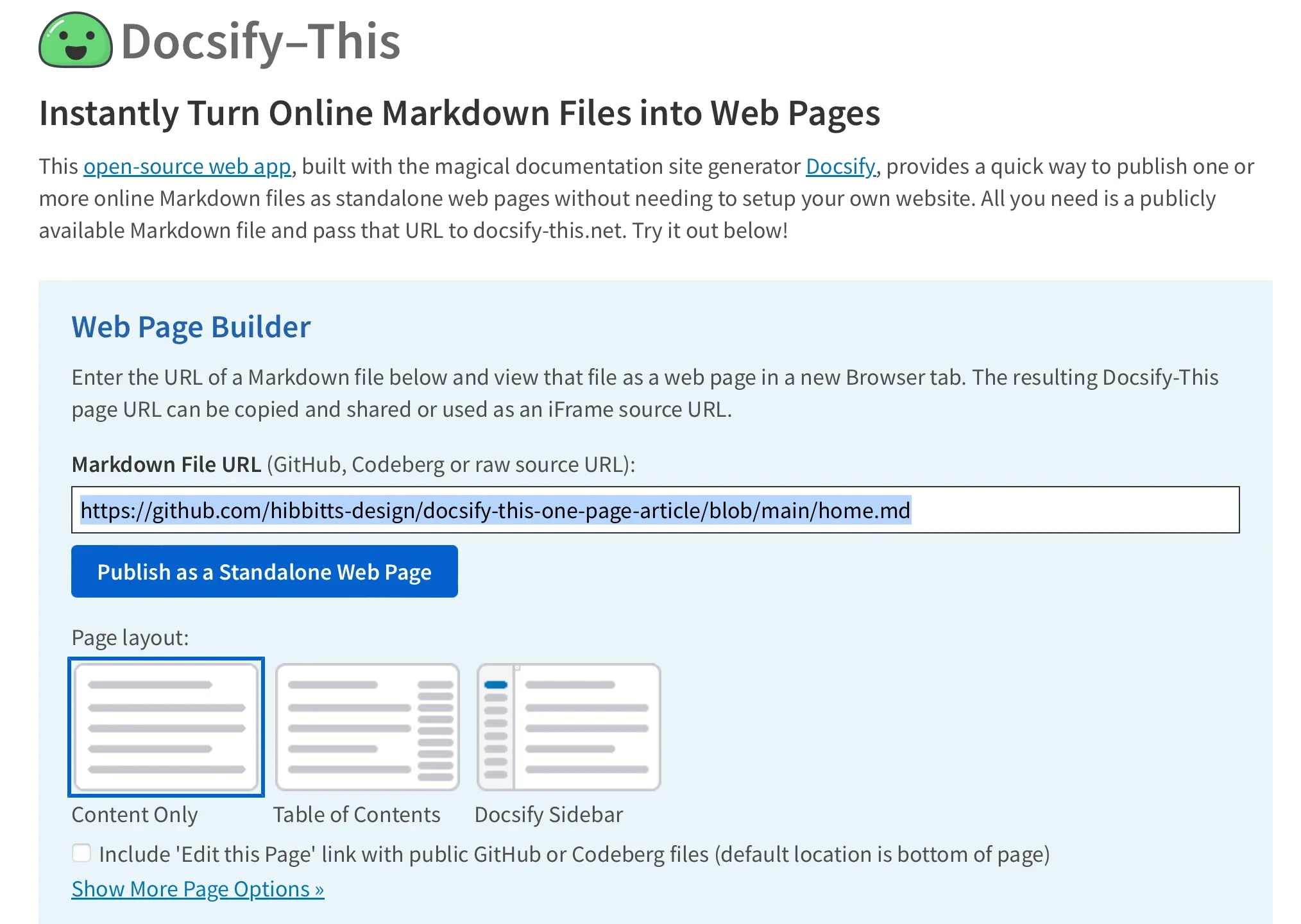
Getting started with the rendering engine requires no command-line tools or local development environments for basic publishing. Users can access the official Docsify-This website or spin up a local instance on their own infrastructure to utilize the built-in Web Page Builder. By simply pasting the raw URL of a Markdown file hosted in a public GitHub or Codeberg repository into the builder interface and clicking the publication button, the system generates a fully rendered, responsive web page accompanied by a dedicated, shareable URL.
While the primary graphical interface is optimized for GitHub and Codeberg repositories, the underlying platform supports other Git hosts through direct manipulation of Docsify-This URL parameters. The resulting web pages are engineered specifically for seamless embedding, allowing creators to visually adapt the output to match the aesthetic constraints of any destination platform, whether that is a corporate intranet, an academic portal, or an independent blog.
Render Other Files in the Same Repository
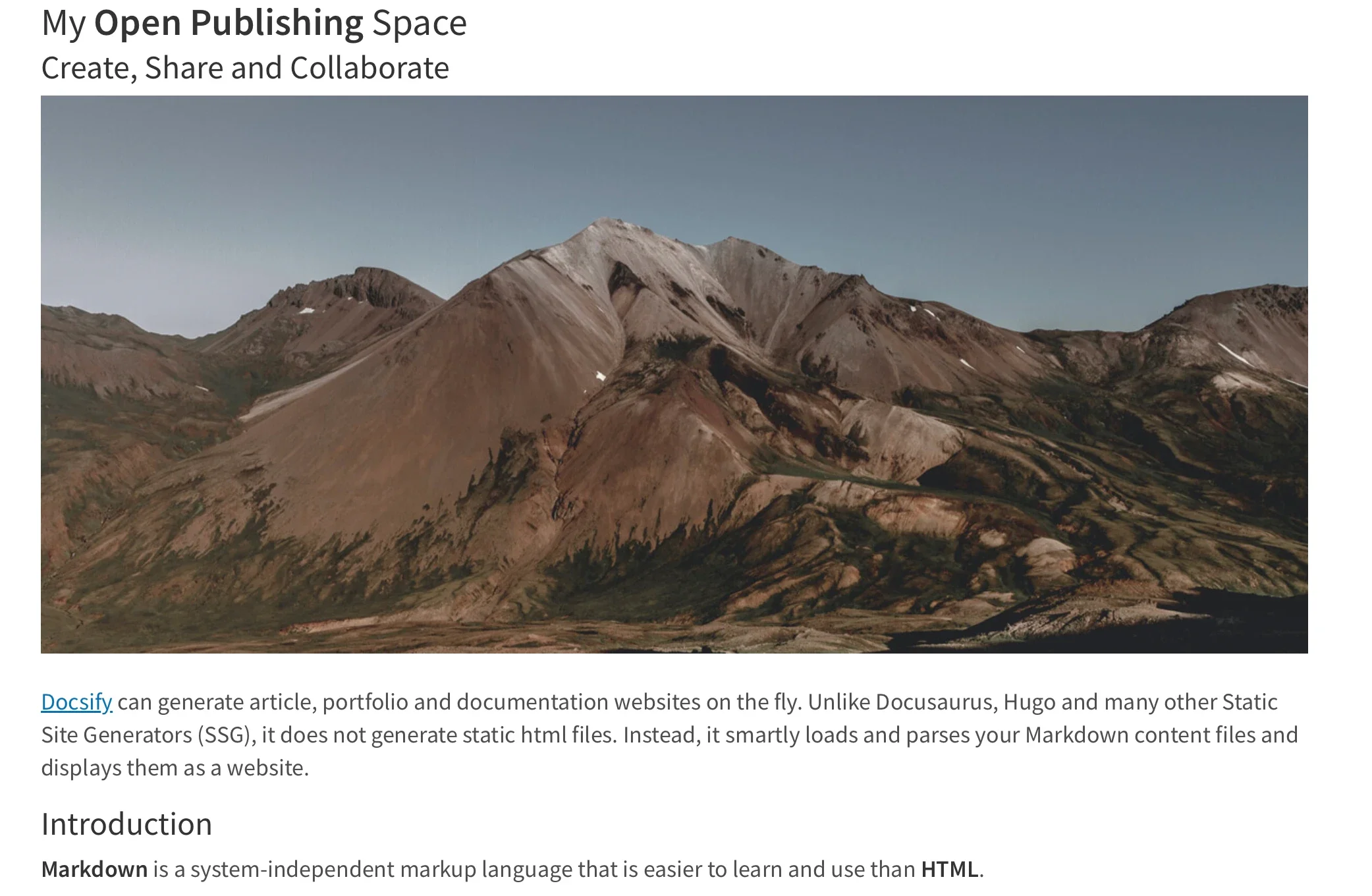
Content architectures often demand multi-page layouts or interconnected documentation sets rather than isolated single-page documents. Docsify-This accommodates this requirement by allowing publishers to render alternative Markdown files residing within the exact same source repository simply by editing specific URL parameters. By adjusting the designated homepage parameter in the web address, administrators can switch out the displayed content file dynamically without generating new publishing pipelines or altering the base configuration of the embedded frame.
This dynamic routing capability significantly reduces the overhead of managing distributed documentation. Instead of maintaining separate deployment scripts for every distinct document or sub-page, authors can manage an entire library of text files within a single repository directory structure and serve them on demand through parameterized links.

Modify the Web Page’s Appearance
Maintaining visual consistency across disparate platforms can be a significant challenge for digital publishers. Docsify-This addresses this design hurdle by empowering authors to modify the visual appearance of any rendered Markdown file directly through URL parameters. Standard Cascading Style Sheet attributes such as font family, font size, link color, and line height can be passed directly within the web address, allowing for real-time typographic adjustments without touching the underlying source code.
In addition to global styling parameters, the platform introduces a set of specialized Markdown CSS classes that enable advanced formatting elements within plain text files. For instance, appending a specific class identifier to a standard link transforms a basic textual hyperlink into a styled button image automatically. Beyond the built-in classes provided by the project, authors are free to define their own custom CSS rules directly within their displayed Markdown files through standard style tags. This flexibility allows advanced users to implement unique visual components, custom color schemes, and specialized layout containers that render reliably wherever the Docsify-This page is displayed.

Include HTML Snippets
While Markdown is celebrated for its clean, distraction-free syntax, complex web layouts frequently require structural HTML elements to organize content effectively. Docsify-This maintains full compatibility with standard Markdown specifications regarding embedded HTML. This compatibility allows content creators to inject layout components, such as multi-column grid containers or specialized division blocks, directly into their documents. By combining the readability of Markdown with the structural power of HTML snippets, authors can build sophisticated, responsive page layouts without abandoning their preferred text-editing workflows or relying on heavy page-building software.
Embed Docsify-This as an iFrame
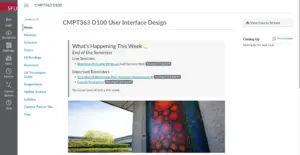
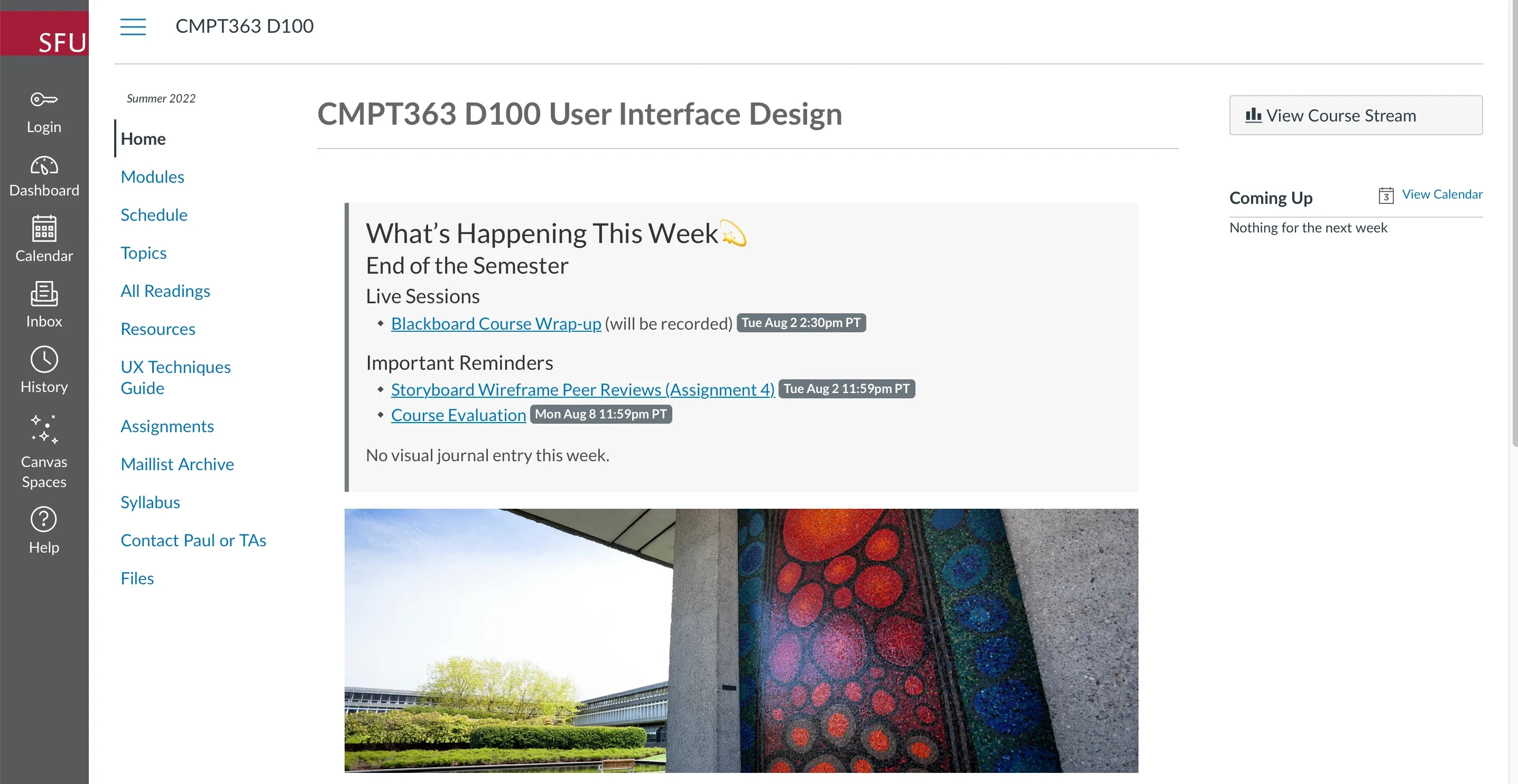
One of the most powerful deployment features of Docsify-This is its robust support for iFrame embedding. Publishers can integrate Docsify-This web pages seamlessly into almost any modern platform by wrapping the generated link in a standard HTML iFrame tag. Combined with the platform’s extensive URL parameter system, administrators can fine-tune the embedded view to strip away unwanted chrome, adjust typography, hide credits, and ensure the content matches the exact visual styling and dimensions of the host application. This capability is particularly valuable for educators and enterprise administrators who need to inject dynamic, easily updated documentation directly into existing learning management systems or corporate portals without disrupting the user experience.
Integrate Docsify-This and Git
To unlock the full collaborative potential and version-control benefits of Docsify-This, content creators typically rely on Git-based hosting services such as GitHub or Codeberg. Managing these repositories does not require advanced command-line proficiency, as a wide variety of open-source graphical user interfaces are available to simplify the workflow. Applications such as GitHub Desktop, Git-Cola, and SparkleShare provide intuitive visual environments for tracking changes, committing updates, and synchronizing files with remote servers. Furthermore, popular modern text editors like Visual Studio Code and Pulsar Edit feature deep, built-in Git integrations that allow writers to draft, revise, and publish their Markdown documents within a single, unified application interface.
Through the combination of lightweight rendering engines, flexible styling controls, robust platform embedding, and standard version control workflows, Docsify-This demonstrates how modern publishing tools can strip away technical complexity while empowering creators to share and manage their content efficiently across the web.