







The community centered around Opensource.com is hard at work on something new. Visitors to the platform may have noticed a distinct quietness settling over the site lately, signaling a transition period behind the scenes. While specific details regarding the upcoming project remain under wraps for the moment, there is already plenty to discuss as the platform looks toward its next evolution. What better way to begin unpacking this transition than by looking at the broader architecture of the internet itself and the foundational concepts that connect us all?
The Internet, and Top-Level Domains
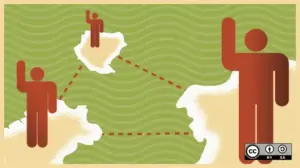
To understand where the community is heading, it helps to examine where the digital landscape originated. Anyone familiar with the digital space knows that the internet is, fundamentally, a network. By definition, a network is a group of interconnected connections. In fact, the term "internet" is a portmanteau combining "interconnected" and "network."
Originally, the internet consisted of just two primary networks: the military network and the academic network. These early environments were tightly controlled and served specific institutional purposes. However, once the internet began to grow in popularity and expand far beyond those initial groups, it quickly became apparent that different designations were necessary to keep things organized.

Administrators and early architects needed ways to differentiate between various types of entities inhabiting the digital space. For example, a commercial business needed a different digital marker than a charitable organization, a university, or a governmental department. These crucial designations eventually came to be known as top-level domains, commonly abbreviated as TLDs.

Today, a vast array of TLDs are available for registration, giving organizations endless choices for their web presence. However, for a long time, there were only a handful of options available to the public. These original TLDs remain remarkably popular and culturally embedded in the web’s infrastructure. Most internet users intuitively recognize that when they navigate to a ".com" address, they are visiting a commercial site. Conversely, visiting a ".org" address signals that the user is interacting with a non-profit website. These suffixes carry historical weight and established expectations about the entities operating behind the screen.
Open Source Is a Network
Just as the internet relies on a vast, interconnected grid of systems and communication protocols, open source itself operates as a network in the truest sense of the word. Open source can manifest in many different forms, adapting to the needs of its contributors and users. It can be commercial, serving enterprise markets and driving technological innovation through corporate sponsorship. It can be non-profit, focusing on public goods, digital rights, and community-driven infrastructure. It can be academic, supporting research, education, and open science. It can also be cultural, shaping how creators share art, literature, and media.
No matter what specific form it takes, open source is always fundamentally a network. Sometimes, this takes a literal technological shape as a network of computers, servers, and distributed code repositories spanning the globe. More importantly, however, it is a network of people.
Human connection is the beating heart of the open source movement. Whether people are gathering in person at a bustling technology conference, catching up informally at a local pub after hours, or collaborating asynchronously in an online chat room, open source thrives as a vibrant community of living, breathing individuals. Technology is the medium, but people are the message and the driving force.

The website Opensource.com has enjoyed a remarkable run, supported by a dedicated commercial entity for 12 years. Throughout that history, the platform has published countless stories about creating, adopting, and sharing open source solutions, chronicling how collaborative software has transformed industries and everyday digital life.
Yet, there is a fundamental distinction to be made between corporate support and community identity. The people—meaning the readers, writers, contributors, and advocates who make up the Opensource.com community—are not commercial entities. They are simply people, united by a shared passion for openness, collaboration, and the belief that software and knowledge should be shared freely for the betterment of society.
Now, after more than a decade of consistency, that relationship is shifting as the community prepares to take the next step in its evolution. In just one month, Opensource.com is going to resolve that long-standing bug and unveil what has been quietly building behind the scenes. Stay tuned for further developments as this new chapter unfolds.