The United Kingdom has launched a significant crackdown on the illicit cryptocurrency infrastructure supporting the Russian state, issuing formal economic sanctions against the digital payment platform Cryptomus. The move marks a major escalation in the international effort to dismantle a sprawling network of services—including VexPay, TokenSpot, and Tsunami Payments—that authorities allege have become critical conduits for ransomware, drug trafficking, darknet market operations, and large-scale financial fraud.
On October 8, the U.K. government released a formal notice confirming that Cryptomus, which has previously operated under the corporate aliases Certa Payments and Xeltox Enterprises, is now subject to severe financial restrictions. The sanctions effectively freeze any assets held by the platform within British banking institutions and explicitly prohibit U.K.-based companies from engaging in any business dealings with the firm, whether in virtual assets or traditional financial services.
This regulatory strike targets the core of a "chameleonic" ecosystem that has spent years obfuscating its operations to evade law enforcement. According to investigators, these platforms have provided the essential plumbing for the Russian government and its allied financial institutions to circumvent international sanctions. By facilitating the movement of funds into and out of Russia, these services have become indispensable to a wartime economy struggling against global isolation.
A History of Evasion and Rebranding
Cryptomus first emerged on the digital scene in 2022, rapidly positioning itself as a payment processor for an array of Russian cryptocurrency exchanges and websites specializing in cybercrime services. However, the company’s lifespan has been defined by a strategy of constant rebranding and tactical adaptation.
The platform’s most notable pivot occurred last year following a landmark enforcement action by Canadian regulators. In October 2025, Canadian authorities levied a record-breaking CAD $176 million fine against Cryptomus, citing egregious violations of anti-money laundering (AML) laws. Rather than shuttering, the platform engaged in a series of evasive maneuvers. It appealed the penalty, launched a parallel service dubbed "Heleket" to maintain its illicit transaction volume, and continued to operate with a disregard for standard "know your customer" (KYC) requirements.
Blockchain investigators have observed that Heleket’s support agents on encrypted messaging platforms like Telegram have actively sought to distance the new brand from the sanctioned Cryptomus entity, despite overwhelming technical evidence linking the two through shared infrastructure and payment protocols.

Mapping the Illicit Financial Hub
The scale of the operation is vast. According to findings published in April 2026 by the blockchain intelligence firm TRM Labs, Cryptomus had processed more than $7 billion in transactions since its 2022 inception. This staggering volume was not confined to standard commercial activity; it included significant flows of funds linked to the sale of child sexual abuse material, the financing of international terrorist networks, and human trafficking operations.
TRM Labs observed a curious pattern in the platform’s transaction data: the company’s volume experienced a sharp decline only after it was forced to implement new KYC rules. However, the platform’s immediate response was to launch Heleket, a secondary, "no-KYC" payment processor that allowed illicit actors to continue their operations without the interference of identity verification.
The blockchain data-crunching firm Chainalysis has emphasized that the U.K. sanctions are specifically designed to dismantle the broader infrastructure supporting Russia’s war effort. In an analysis published the same day the sanctions were announced, Chainalysis noted that Cryptomus and Heleket had evolved into primary hubs for illicit financial activity. The firm reported that these services received more illicit funds across their tracked categories than traditional mixers, with the number of illicit counterparties utilizing these platforms surging to more than 900 in a single month during late 2025.
The Significance of Global Enforcement
The U.K. sanctions represent a departure from previous attempts to curb the platform’s influence. Richard Sanders, a blockchain analyst and investigator who has spent months mapping the complex payment infrastructure of these entities, argues that the British action carries more weight than the earlier Canadian fine.
"A fine doesn’t stop a cryptocurrency payment processor from processing payments," Sanders wrote in a public assessment of the sanctions. "Sanctions kill the operation. The distinction matters."
Sanders’ investigation, which included direct engagement with the platform’s customers to map its operations, suggests that the U.K. sanctions are historically significant for another reason: they mark the first instance of a "Five Eyes" nation—comprising the U.K., the U.S., Canada, Australia, and New Zealand—sanctioning a cryptocurrency operation that is incorporated within another jurisdiction also governed by the Five Eyes intelligence-sharing alliance. This cross-border cooperation signals a shift in how Western governments are prioritizing the disruption of transnational financial crime.

The Mirage of Legitimacy
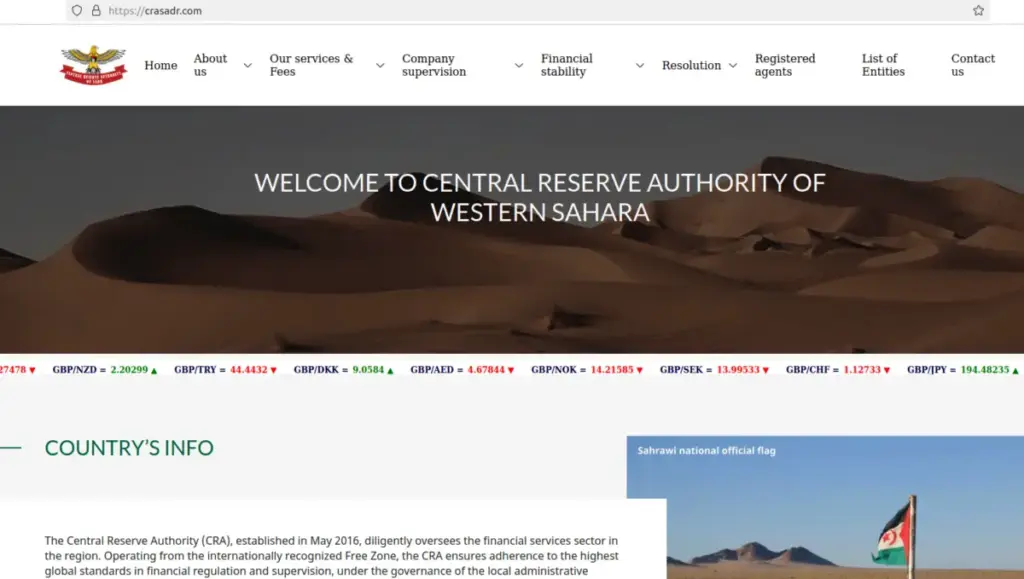
The mystery surrounding how entities like Cryptomus and Heleket gained the perceived authority to operate as international financial services is rooted in a web of fabricated regulations. Previous investigations have uncovered that the sole shareholder of Cryptomus’s parent company, Certa Payments, was a 25-year-old Ukrainian woman. This individual was also tied to the WS Management and Advisory Corporation, an entity that markets itself as a legitimate regulatory body overseeing licenses for cryptocurrency, online gaming, and foreign exchange businesses.
Crucially, this "regulatory body" claims to operate within the Western Sahara, a region in northwest Africa with disputed sovereignty. The entity’s website, crasadr.com, functions as a portal for applicants seeking bank setup, formation, and licensing services.
Evidence gathered during the 2024 investigation revealed that Certa Payments utilized a website, certa[.]website, which shared a server with over a dozen other domains. Among those domains was rasd-state[.]ws, the official-looking website for the "Central Reserve Authority of the Western Sahara." By creating a facade of sovereign regulation in a disputed region, the operators of these platforms successfully projected an air of legitimacy that allowed them to solicit business from global users while operating outside the reach of genuine international financial oversight.
As of October 8, the facade began to crack under the weight of the U.K.’s enforcement. Cryptomus’s support bots on Telegram, which previously provided seamless, automated assistance to those looking to process funds, began notifying users that the platform was suddenly unable to execute transactions. Whether this disruption will prove to be a permanent blow to the network or merely the precursor to yet another "rebranding" remains to be seen. However, for regulators and analysts alike, the U.K. sanctions represent a pivotal attempt to turn the tide against the digital financial infrastructure that has sustained illicit activities and state-sponsored evasion for years.