









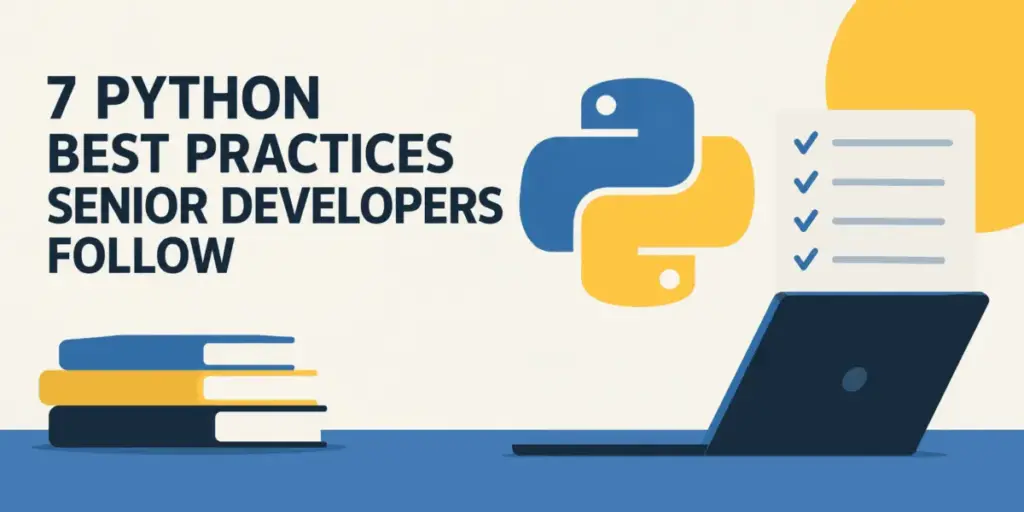
In software development, code that passes a standard linter and successfully executes on a happy path can still conceal critical operational vulnerabilities. While code formatting, variable naming, and stylistic consistency remain essential foundations of software engineering, they only address surface-level tidiness. According to experienced software developers and technical experts, true senior-level engineering in Python is largely an exercise in surprise reduction—surfacing hidden assumptions before code ever reaches a production environment.
Many Python functions look completely acceptable during a standard code review. They fetch records, interact with external application programming interfaces, record logs, and return expected results while passing all standard test suites. However, closer inspection often reveals underlying architectural flaws: self-contained Hypertext Transfer Protocol clients that cannot be isolated, unbounded network waits that can starve worker processes, opaque error logs that lack identifying metadata, and complete absences of failure-path testing. Because linters and static analyzers typically evaluate syntax and style rather than architectural resilience, these silent risks frequently slip past reviewers who focus exclusively on local tidiness.
To address this gap, software engineering standards point toward specific practices that transform hidden assumptions into explicit, reviewable contracts. These practices bridge the divide between code that merely runs on a developer’s machine and software that survives the unpredictable pressures of a live production ecosystem.

Passing Dependencies In Instead of Hiding Them
One of the most common architectural traps in Python development involves internalizing dependencies rather than exposing them to the caller. A function that constructs its own network client internally appears straightforward and self-contained at first glance. Yet, this approach forces every automated test to either make live network calls or rely on deep, complex patching of module internals.
Senior developers routinely avoid this anti-pattern by accepting collaborators explicitly, typed as narrowly as possible using structural typing tools such as the typing Protocol module. This approach allows any object with a matching method signature to satisfy the interface for static type checking without requiring a rigid inheritance hierarchy. While protocols provide structural shapes for type checkers rather than runtime validation, their immediate payoff appears in testing environments. Developers can easily substitute lightweight fakes that record their calls and replace network dependencies entirely, eliminating the need for heavy mocking frameworks while keeping explicit control over the wiring.
Letting Context Managers Own Resource Cleanup
Resource management represents another critical domain where beginner and senior implementations frequently diverge. Relying on garbage collection to eventually release files, database connections, locks, or temporary directories under load is an operational risk. The Python language provides explicit context management blocks to guarantee that acquisition and release happen within the same visible lifecycle.
Using standard context managers and libraries, developers can ensure that cleanup operations execute reliably even when exceptions occur mid-execution. If a block raises an error, teardown mechanisms still fire, preventing resource leaks and locked states. Treating resource cleanup as a guaranteed architectural block rather than a background responsibility prevents resource exhaustion under heavy operational workloads.
Giving Every External Wait a Deadline
Unbounded waits represent undeclared failure modes that can quietly degrade system performance. Many standard network, database, and queue libraries ship with default behaviors that wait indefinitely for a response unless explicitly configured otherwise. Modern asynchronous frameworks provide clean timeout boundaries for awaited operations, allowing developers to catch specific timeout errors and raise descriptive exceptions rather than hanging indefinitely.
Synchronous clients require deliberate, library-specific timeout configurations. Establishing a strict discipline of pairing every external wait with a defined deadline and a clear fallback or failure response prevents worker starvation and cascading system failures. Deciding whether to retry an operation depends entirely on whether the action is safe to repeat and whether the error is genuinely transient.
Logging Events With the Context Needed to Investigate Them
Generic log entries stating that a process has failed offer virtually no actionable data during an operational incident. Standard logging mechanisms easily support structured records that include critical metadata such as unique job identifiers and record counts.
When formatting includes these contextual fields, log lines transform from vague notifications into investigable events. Attaching contextual information consistently across related calls allows on-call engineers to trace specific jobs immediately instead of combing through ambiguous logs. However, this capability comes with a strict boundary requirement: while structured logging makes context visible, developers must rigorously ensure that sensitive data, tokens, and passwords are never accidentally exposed in log outputs.
Testing the Failure Contract, Not Only the Happy Path
Passing tests that evaluate only friendly inputs provide a false sense of security regarding how a software boundary behaves under pressure. Incorporating parametrization allows test suites to cover edge cases, malformed inputs, and missing data without duplicating test code.
Combined with environment and attribute patching utilities, testing frameworks can force timeout paths, connection failures, and invalid responses on demand. Effective assertions focus on observable behaviors—such as correct exceptions, warnings, fallback values, and log fields—rather than internal implementation sequences. This approach ensures that test suites verify the actual contract of the code rather than brittle implementation details that break during routine refactoring.
Treating Package Metadata as Part of the Code Contract
Project configurations should clearly articulate how software builds, what dependencies it requires, and which Python versions it supports in a machine-readable format. Using standard project definition files separates build systems, project metadata, and tool configurations into distinct, transparent tables.
This clarity enables new contributors and continuous integration pipelines to inspect runtime assumptions directly, avoiding tribal knowledge and environment drift. Declaring compatibility assumptions specifies minimum requirements without locking applications to exact resolved versions, leaving explicit version locking as a separate operational workflow decision.
Deprecating Public Behavior Before You Delete It
Managing change and maintaining backward compatibility require deliberate communication channels. The Python standard library provides native warning mechanisms to signal when functions or behaviors are approaching deprecation.
Configuring warnings to target caller lines with explicit replacement recommendations gives downstream users clear migration paths. By elevating deprecation warnings into failing conditions within test configurations, development teams can catch retiring behaviors early in the development lifecycle rather than surprising users with unannounced breaking changes.
Ultimately, these practices collapse into fundamental questions during code reviews: Where does code wait, and for how long? What does it depend on, and can those dependencies be substituted? What will logs reveal at two in the morning, and how does the system behave when boundaries fail? By making hidden assumptions explicit, developers write maintainable code capable of withstanding the complexities of production environments.
Nahla Davies is a software developer and tech writer. Before dedicating her work full time to technical writing, she managed to serve as a lead programmer at an Inc. 5,000 experiential branding organization whose clients include Samsung, Time Warner, Netflix, and Sony.