










In a significant expansion of its serverless database capabilities, Amazon Web Services (AWS) has announced the general availability of native vector search for Amazon DynamoDB. This major update allows developers to store vector embeddings directly alongside their operational data, enabling high-performance similarity searches without the need to replicate data to specialized, third-party vector databases. By integrating this functionality directly into the DynamoDB engine, AWS is aiming to streamline the architecture of modern applications, particularly those leveraging machine learning, retrieval-augmented generation (RAG), and agentic memory systems.
The integration represents a pivotal shift for organizations currently managing complex data pipelines to support artificial intelligence features. Previously, teams using DynamoDB for their primary operational storage were often forced to maintain a secondary vector-capable database to facilitate semantic search. This requirement introduced substantial operational friction, including the need to build and maintain synchronization pipelines to ensure data consistency between the primary store and the vector index. Furthermore, these architectures often incurred additional licensing costs, increased infrastructure management overhead, and potential latency challenges caused by the constant movement of data between disparate systems.
With this new native capability, DynamoDB now supports vector search with single-digit millisecond latency while maintaining over 99% recall accuracy. The service is built to accommodate massive scale, supporting trillions of vectors without requiring users to provision, patch, or manage servers. As a fully serverless offering, the new feature inherits the core benefits of the DynamoDB ecosystem: there are no versions to manage, no maintenance windows to schedule, and no risk of downtime during updates. The infrastructure scales horizontally automatically as data grows, providing a seamless experience for developers focused on building intelligent applications rather than managing database clusters.


Bridging Operational Data and Semantic Intelligence
The introduction of vector search in DynamoDB is designed to support a wide range of use cases that demand real-time semantic retrieval. This includes the development of recommendation engines, personalized user experiences, sophisticated anomaly detection, and agentic systems that require fast access to long-term memory. Because vectors and operational data now share the same serverless infrastructure, developers can leverage the same familiar pay-per-request pricing model, simplifying cost management and budget predictability.
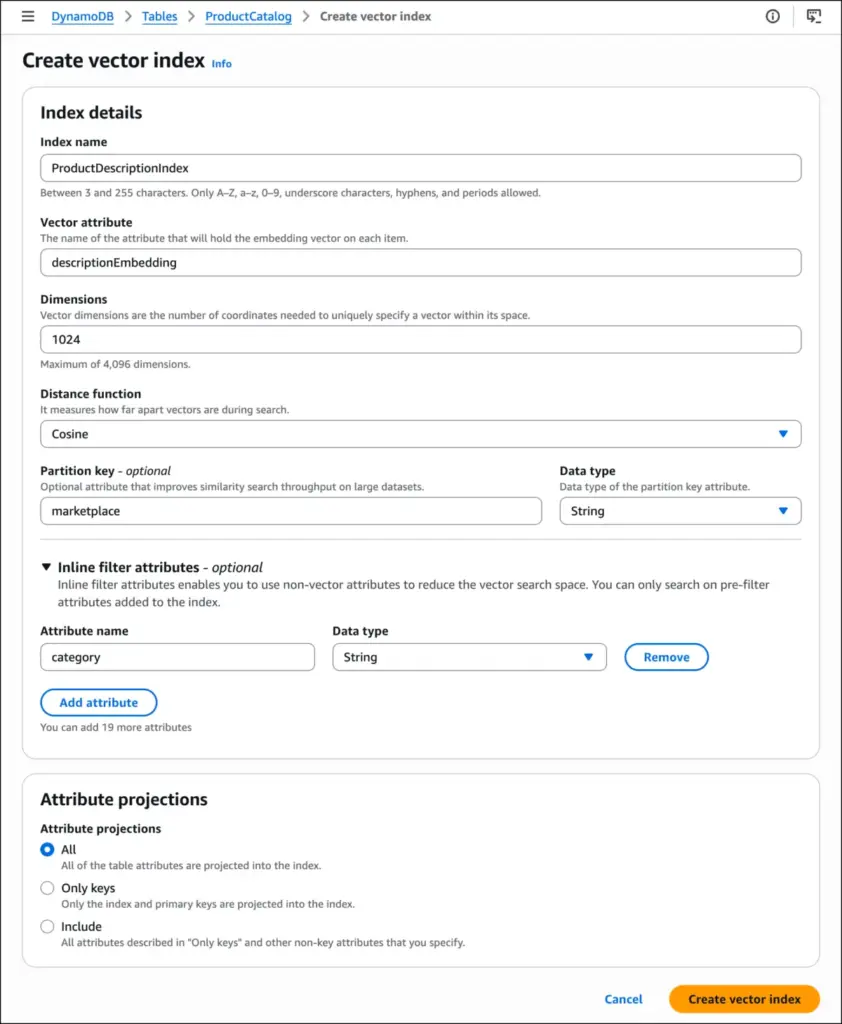
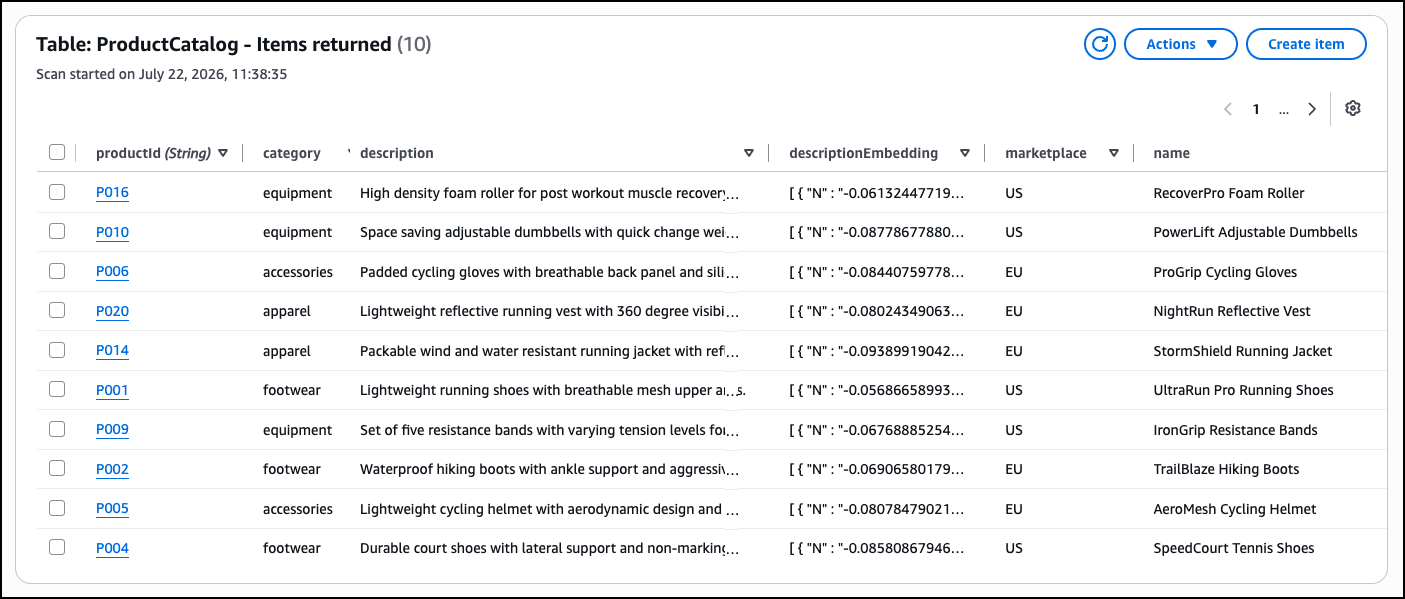
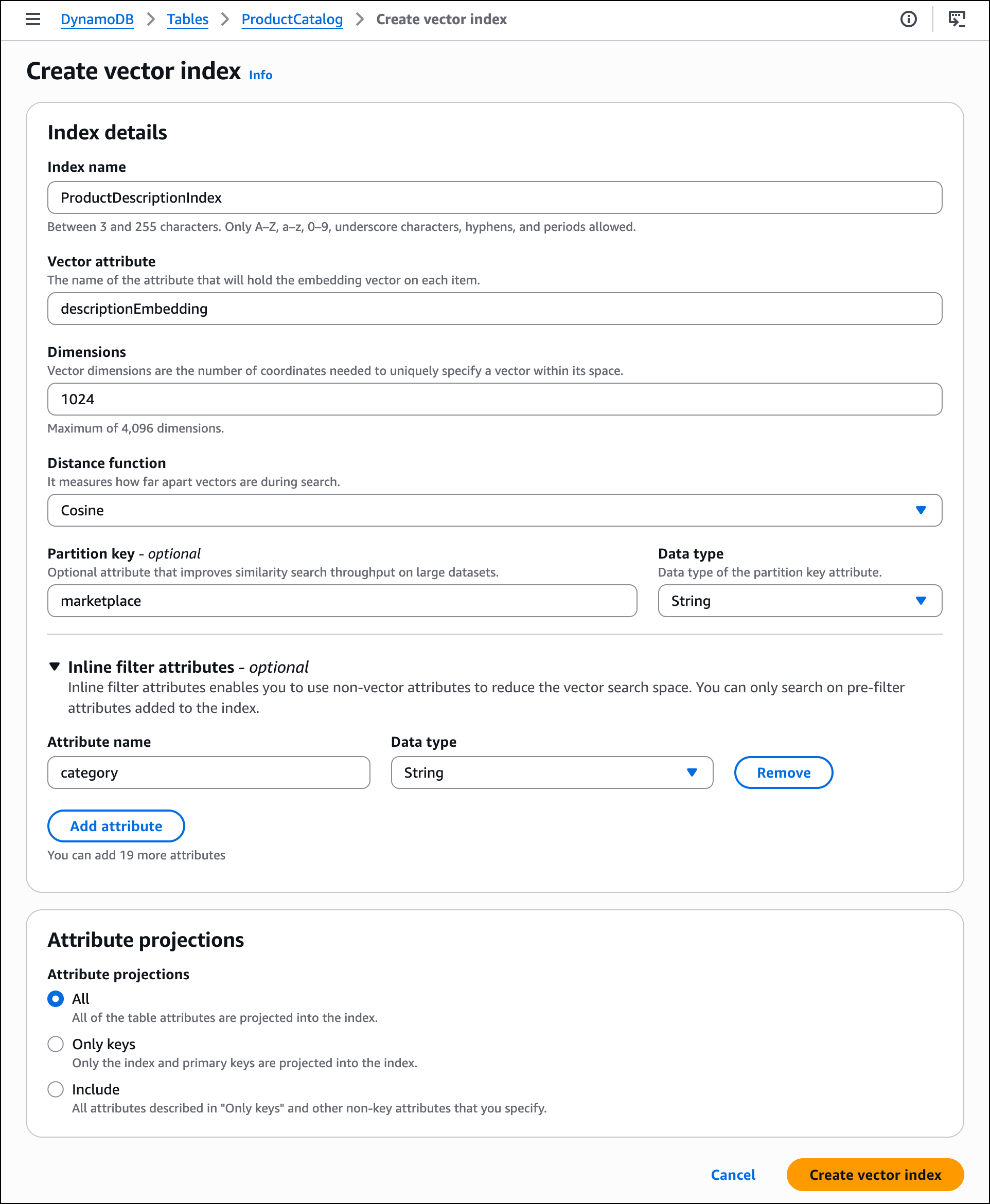
To implement this functionality, users create a new index type on an existing attribute that stores vector embeddings. These embeddings, which are numerical representations of data generated by machine learning models such as Amazon Bedrock Titan Text Embeddings, Cohere Embed, or OpenAI models, are stored as a list of floats within the DynamoDB table. Once the embeddings are stored—which can be achieved through a standard PutItem operation—a vector index can be defined by specifying the number of dimensions, the chosen distance function, and any optional non-vector attributes to be used as filters.
The new SearchVectors API is the engine behind this capability, allowing applications to submit a query vector alongside a requested number of results. The API also supports optional filter conditions, enabling developers to refine their search criteria in real-time. By narrowing search results during the query phase, developers can ensure that the returned data is not only semantically similar to the input but also adheres to necessary business logic or metadata constraints.

Architectural Advantages and Implementation
The technical implementation of vector search in DynamoDB is designed to be as non-disruptive as possible. For existing tables, such as a product catalog in an e-commerce application, developers can add embeddings as a new attribute without requiring significant schema changes or database migrations. DynamoDB utilizes its existing List data type to store these vectors, where each element represents a single float value. This design choice ensures that existing application logic remains largely intact, while the new vector index provides a high-performance path for similarity queries.
When creating a vector index, developers can choose from three primary distance functions: Euclidean distance, Cosine similarity, and Dot product. The selection of a distance function is crucial, as it determines how the model interprets the relationship between vectors. For example, Cosine similarity—which measures the angle between vectors rather than their absolute magnitude—is particularly effective for assessing the semantic similarity of text. In contrast, other functions may be better suited for different types of mathematical modeling, providing the flexibility needed to support diverse AI workloads.
To ensure optimal performance, particularly in large datasets with high query throughput, developers can designate a partition key for the vector index. This key dictates how the vectors are distributed across the database partitions, allowing the system to scale out effectively. By scoping searches to a specific partition key value, such as a geographic marketplace or a specific product category, developers can achieve highly efficient queries without the need to scan the entire index, thereby maintaining the low-latency guarantees that DynamoDB is known for.
Expanding the Horizon for AI Applications
The ability to perform inline filtering is a standout feature of this release. During a search operation, developers can apply filters on non-vector attributes to restrict the result set. While these filter conditions currently support exact-match values, they provide a powerful way to integrate semantic search with traditional relational-style filtering. For instance, a shopper searching for "lightweight running shoes for summer" can be shown results that are semantically relevant to that query but are also strictly limited to a specific category, such as "footwear," and a specific marketplace, such as the United States.
This capability significantly lowers the barrier to entry for developers who wish to integrate AI features into existing systems. By removing the architectural burden of managing a separate vector database, AWS is enabling a new generation of "agentic" applications. These applications, which often act as autonomous agents, rely on the ability to store, retrieve, and act upon vast amounts of unstructured data. With DynamoDB acting as both the source of truth for operational data and the retrieval engine for semantic search, the complexity of these agentic architectures is drastically reduced.
For those looking to integrate these capabilities into their development workflow, AWS has provided comprehensive support, including documentation for the AWS MCP Server and various plugins compatible with leading AI coding tools. These resources are designed to help developers programmatically interact with the vector search API and incorporate similarity search into their existing CI/CD pipelines and application codebases.
The general availability of vector search in Amazon DynamoDB marks a significant milestone in the evolution of cloud-native databases. By treating vectors as a first-class data type within its flagship NoSQL service, AWS has provided a path for organizations to innovate faster and with greater confidence. As the technology continues to mature, it is expected that this capability will become a foundational element for a wide array of intelligent applications, from large-scale e-commerce platforms to real-time recommendation engines and beyond.
The service is currently available in all commercial AWS Regions, as well as the AWS GovCloud (US) Regions. Organizations looking to adopt this technology can find detailed pricing information and technical documentation on the Amazon DynamoDB website. As teams begin to integrate these features into their production environments, AWS continues to solicit feedback through its support channels and re:Post community forums to further refine and expand the capabilities of this new database feature.