In a significant escalation of the federal investigation into the notorious cybercrime syndicate known as ShinyHunters, FBI agents have arrested a prominent Canadian cybersecurity executive. The arrest, which occurred on Thursday, marks a pivotal moment in the government’s pursuit of a group that recently managed the audacious feat of exfiltrating sensitive internal data from the Federal Bureau of Investigation itself.
Multiple sources familiar with the ongoing probe confirmed to KrebsOnSecurity that the individual was taken into custody in Pennsylvania. While the FBI has maintained a degree of official silence regarding the suspect’s identity, reports from The New York Times corroborated the arrest, noting that the individual is suspected of providing material assistance to the ShinyHunters group. FBI Director Kash Patel acknowledged the apprehension in a brief statement on X (formerly Twitter), though he provided no specific details regarding the identity of the detainee or the precise nature of the charges at that time.
A High-Stakes Arrest in Pennsylvania
According to sources close to the investigation, the suspect was in Pennsylvania to attend the Cyber Risk Summit, a professional gathering held at the Loews Philadelphia Hotel between October 5 and October 7. The suspect’s professional background is deeply intertwined with the very world of cybercrime response; his company reportedly specialized in navigating the perilous landscape of ransomware negotiations, acting as an intermediary between victimized organizations and the digital extortionists who hold their data hostage.
The investigation into ShinyHunters has increasingly become a centralized priority for the agency, with control over the case reportedly shifted to an FBI field office in Texas. This tactical consolidation suggests that the bureau is treating the syndicate as a top-tier national security threat rather than a standard criminal enterprise.
Public records and conference materials identify the arrested individual as Edward Dubrovsky. Court records filed on October 8 under the name "Edward Dobrovsky"—a slight variation in spelling—charge the defendant with "conspiracy to threaten to impair the confidentiality of information with the intent to extort money," as well as "interference with commerce by threats." While several of the core documents related to the case remain under seal, the charges reflect a grave assessment of his alleged role in facilitating the activities of extortionists.
The U.S. Bureau of Prisons inmate locator confirmed that a 54-year-old Edward Dubrovsky is currently being held at a federal facility in Philadelphia. However, in a clear signal of the investigation’s new focal point, a notice filed on October 9 in federal court mandated that the case be transferred to the Eastern District of Texas, the current epicenter of the broader ShinyHunters inquiry.

Professional Background and the Ransomware Industry
Dubrovsky’s career has been spent in the specialized niche of cyber-incident response. Prior to his current affiliation with the Canadian security firm CyberSteward, he was associated with Cypfer, another prominent Canadian cybersecurity entity that served as a major sponsor for the Philadelphia summit.
In the wake of the arrest, the corporate landscape has scrambled to clarify professional ties. A spokesperson for Cypfer issued a statement on October 10 clarifying that while Dubrovsky’s LinkedIn profile had identified him as a founder or co-founder, he had actually served as a managing director before resigning from the firm in November 2025.
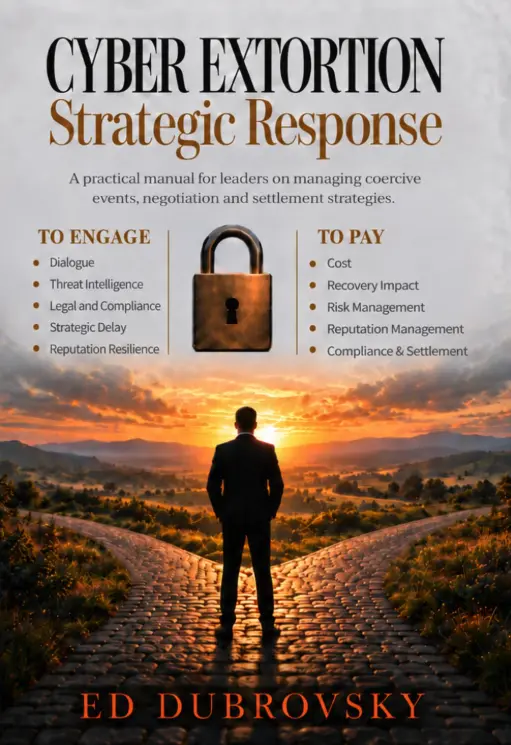
Dubrovsky is also the author of a 252-page book titled Cyber Extortion Strategic Response, which purports to guide organizations through the complex, high-stakes decisions required during a ransomware event. In his writing, Dubrovsky emphasized a nuanced approach to dealing with criminals. "At the heart of the book is a critical distinction: communicating with a criminal is not the same as negotiating a payment, and negotiating is not a commitment to pay," an excerpt from the book’s Amazon listing reads. "Engagement can serve other objectives, including testing claims, gathering information, creating time, and preserving options while the organization evaluates its next move."
This perspective on the "gray area" of ransom negotiations—where security firms often operate—is now at the center of a federal prosecution. Prosecutors appear to be testing the legal boundary between legitimate incident response consulting and criminal facilitation.
The Rise and Fall of ShinyHunters
The ShinyHunters group has long been a thorn in the side of global security agencies. Their modus operandi typically involves the deployment of sophisticated phishing campaigns and the exploitation of stolen credentials to breach corporate accounts at software-as-a-service (SaaS) providers. Once inside, they siphon massive amounts of data, threatening to publish the information online unless their exorbitant ransom demands are met. According to internal FBI estimates, the group has successfully extorted more than $70 million from victims throughout the current calendar year.
The investigation has gained significant momentum in recent months. Federal authorities have been meticulously analyzing data from devices seized during the arrest of convicted cybercriminal Pepijn van der Stap, who was taken into custody by Dutch police last month. Sources indicate that the evidence uncovered from these devices has provided a roadmap into the inner workings of the group, leading to the expectation that charges against principals at other ransomware negotiation firms may be forthcoming.

The pressure on ShinyHunters intensified after the group’s leadership structure began to fracture. Following the arrest of Van der Stap, a member operating under the handle "Rey" assumed control of the group. In a brazen display of defiance, Rey began taunting the FBI, publicly claiming responsibility for the theft of sensitive internal data from the bureau’s own online recruitment portal. That breach was particularly damaging, as it reportedly contained the unit details, specializations, and even the medical and psychiatric records of numerous FBI personnel.
The hunt for Rey concluded last week when it was revealed that the individual was actually a teenager named Saif Al-din Khader. Reuters reported that Khader had been detained and was actively cooperating with federal investigators. The apprehension of the teenager followed a series of investigations into the group’s attempts to extort a navigation and digital aviation unit, which had been divested by Boeing in late 2025.
An Unfolding Legal Landscape
As of now, Dubrovsky remains in federal custody. Court records indicate that he has not yet secured legal counsel, and the court has not yet appointed a public defender to oversee his defense. The FBI has declined to comment on the specifics of the ongoing investigation, citing the sensitivity of the pending legal proceedings.
The arrest of a professional who authored treatises on the "strategic response" to extortion highlights the growing intersection between the cybersecurity industry and the criminal underworld it purports to combat. As the Department of Justice moves to centralize the case in Texas, the industry is watching closely. The outcome of the case against Dubrovsky may set a significant precedent for how authorities define the limits of "negotiation" and "engagement" in the fight against global ransomware syndicates.
With the case still in its early stages and the investigation spanning multiple international jurisdictions, federal authorities are clearly signaling that the era of impunity for those associated with the ShinyHunters operation is rapidly drawing to a close. Further developments in the case are expected as investigators continue to process the digital evidence seized during the recent string of international arrests.