What can digital transformation teach us about the current rush into artificial intelligence? According to digital strategist and author Paul Boag, revisiting his 2014 book Digital Adaptation reveals that organizations are making remarkably similar mistakes today as they attempt to integrate AI into their daily operations.
Reflecting on the current landscape, Boag notes that the way most organizations roll out artificial intelligence feels less like a calculated business strategy and more like an absurdity. If these corporate rollouts were adapted into a feature film, reviewers would likely dismiss the plot as entirely unbelievable, arguing that no real-world management team could make decisions quite that misdirected. Yet, businesses find themselves repeating the exact same patterns, and the frustration is amplified by the simple fact that the corporate world has been down this exact road before.
Back in 2014, Boag authored Digital Adaptation for Smashing Magazine, a publication examining the widespread missteps organizations were making during the height of the digital transformation era and outlining corrective measures. The parallels between the challenges faced a decade ago and the hurdles confronting businesses in the age of generative AI are striking. The overarching error, both then and now, lies in framing a profound cultural and structural evolution as a purely technological challenge.

It’s About People, Not Technology
Undoubtedly, both digital transformation and the integration of artificial intelligence represent massive technological leaps forward. Some level of technical deployment is naturally required to get started. However, that technical implementation is merely the tip of a very large iceberg.
During the digital transformation era, IT departments busily deployed content management systems, customer relationship management platforms, and internal intranets. Simultaneously, customer-facing teams rolled out corporate websites, mobile applications, and early personalization engines. Despite all this activity, organizations placed almost zero emphasis on how actual human beings were going to interact with and utilize these complex systems. Consequently, internal platforms proved frustratingly difficult to navigate, while customers either remained indifferent to what was being built or actively desired entirely different solutions.
A parallel dynamic is playing out across modern enterprises regarding AI. Senior executives buy heavily into the industry hype, prompting IT teams to blanket organizations with Copilot Studio licenses and consider their work complete. Aside from a handful of generic, organization-wide training webinars, little else is done. Staff members are left stranded, wondering how these new tools fit into their daily responsibilities while feeling immense pressure to immediately use them and deliver measurable results.
This time around, the stakes are significantly higher because employees are grappling with a deep underlying fear for their jobs. Workers consume the same bleak headlines regarding automation and labor displacement as executive leadership, and standard corporate talking points or reassurances from senior management do little to alleviate their anxieties. Organizations must finally recognize that artificial intelligence represents a profound cultural shift as much as it is a technological one, and that shift carries enormous human implications for their workforce.
Why Would Staff Want To Adopt AI?
Evaluating the situation from an average employee’s perspective highlights a fundamental motivational disconnect. Artificial intelligence offers workers very few personal advantages, particularly when factoring in the lingering suspicion that management views the technology as a mechanism to reduce headcount.
The primary driver of executive enthusiasm for AI is the promise of enhanced productivity, enabling workers to accomplish more in less time. Yet, this efficiency gain rarely translates into tangible benefits for the staff themselves. Employees are still expected to put in their standard working hours, but now face unspoken expectations to output higher volumes of work within the exact same timeframe. They receive no additional time back and no corresponding increase in compensation, leaving many to wonder why they should willingly embrace the disruption.
Before demanding that staff integrate AI into their workflows, organizations must address the critical question of how they intend to motivate them. One viable strategy involves helping employees identify the most tedious, frustrating aspects of their jobs and demonstrating how artificial intelligence can alleviate those specific pain points. People naturally exhibit far greater receptiveness to workplace change when it is framed as a genuine opportunity to improve their day-to-day working lives. Beyond removing friction, progressive organizations may need to consider offering explicit incentives for AI adoption, ranging from pathways for career progression and financial compensation to flexible arrangements like shorter working hours.

Staff Need Time And Support To Adopt AI
Adopting artificial intelligence is far from a trivial undertaking. It requires individuals to challenge and dismantle professional working practices they may have spent decades establishing. Decades of accumulated procedural knowledge must be unlearned and rebuilt. Demanding such a monumental shift is a tall order under any circumstances, let alone the high-stress environments where most modern employees operate.
The majority of the workforce is already overworked, chronically busy, and struggling simply to stay afloat amid overflowing to-do lists. Employees quite simply lack the luxury of free time to sit down, master a novel software tool, and figure out how it integrates into their complex operational rhythms.
Meaningful adoption demands time, deep consideration, and continuous experimentation. Merely enrolling a staff member in a generic, one-size-fits-all training course is entirely insufficient for unlocking the technology’s full potential. At a minimum, workers require role-specific training tailored to their distinct professional environments, such as specialized guidance for user experience researchers, financial analysts, or creative teams. Furthermore, organizations must build sophisticated, ongoing support structures that grant employees dedicated time to experiment and discover the most effective applications for their unique duties.
While formal training programs provide a baseline, the most potent support frequently originates from peer networks. Rather than focusing initial change management efforts on winning over the most vocal skeptics, organizations achieve better results by identifying early adopters—those enthusiastic individuals who are already experimenting with AI tools independently. Bringing these enthusiasts together, allocating them the time and space to share successful use cases, and allowing their organic enthusiasm to permeate the broader team proves far more effective than mandates issued from the executive suite.
During the digital transformation era, internal showcases where employees demonstrated practical digital projects achieved far higher adoption rates than any top-down memo ever could. People are naturally inclined to try new approaches when they witness a peer in a comparable role utilizing them with success.
It Needs To Be Safe To Fail
Unfortunately, genuine experimentation carries an inherent downside: mistakes are inevitable. Many corporate cultures unfortunately remain steeped in a subtle fear where any error is interpreted as a sign of professional incompetence. This punitive atmosphere creates a massive, self-imposed barrier to innovation and tool adoption.
During the earlier digital transformation push, senior management frequently expressed confusion when expected changes failed to materialize organically. They routinely overlooked the fact that their communications were sending deeply contradictory messages. While leaders loudly demanded digital transformation, they simultaneously insisted that historical key performance indicators remain untouched and penalized employees for minor errors during annual reviews. The relentless pressure to deliver flawless execution left zero institutional space for failure.
In the current AI rollout, similar warning signs are emerging. Reports surface of employees receiving reprimands for consuming excess computing tokens just weeks after being instructed to embrace AI tools. In other instances, staff are subjected to such heavy-handed warnings about compliance boundaries that they become genuinely afraid to attempt anything novel. Ultimately, employees calculate that adhering to familiar, legacy workflows is the safest career choice.
If management genuinely expects staff to integrate AI into their daily routines, they must deliberately foster a safe psychological environment for experimentation. This requires adjusting performance metrics, revising evaluation criteria, and relaxing rigid governance standards while workers navigate the steep learning curve associated with new technologies.
Handle Governance With Care
Naturally, enterprise-grade AI cannot be deployed entirely without guardrails. However, governance represents another domain where organizations historically stumble. During past digital transitions, oversight either remained entirely nonexistent or morphed into an impenetrable bureaucratic maze that stifled every spark of innovation.

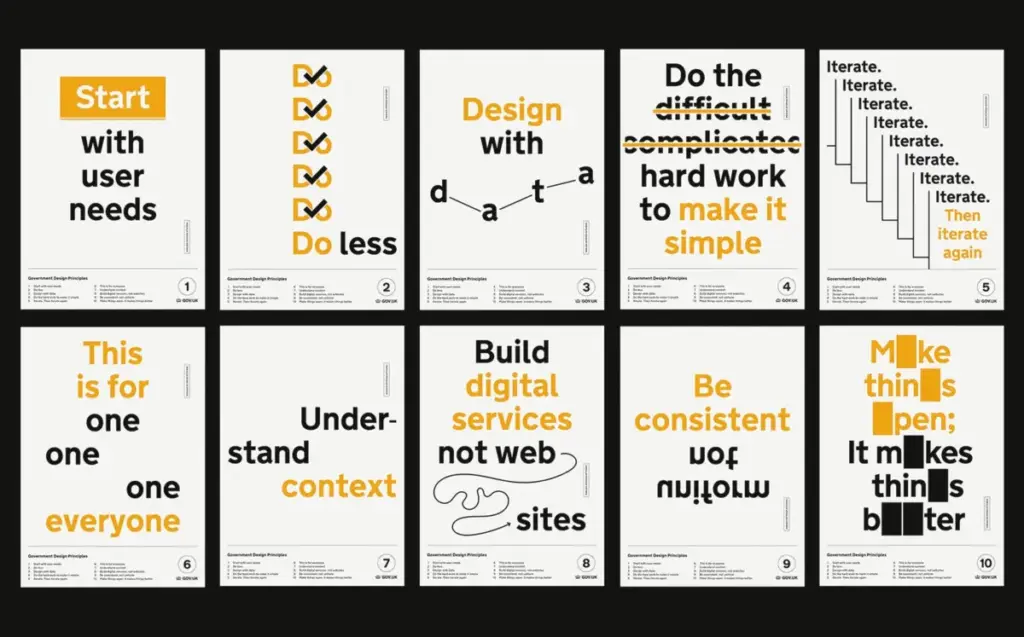
Employees require clear governance frameworks to understand organizational boundaries, defining expectations alongside clear parameters of permissible use. Yet, corporations frequently swing to the opposite extreme, drafting voluminous manuals detailing every prohibited action, which inadvertently fuels employee anxiety. Organizations would achieve better results by establishing a concise set of core principles that fit neatly on a few shared posters—similar to successful public sector design standards—and pairing those guidelines with a baseline level of trust in employee common sense.
While missteps will inevitably occur along the way, they represent the natural cost of operational evolution. Organizations must accept this reality and design their rollout strategies to absorb and mitigate those risks constructively.
Adaptive Technological Rollout
From an IT infrastructure perspective, technological rollouts demand similar care. Restrictive deployment strategies often backfire by locking down systems so severely that genuine adoption becomes impossible.
A decade ago, overstretched IT departments typically selected a rigid suite of technologies and mandated their use across the entire organization, offering little consultation to the actual end users. Navigating outside that approved software catalog required traversing complex approval processes governed by bureaucratic steering committees. The resulting glacial pace of change became a primary contributor to the high failure rate of digital transformation initiatives.
A nearly identical dynamic is unfolding today. IT divisions frequently purchase enterprise licenses for standardized platforms, check the box, and declare the job finished. In reality, these standardized tools frequently fail to address the specific, sophisticated requirements of specialized departments. When ambitious teams find themselves bogged down in endless bureaucratic appeals to secure alternative software, their initial enthusiasm inevitably fades.
Faced with official tools that fail to meet their operational needs, impatient employees bypass internal channels entirely. Just as shadow IT flourished during the digital transformation era—with workers adopting external cloud storage platforms because corporate systems fell short—modern organizations are witnessing a surge in shadow AI. When internal tools prove too restrictive, staff simply open personal accounts on consumer platforms via their personal devices to get their work done.
This behavior introduces severe data security risks, as sensitive corporate data flows into external platforms completely outside organizational oversight or auditing trails. The instinctive corporate reaction involves clamping down with stricter technical blocks, harsher policies, and threats of disciplinary action. However, punitive measures rarely work; instead, they simply drive employee behavior further underground. Shadow AI should instead be interpreted as a valuable diagnostic symptom, highlighting precisely where official enterprise solutions fall short.
Rather than attempting to eradicate shadow management tools through force, organizations should investigate what staff are attempting to accomplish with those external accounts. Understanding those unmet needs provides direct insight into what features and platforms require official support moving forward. While managing a messy, decentralized technology stack is far from ideal, organizations navigating the early phases of a major technological shift must tolerate a degree of operational chaos while employees explore the boundaries of what is possible.
A Dangerous Time
For many corporate risk officers, embracing this level of decentralized exploration feels deeply uncomfortable. Centralized control remains the preferred default to ensure nothing goes wrong. Yet, structural change inherently carries risk, and in a rapidly evolving technological landscape, the danger of moving too slowly far outweighs the hazards of moving too fast.
The most critical danger facing modern enterprises is treating artificial intelligence as a purely technological challenge while ignoring the human dimension. Just like the digital transformation era before it, the success of AI adoption depends fundamentally on people, organizational culture, and thoughtful change management. The sooner leadership grasps the true scope of the transition underway, the more effectively their organizations will navigate the road ahead.