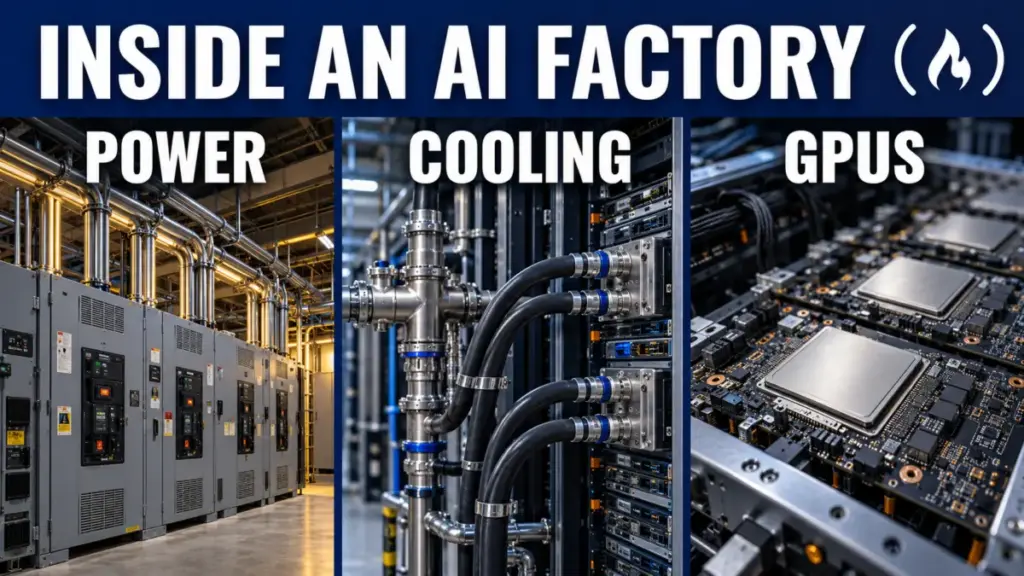
The explosive growth of modern artificial intelligence models like GPT-4 and Claude has captured global attention, yet the monumental physical infrastructure required to sustain them remains largely invisible to the everyday user. To demystify the vast mechanical and electrical ecosystems driving this technological shift, freeCodeCamp.org has released a new, full-length course available on its official YouTube channel that takes learners deep inside the high-tech data centers powering the ongoing AI revolution.
While everyday software developers and technology consumers interact with generative artificial intelligence through clean, minimalist chat interfaces and simple application programming interfaces, the reality beneath the surface is vastly different. Operating these advanced neural networks demands industrial-scale facilities equipped with specialized hardware, immense power consumption capabilities, and sophisticated cooling systems. The newly launched educational resource aims to bridge the gap between software abstraction and physical reality by tracing the complete journey of electrical energy. It follows power from the regional utility grid all the way down to the individual graphics processing units executing complex matrix multiplications that make machine learning possible.
The comprehensive program breaks down the anatomy of what industry insiders increasingly refer to as modern AI factories. These facilities represent a radical departure from traditional cloud computing data centers, which historically handled web hosting, database management, and standard enterprise applications. Standard data centers were engineered for general-purpose computing workloads characterized by varied, unpredictable request patterns and relatively modest power densities per server rack. In contrast, AI data centers are hyper-specialized fortresses designed to maximize computational density and throughput for deep learning training and inference.

Constructing and operating these facilities requires overcoming unprecedented engineering hurdles, particularly regarding power delivery and thermal management. A single modern AI training cluster can consume as much electricity as a small city, necessitating dedicated substations, robust backup generator systems, and advanced cooling infrastructure capable of removing extreme levels of heat. The freeCodeCamp course explores these intricate systems in exhaustive detail, offering an eight-hour deep dive into the mechanical, electrical, and computational engineering disciplines that converge inside these massive warehouse-sized buildings.
The release of this educational content comes at a time when global demand for AI infrastructure is surging to historic highs. Technology giants and specialized cloud providers are investing tens of billions of dollars into building out next-generation data center capacity across the globe. As power grids face increasing strain and the semiconductor industry races to manufacture more powerful chips, understanding the physical constraints and architectural design of AI infrastructure has become increasingly critical for software engineers, systems administrators, and technology analysts alike.
By making this detailed curriculum freely accessible to the public, freeCodeCamp continues its long-standing mission of democratizing technical education. The non-profit organization, widely known for its open-source coding curriculum, has previously helped more than 40,000 individuals launch careers as professional software developers through its free learning platform. This latest release expands the scope of that educational mandate into the physical and hardware-centric domains that underpin modern computing.
Viewers interested in examining the intricate engineering behind artificial intelligence can watch the complete eight-hour course on the freeCodeCamp.org YouTube channel.