









WhatsApp, the world’s most widely used messaging platform, is reportedly taking steps to fundamentally alter how its billions of users interact with external web content. According to recent findings by the reliable industry monitor WABetaInfo, the Meta-owned application is developing a comprehensive in-app browser feature. This move marks a significant evolution from the platform’s current approach, expanding the capability from a limited set of business-related links to a universal browsing tool that will allow users to open any URL shared within a conversation without ever leaving the WhatsApp interface.
The transition represents a broader shift in strategy for WhatsApp, which has historically prioritized simplicity and minimal external integration. By bringing web navigation directly into the app, the company is aiming to reduce the friction associated with switching between the messaging interface and external browsers like Safari or Chrome. This development, while still in its early stages of discovery, suggests that the platform is looking to become a more holistic environment for information consumption and communication.
From Business-Specific to Universal Browsing
The foundation for this development was laid last May, when WhatsApp first began experimenting with a more restricted version of in-app navigation. At the time, the feature was specifically engineered to handle HTTPS-secured business sites. The objective was to provide a seamless experience for users interacting with commercial entities—such as retailers, service providers, or customer support channels—allowing them to view web content directly within the chat window. This initial iteration included a basic "three-dot" menu, which offered users the flexibility to redirect themselves to their default system browser if they preferred a more traditional experience.

Now, reports indicate that WhatsApp is ready to scale this functionality significantly. References found within the latest TestFlight build of the application suggest that developers are building the architecture to support all incoming and outgoing links. This represents a substantial upgrade, moving away from a business-centric tool toward a universal utility that could eventually eliminate the need for users to bounce back and forth between different apps during their daily digital interactions.

The implementation of such a feature is highly technical and requires careful consideration of privacy and performance. By hosting the browsing experience natively, WhatsApp is effectively creating a container for web content that it must manage with the same level of security and efficiency that users have come to expect from its messaging services.
User Control and Customization
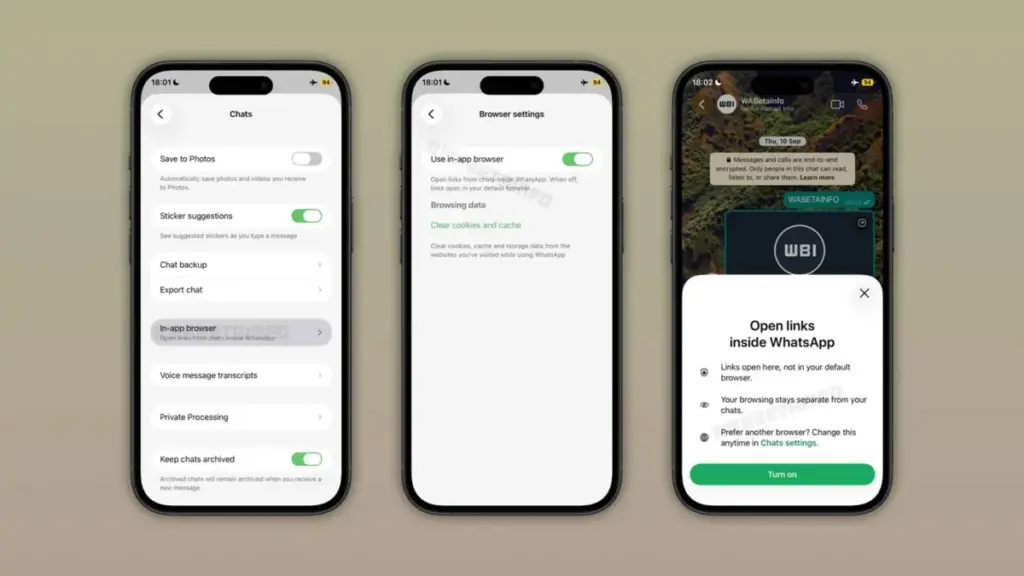
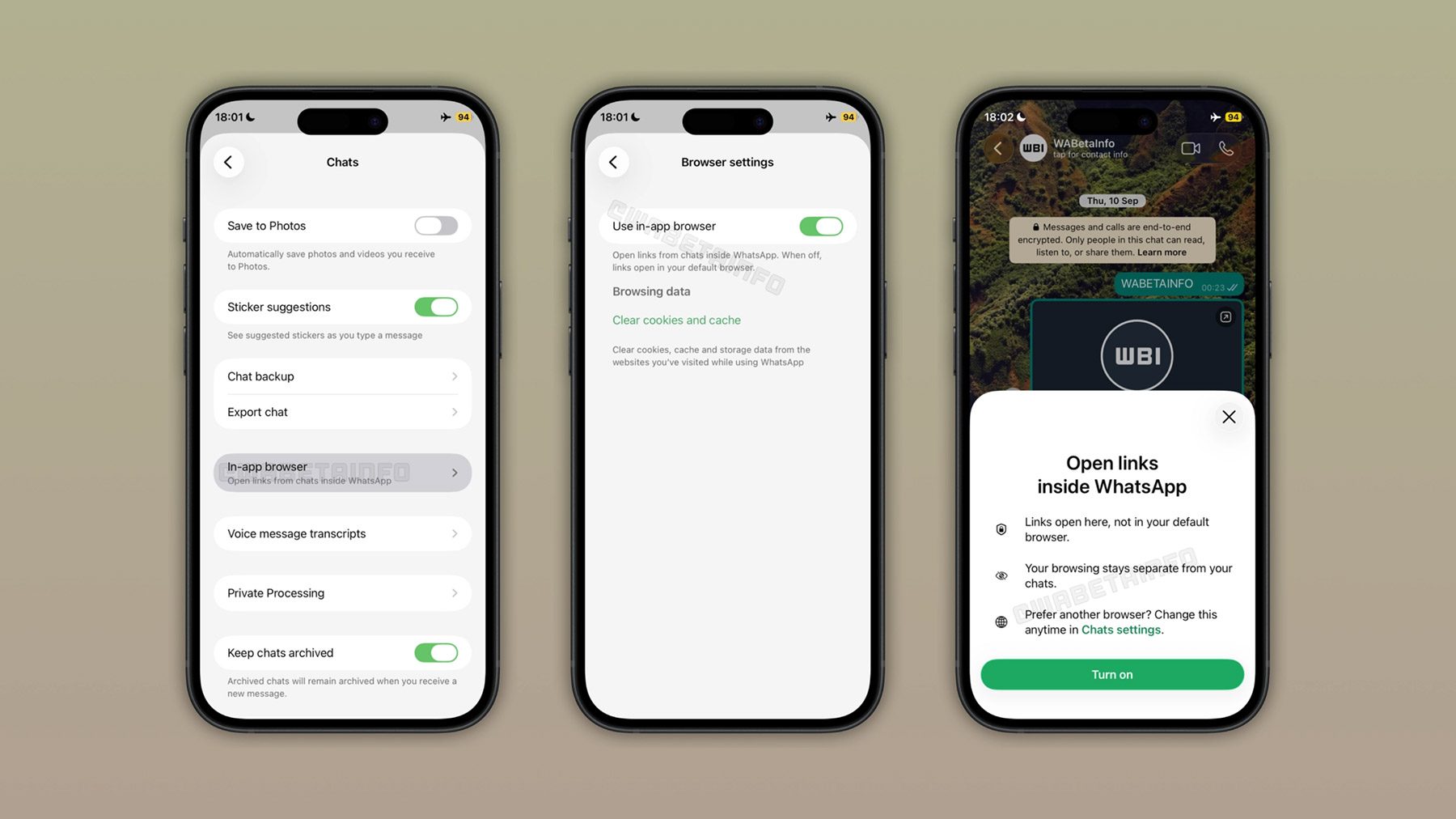
One of the most critical aspects of this upcoming feature is the emphasis on user agency. Recognizing that a one-size-fits-all approach to browsing may not satisfy everyone, WhatsApp is reportedly planning to make this in-app browser an optional setting. Users will be able to navigate to the "Chats" section within the application’s settings menu to decide for themselves whether they want to open links internally or continue utilizing their device’s default browser.
This design choice is crucial for maintaining the user base’s trust. By providing an "off switch" or an opt-in toggle, WhatsApp ensures that users who prefer the performance, bookmarking capabilities, or privacy features of dedicated browsers like Firefox or Brave are not forced into a restrictive ecosystem. Furthermore, the settings menu will include granular controls for managing privacy-related data, such as the ability to clear cookies, cache, and other browsing artifacts generated during sessions within the app.
When a user enables the feature for the first time, the app is expected to present a bottom sheet—a standard UI element in mobile design—that explains how the new system operates. This information screen will explicitly detail that users have the power to toggle the setting on or off at any time, ensuring that the transition to an in-app browser remains a transparent process.
Privacy and Data Integrity
A primary concern whenever a messaging platform introduces an in-app browser is the potential for data tracking and the integrity of the user’s private conversations. WhatsApp has been quick to address these concerns, with early reports emphasizing that the company cannot see which links are shared in conversations, nor can it monitor which links a user chooses to open.
This distinction is vital. WhatsApp utilizes end-to-end encryption to secure the content of messages, and by maintaining a technical wall between the messaging stream and the browser component, the company aims to preserve the privacy of the user’s browsing habits. The browser is essentially a window that connects to the internet independently of the encrypted messaging database. While the browser will necessarily handle the data requested by the websites visited, this activity is intended to be siloed from the content of the user’s personal messages.
For many users, the convenience of staying within a single app outweighs the potential loss of features found in standalone browsers. However, by including the ability to wipe cache and cookies, WhatsApp is providing a necessary tool for those who are conscious of their digital footprint and wish to keep their browsing sessions clean and ephemeral.
The Evolution of the WhatsApp Ecosystem
This development is part of a larger trend observed across the Meta ecosystem, where apps like Facebook, Instagram, and WhatsApp are increasingly integrating web-view technologies to retain user attention. By keeping users within the app, companies can provide a more cohesive experience and, theoretically, increase the time spent on their platforms.

The inclusion of an in-app browser also simplifies the experience for users on lower-end devices or those with limited data plans, where opening multiple heavy browser instances might cause lag or battery drain. A streamlined in-app browser, optimized for the WhatsApp interface, can offer a faster, more responsive way to preview content.
As of now, the feature has not been rolled out to the general public or even to the broader community of beta testers. The references identified in the latest TestFlight build are, at this stage, purely internal markers for developers to build upon. There is no official timeline for a rollout, and as is standard with pre-release software, the design, implementation, and availability could change significantly before it reaches the final version of the app.
For the developers at WhatsApp, the challenge lies in balancing the simplicity that made the app a global success with the complexity of modern web browsing. If successful, the in-app browser will likely become an invisible, yet indispensable, part of the user experience. For now, the messaging community remains in a state of anticipation, waiting for further updates from the beta channels that will reveal the final polish and performance of this highly anticipated utility. As WhatsApp continues to grow, it is clear that its mission is to serve not just as a channel for text, but as a comprehensive hub for all types of digital communication and discovery.