











In October, the software development landscape hit a significant milestone: GitHub recorded over 1.2 billion commits in a single week. This figure represents a staggering 400% increase compared to the same period just one year prior, effectively eclipsing the total volume of commits processed by the platform throughout the entirety of 2025. This surge is not merely a statistical anomaly; it is a direct reflection of how fundamentally artificial intelligence has accelerated the act of writing code. Developers are churning out features, scripts, and patches at a velocity that was previously unimaginable. Yet, this explosion in output has prompted a challenging, introspective question among engineers: despite the surge in code volume, do you actually feel 400% more productive?
The reality of modern software engineering suggests that while AI excels at rapid implementation, it does not necessarily solve the systemic friction inherent in the broader development lifecycle. Generating code is only one component of the engineering equation. A recent study by Faros AI highlights a growing "acceleration whiplash" within development teams: when organizations transition from low to high AI adoption, the time spent on pull request reviews increases by as much as 441%. This suggests that while AI tools are drastically lowering the barrier to writing code, they are simultaneously creating a bottleneck in verification and quality assurance. To truly leverage the benefits of AI, developers must move beyond treating tools like GitHub Copilot as simple text completion engines and start viewing them as agents capable of assisting across the entire engineering workflow—from planning and building to verifying and observing.
Planning: Harmonizing Context for Humans and Agents
The modern developer’s workflow is often plagued by fragmented information. A typical API change, for instance, might require a developer to synthesize design documents scattered across internal wikis, compatibility requirements buried deep in Slack threads, and the historical context of previous pull requests. This "context gathering" phase is often the most exhausting part of the process, consuming hours of manual labor before a single line of code is written.

By utilizing agents to consolidate this scattered data, developers can move from a state of reactive searching to proactive planning. Instead of manually cross-referencing disparate tools, agents can pull relevant documentation and technical constraints into a single, cohesive view. This allows developers to focus their cognitive energy on high-level decision-making—evaluating trade-offs and defining acceptance criteria—rather than the tedious retrieval of information. By transforming nebulous requirements into a structured, reviewable plan, the agentic workflow sets the stage for more efficient implementation, ensuring that both the human developer and their AI assistants are working from the same source of truth from the very start.
Building: Managing Parallel Progress in an Interrupted World
Writing code is rarely a linear, uninterrupted experience. In the modern, fast-paced environment, a developer might be mid-task when a sudden meeting arises or a colleague flags a critical edge case that requires immediate attention. These interruptions threaten to derail momentum, especially when a developer is relying on an AI agent to progress through complex logic. When the human must switch contexts, the work often stalls.
To combat this, an agentic engineering approach allows for the continuation of tasks independently of the developer’s active presence at their terminal. By leveraging shared project knowledge, agents can maintain progress on secondary tasks or background operations even when the developer is pulled away. Modern tooling now enables developers to pick up sessions across different devices, ensuring that the transition between meetings and deep work remains fluid. This capability is essential for maintaining consistent coding standards while juggling an increasingly heavy workload. As the agent finishes its segments of the code, it produces focused, modular changes ready for review, allowing the developer to remain in control of the implementation while offloading the burden of constant manual oversight.
Verification: Refining the Review Process
The 441% increase in review time noted by Faros AI is often a symptom of "review fatigue," where the quality of feedback diminishes under the weight of massive, unrefined pull requests. A developer might open a PR labeled as a "small refactor," only to realize it involves changes across dozens of files, including formatting adjustments and hundreds of lines of generated test code. For reviewers, finding the actual logic changes amidst the noise is a daunting task, leading to long delays and endless cycles of back-and-forth communication.
The solution lies in shifting the verification process to be more human-centric. By using agents to handle the routine aspects of verification—such as clearing standard checks, identifying formatting discrepancies, and vetting generated tests before they reach a human reviewer—the scope of a pull request can be dramatically narrowed. When reviewers are presented with cleaner, more focused code, their ability to provide high-quality feedback on intent and potential architectural pitfalls increases. This approach effectively shortens the review queue, reducing the "acceleration whiplash" and ensuring that human attention is applied only where it is truly needed.
Observation: Closing the Loop After Deployment
The development cycle does not end when code is pushed to production; in many ways, it is just beginning. The traditional "ship and move on" mentality is increasingly insufficient as systems become more complex. Often, developers find themselves scrambling the morning after a release, frantically comparing logs, release histories, and customer support reports to identify the source of intermittent timeouts. This reactive state—often compounded by the pressure to decide whether to roll back a deployment—is the antithesis of efficiency.
An agentic approach integrates operational evidence with engineering context to transform how developers react to production issues. Rather than bouncing between disparate dashboards and communication channels, developers can use agents to aggregate relevant data, connect incident logs to specific commits, and document findings in real-time. This not only speeds up the investigation but also informs future development. By documenting what went wrong and what the operational data revealed, the team builds a knowledge base that improves the guidance for future tasks. In this way, the "Observe" phase becomes the foundation for the next "Plan" phase, creating a virtuous cycle of continuous improvement.
The Path Forward
The transition to an agentic engineering workflow is not an overnight transformation; it is a gradual shift in how developers approach their daily tasks. It begins by identifying specific pain points within an existing project—whether that is the frustration of gathering context for a new feature, the bottleneck of the review queue, or the difficulty of diagnosing production issues.
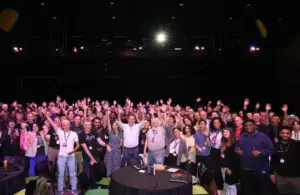
Developers do not need to overhaul their entire process at once. By applying agents to the areas that cause the most friction, they can begin to see the compounding benefits of automation. As these agents become more integrated across the Plan, Build, Verify, and Observe stages, the promise of increased productivity starts to align with the reality of the record-breaking commit volumes seen across the industry. The goal is not to replace human judgment but to liberate it, ensuring that developers spend their time on the creative and strategic decisions that define great software, rather than the manual overhead of managing it. As discussed at GitHub Universe 2026, the era of "Agentic Engineering" is not just about writing more code—it is about managing the complexity that comes with doing so at an unprecedented scale.