Something remarkable and unprecedented is unfolding within the global AI development community, signaling what many tech industry observers believe to be the beginning of a profound paradigm shift in software engineering. Developers are moving far beyond the era of simply "vibe coding" simple websites, foundational dashboards, and isolated applications. Instead, they are now ambitiously attempting to recreate entire, highly complex commercial software suites—including industry mainstays like Adobe Creative Cloud and Microsoft Office—utilizing advanced artificial intelligence.
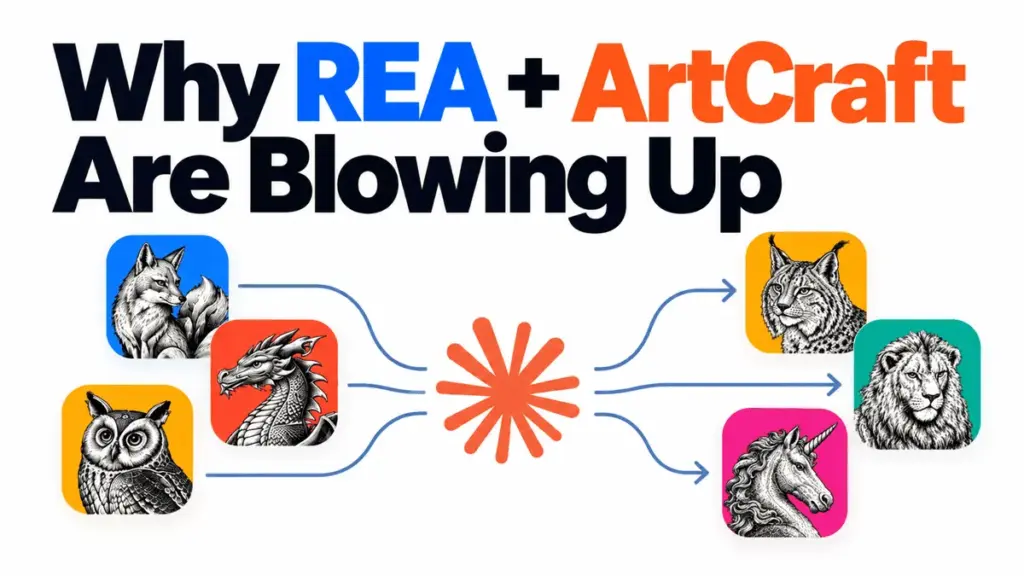
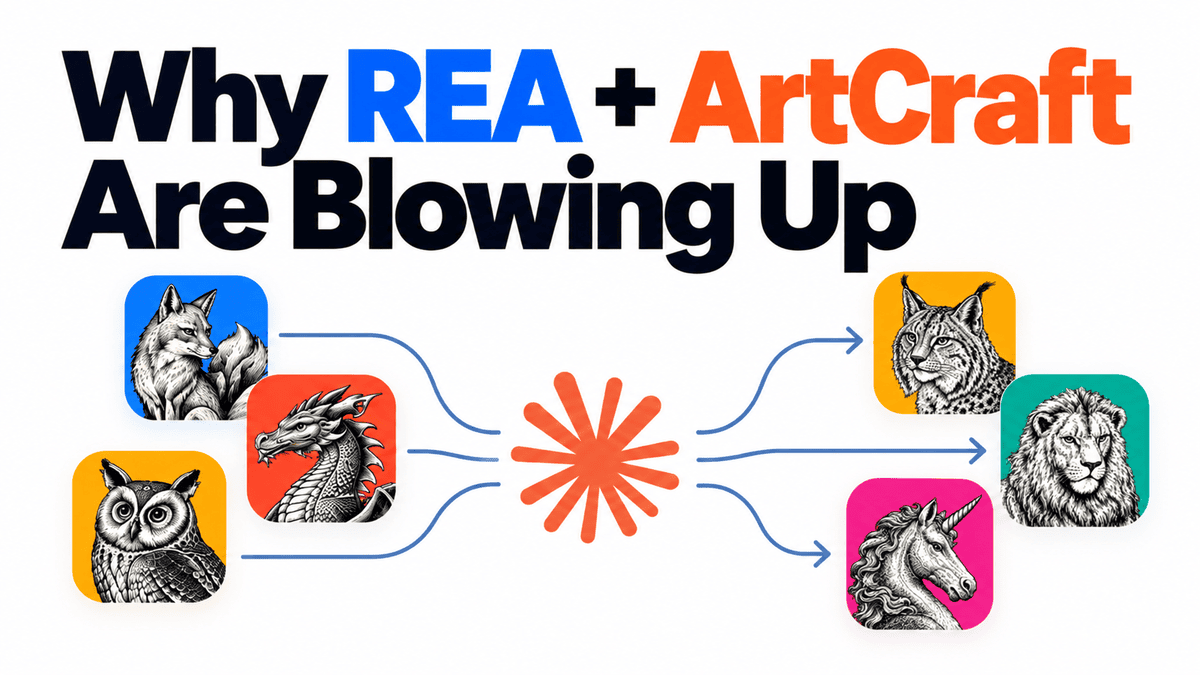
Perhaps the most fascinating aspect of this burgeoning movement is that many of these ambitious projects are not being engineered by massive enterprise teams backed by millions of dollars in venture capital, but rather by individual developers leveraging modern AI coding agents. Two distinct initiatives in particular have captured the attention of the tech world: an AI-powered reverse-engineering toolkit known as Reverse Engineer Anything, or REA, and a collection of developer-built applications grouped under the ArtCraft ecosystem.
For decades, the software market has featured free alternatives to dominant commercial tools. Software users have long had access to GIMP as an open-source alternative to Photoshop, Inkscape for vector graphics editing, and LibreOffice to handle word processing, spreadsheets, and presentations without paying for Microsoft Office. However, these traditional alternatives have consistently struggled against a formidable economic and psychological barrier: high switching costs.
Most established open-source and alternative applications feature entirely independent user interfaces, distinct keyboard shortcuts, and customized workflows. For a professional designer or office worker who has spent a decade mastering the intricate layout and muscle memory of Photoshop, migrating to GIMP can feel less like upgrading and more like learning an entirely foreign operating system from scratch.
The new generation of AI-built software clones is attempting to approach this perennial problem from a radically different angle. Rather than forcing users to adapt to a newly invented user experience, developers are attempting to closely mimic familiar layouts, nested menus, keyboard shortcuts, and core functionalities. The theoretical promise is simple: a user could open a free, independently developed alternative to a major commercial program and instantly know where every tool and panel is located, eliminating the need for extensive tutorials, unfamiliar workflows, and expensive recurring monthly subscriptions. Naturally, the real-world quality, performance, and feature compatibility of these early experimental clones still vary considerably, but the sheer ambition of the approach has sent shockwaves through the industry.
REA Is Making Reverse Engineering More Accessible
One of the foundational projects propelling this movement forward is Reverse Engineer Anything, or REA, an open-source, AI-powered toolkit that has captured explosive attention within the global developer community, amassing over 130,000 stars on GitHub in a remarkably short span of time.
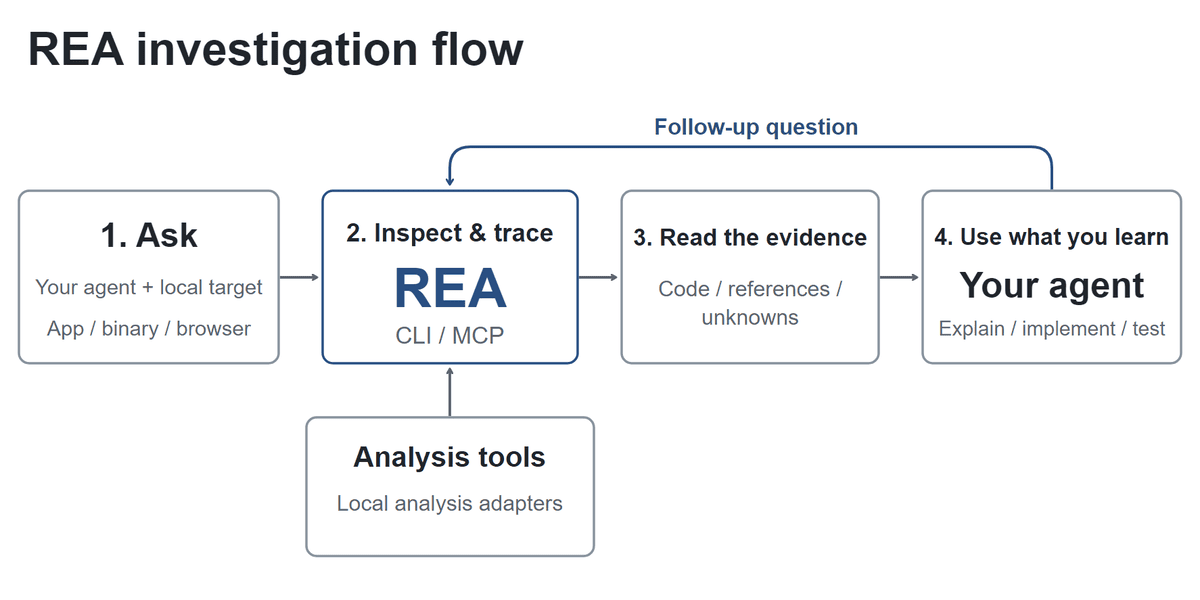
Traditionally, the specialized field of software reverse engineering has demanded years of rigorous training, deep familiarity with low-level systems, and painstaking manual analysis using complex, intimidating tools. REA aims to democratize and accelerate this workflow by serving as a bridge, connecting advanced AI coding assistants like Claude Code, Codex, and Cursor with established binary analysis utilities such as Ghidra, Hopper, and IDA Pro.
The core premise of the toolkit is straightforward: a developer provides an application’s binary file, and the integrated AI agent is tasked with systematically analyzing its internal functions, system dependencies, architectural patterns, and runtime behavior—all without requiring access to the original proprietary source code. Once the AI extracts these underlying mechanics, developers can leverage those insights to recreate specific features, understand undocumented formats, or build entirely independent, compatible alternatives.
Developers are already pushing the boundaries of this workflow with creative experiments. Notable showcases built using REA include the reconstruction of Notion’s complex clipboard functionality, the recreation of intricate sound and physics calculations from classic arcade games like DX-Ball, and the recovery of mathematical routines from older PC-98 computing environments.
The implications of applying these same techniques to expensive, proprietary commercial software packages are profound. While REA cannot magically produce a flawless, production-ready clone of a multi-million-dollar application overnight, it drastically lowers the barrier to understanding how complex software is constructed. By making legacy and commercial codebases transparent and understandable to AI agents, REA has galvanized open-source contributors around the world.
ArtCraft Is Already Recreating Adobe and Microsoft Software
While REA provides the analytical toolkit for understanding compiled software, other developers are directly tackling the challenge of building functional clones from scratch. Independent developer Brandon Thomas has drawn widespread industry attention for spearheading a collection of Adobe-inspired desktop applications built primarily using Claude and the Rust programming language.
The developer’s expanding ecosystem includes PhotoCraft, designed to replicate the core image-editing environment of Adobe Photoshop; VectorCraft, aimed at mimicking the vector illustration capabilities of Adobe Illustrator; and FilmCraft, structured around the familiar editing timeline of Adobe Premiere. When these projects first surfaced, the developer set an aggressive and widely debated goal of achieving complete feature parity with Adobe’s professional suite within a single month—an extraordinarily ambitious target that immediately drew skepticism from veteran software engineers.
Yet the scope of this movement extends well beyond creative suites into productivity software. The broader ArtCraft ecosystem and its contemporary projects have increasingly expanded into territories historically dominated by enterprise document and spreadsheet tools, inspiring developers to explore Microsoft Office-inspired applications.
The sheer speed at which a single developer can conceptualize, scaffold, and iterate upon complex multi-window applications using modern AI assistants has astonished observers. While traditional desktop software of this caliber historically required years of coordinated engineering by specialized teams, these solo developers are churning out functional prototypes in days and weeks.
What Are People Saying About This?
The emergence of AI-generated software clones has elicited a polarized response characterized by intense excitement mingled with profound skepticism. Within developer forums and social media channels, many software engineers express amazement that solo creators can now replicate complex, feature-rich commercial software environments with the assistance of LLM-powered coding agents. End users and content creators, meanwhile, are naturally intrigued by the prospect of escaping restrictive software licensing models in favor of free or low-cost alternatives that mirror the exact look, feel, and ergonomics of the proprietary tools they already know how to use.
At the same time, critics and seasoned software architects raise valid concerns regarding whether these rapidly assembled applications can truly match the rock-solid reliability, high-performance rendering, memory management, and deep feature depth of mature commercial software like Photoshop or Excel. Early adopters testing these experimental builds frequently point out persistent bugs, unhandled edge cases, and missing advanced features that professional workflows rely upon daily.
Despite these limitations, the overarching sentiment points to a growing disruption in how users view software value. As AI-built alternatives rapidly improve, a growing segment of the tech community is beginning to question the justification for mandatory, expensive software subscriptions when functional alternatives can be generated, modified, and hosted independently.
Final Thoughts on the Future of Software Ownership
What remains most striking about this phenomenon is the sheer velocity of its adoption. Projects like REA have captured over 130,000 GitHub stars within days of gaining viral traction, demonstrating an unprecedented appetite within the tech community for tools that demystify proprietary software.
This trend represents far more than a momentary viral curiosity on developer platforms; it points toward a potential structural evolution in software ownership and distribution. Instead of remaining perpetually dependent on centralized corporate subscription models, users and communities could eventually possess the capability to run, inspect, and customize the software tools they rely on for their livelihoods. Naturally, significant hurdles remain regarding intellectual property law, codebase reliability, and cross-platform compatibility.
Yet the ultimate challenge facing established software giants like Adobe and Microsoft may not come from traditional corporate competitors releasing new standalone products. Instead, the true disruption may stem from a decentralized wave of AI-assisted developers building familiar, functional software that eliminates the friction of switching costs, leaving users with fewer compelling reasons to maintain their ongoing subscription fees. As this new wave of development gathers momentum, the software industry is only just beginning to see what is possible.